Please wait...
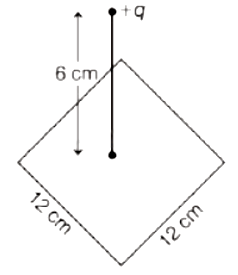
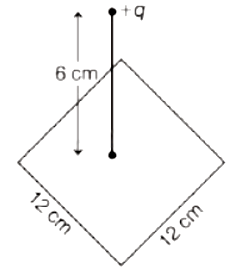
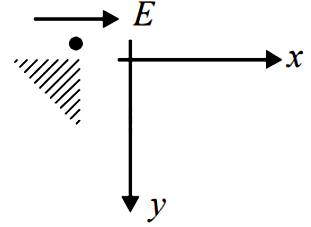
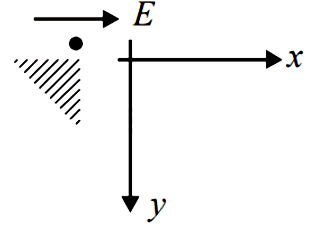
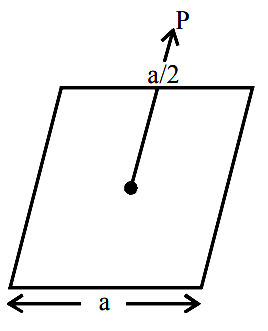
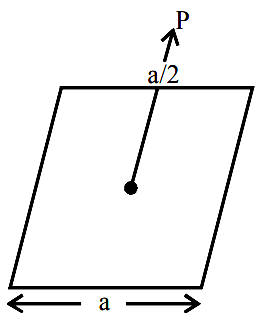
A square loop of sides $a=1 \mathrm{~m}$ is held normally in front of a point charge $\mathrm{q}=1 \mathrm{C}$ at a distance $\frac{\mathrm{a}}{2}$. The flux of the electric field through the shaded region is $\frac{5}{\mathrm{p}} \times \frac{1}{\varepsilon_0} \frac{\mathrm{Nm}^2}{\mathrm{C}}$, where the value of p is ________ .
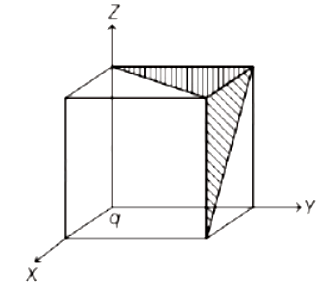
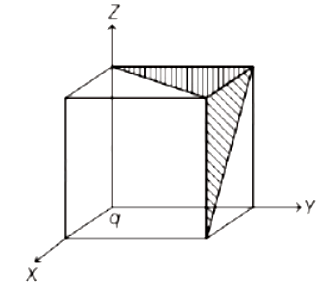
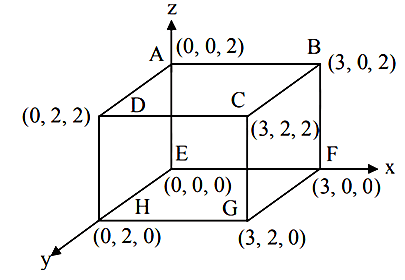
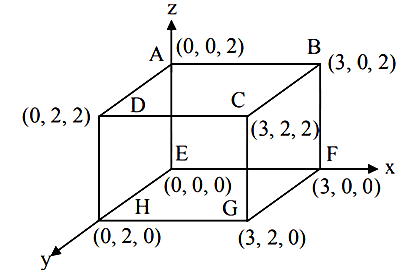
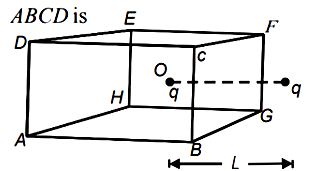
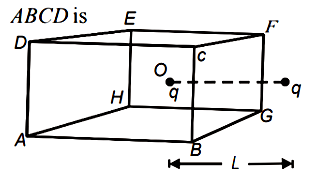
A line charge of length $\frac{\mathrm{a}}{2}$ is kept at the center of an edge $B C$ of a cube ABCDEFGH having edge length ' $a$ ' as shown in the figure. If the density of line charge is $\lambda \mathrm{C}$ per unit length, then the total electric flux through all the faces of the cube will be ___________ . (Take, $\epsilon_0$ as the free space permittivity)
For a short dipole placed at origin O , the dipole moment P is along $x$-axis, as shown in the figure. If the electric potential and electric field at $A$ are $V_0$ and $E_0$, respectively, then the correct combination of the electric potential and electric field, respectively, at point B on the $y$-axis is given by
The electric flux is $\phi=\alpha \sigma+\beta \lambda$ where $\lambda$ and $\sigma$ are linear and surface charge density, respectively. $\left(\frac{\alpha}{\beta}\right)$ represents
A point particle of charge $Q$ is located at $P$ along the axis of an electric dipole 1 at a distance $r$ as shown in the figure. The point P is also on the equatorial plane of a second electric dipole 2 at a distance r. The dipoles are made of opposite charge q separated by a distance $2 a$. For the charge particle at P not to experience any net force, which of the following correctly describes the situation?
Two charges $7 \mu \mathrm{c}$ and $-4 \mu \mathrm{c}$ are placed at $(-7 \mathrm{~cm}, 0,0)$ and $(7 \mathrm{~cm}, 0,0)$ respectively. Given, $\epsilon_0=8.85 \times 10^{-12} \mathrm{C}^2 \mathrm{~N}^{-1} \mathrm{~m}^{-2}$, the electrostatic potential energy of the charge configuration is :
Two point charges $-4 \mu \mathrm{c}$ and $4 \mu \mathrm{c}$, constituting an electric dipole, are placed at $(-9,0,0) \mathrm{cm}$ and $(9,0,0) \mathrm{cm}$ in a uniform electric field of strength $10^4 \mathrm{NC}^{-1}$. The work done on the dipole in rotating it from the equilibrium through $180^{\circ}$ is :
Consider a parallel plate capacitor of area A (of each plate) and separation ' $d$ ' between the plates. If $E$ is the electric field and $\varepsilon_0$ is the permittivity of free space between the plates, then potential energy stored in the capacitor is
In the first configuration (1) as shown in the figure, four identical charges $\left(q_0\right)$ are kept at the corners A, B, C and D of square of side length ' $a$ '. In the second configuration (2), the same charges are shifted to mid points $G, E, H$ and $F$, of the square. If $K=\frac{1}{4 \pi \epsilon_0}$, the difference between the potential energies of configuration (2) and (1) is given by :
A small uncharged conducting sphere is placed in contact with an identical sphere but having $4 \times 10^{-8} \mathrm{C}$ charge and then removed to a distance such that the force of repulsion between them is $9 \times 10^{-3} \mathrm{~N}$. The distance between them is (Take $\frac{1}{4 \pi \epsilon_{\mathrm{o}}}$ as $9 \times 10^9$ in SI units)
A particle of mass ' $m$ ' and charge ' $q$ ' is fastened to one end ' $A$ ' of a massless string having equilibrium length $l$, whose other end is fixed at point ' $O$ '. The whole system is placed on a frictionless horizontal plane and is initially at rest. If uniform electric field is switched on along the direction as shown in figure, then the speed of the particle when it crosses the $x$-axis is
Three infinitely long wires with linear charge density $\lambda$ are placed along the $x-a x i s, y-a x i s$ and $z-$ axis respectively. Which of the following denotes an equipotential surface?
Match List - I with List - II.
Choose the correct answer from the options given below :
An electric dipole of mass $m$, charge $q$, and length $l$ is placed in a uniform electric field $\vec{E} = E_0\hat{i}$. When the dipole is rotated slightly from its equilibrium position and released, the time period of its oscillations will be :
An electric dipole is placed at a distance of 2 cm from an infinite plane sheet having positive charge density $\sigma_{\mathrm{o}}$. Choose the correct option from the following.
A point charge causes an electric flux of $-2 \times 10^4 \mathrm{Nm}^2 \mathrm{C}^{-1}$ to pass through a spherical Gaussian surface of 8.0 cm radius, centred on the charge. The value of the point charge is :
(Given $\epsilon_0=8.85 \times 10^{-12} \mathrm{C}^2 \mathrm{~N}^{-1} \mathrm{~m}^{-2}$ )
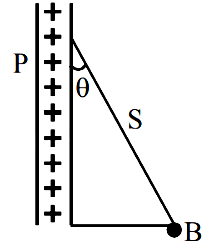
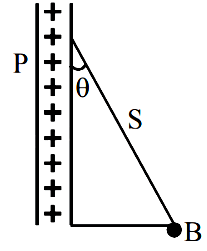
A small bob of mass 100 mg and charge $+10 \mu \mathrm{C}$ is connected to an insulating string of length 1 m . It is brought near to an infinitely long non-conducting sheet of charge density ' $\sigma$ ' as shown in figure. If string subtends an angle of $45^{\circ}$ with the sheet at equilibrium the charge density of sheet will be.
(Given, $\epsilon_0=8.85 \times 10^{-12} \frac{\mathrm{~F}}{\mathrm{~m}}$ and acceleration due to gravity, $\mathrm{g}=10 \frac{\mathrm{~m}}{\mathrm{~s}^2}$ )
A point charge $+q$ is placed at the origin. A second point charge $+9 q$ is placed at ($\mathrm{d}, 0,0$) in Cartesian coordinate system. The point in between them where the electric field vanishes is:
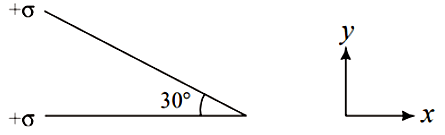
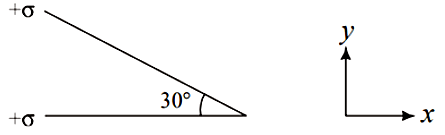
Consider two infinitely large plane parallel conducting plates as shown below. The plates are uniformly charged with a surface charge density $+\sigma$ and $-2 \sigma$. The force experienced by a point charge +q placed at the mid point between two plates will be:
Given below are two statements : one is labelled as Assertion (A) and the other is labelled as Reason (R).
Assertion (A) : Net dipole moment of a polar linear isotropic dielectric substance is not zero even in the absence of an external electric field.
Reason (R) : In absence of an external electric field, the different permanent dipoles of a polar dielectric substance are oriented in random directions.
In the light of the above statements, choose the most appropriate answer from the options given below :
The electrostatic potential on the surface of uniformly charged spherical shell of radius $\mathrm{R}=10 \mathrm{~cm}$ is 120 V . The potential at the centre of shell, at a distance $\mathrm{r}=5 \mathrm{~cm}$ from centre, and at a distance $\mathrm{r}=15$ cm from the centre of the shell respectively, are:
Two small spherical balls of mass 10 g each with charges $-2 \mu \mathrm{C}$ and $2 \mu \mathrm{C}$, are attached to two ends of very light rigid rod of length 20 cm . The arrangement is now placed near an infinite nonconducting charge sheet with uniform charge density of $100 \mu \mathrm{C} / \mathrm{m}^2$ such that length of rod makes an angle of $30^{\circ}$ with electric field generated by charge sheet. Net torque acting on the rod is:(Take $\varepsilon_{\mathrm{o}}: 8.85 \times 10^{-12} \mathrm{C}^2 / \mathrm{Nm}^2$ )
Two infinite identical charged sheets and a charged spherical body of charge density ' $\rho$ ' are arranged as shown in figure. Then the correct relation between the electrical fields at $\mathrm{A}, \mathrm{B}, \mathrm{C}$ and D points is:
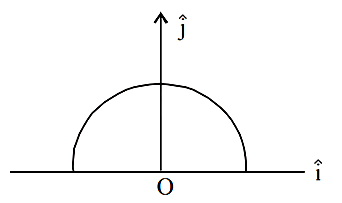
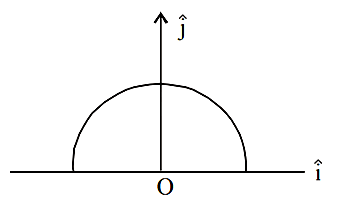
A metallic ring is uniformly charged as shown in figure. AC and BD are two mutually perpendicular diameters. Electric field due to arc $A B$ at ' $O$ ' is ' $E$ ' in magnitude. What would be the magnitude of electric field at ' O ' due to arc ABC ?
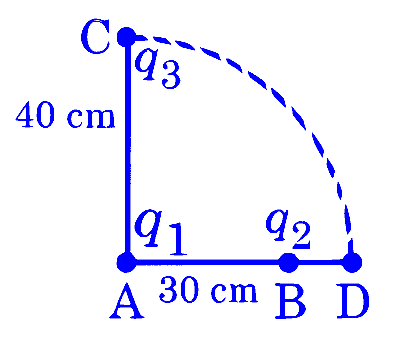
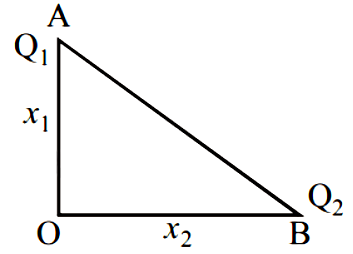
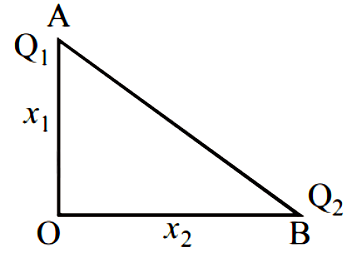
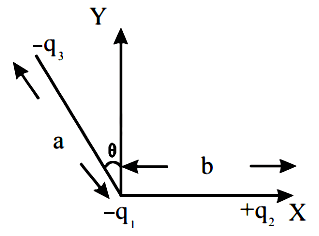
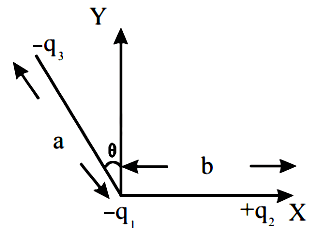
Two charges $q_1$ and $q_2$ are separated by a distance of 30 cm . A third charge $q_3$ initially at ' C ' as shown in the figure, is moved along the circular path of radius 40 cm from C to D . If the difference in potential energy due to movement of $q_3$ from C to D is given by $\frac{q_3 \mathrm{~K}}{4 \pi \epsilon_0}$, the value of K is :
If $\epsilon_0$ denotes the permittivity of free space and $\Phi_E$ is the flux of the electric field through the area bounded by the closed surface, then dimensions of $\left(\epsilon_0 \frac{d \phi_E}{d t}\right)$ are that of :
Assertion (A) : The outer body of an aircraft is made of metal which protects persons sitting inside from lightning strikes.
Reason (R) : The electric field inside the cavity enclosed by a conductor is zero.
A dipole with two electric charges of 2 µC magnitude each, with separation distance 0.5 µm, is placed between the plates of a capacitor such that its axis is parallel to an electric field established between the plates when a potential difference of 5 V is applied. Separation between the plates is 0.5 mm. If the dipole is rotated by 30° from the axis, it tends to realign in the direction due to a torque. The value of torque is:
An infinitely long wire has uniform linear charge density $\lambda = 2 \text{ nC/m}$. The net flux through a Gaussian cube of side length $\sqrt{3}$ cm, if the wire passes through any two corners of the cube, that are maximally displaced from each other, would be $x \text{ Nm}^2\text{C}^{-1}$, where $x$ is:
[Neglect any edge effects and use $\frac{1}{4\pi \epsilon_0} = 9 \times 10^9$ SI units]
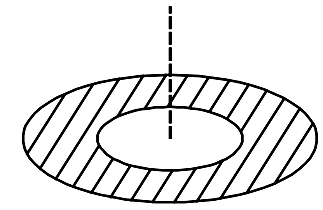
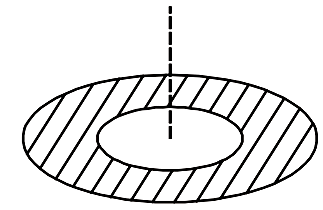
Electric charge is transferred to an irregular metallic disk as shown in the figure. If $\sigma_1$, $\sigma_2$, $\sigma_3$ and $\sigma_4$ are charge densities at given points then, choose the correct answer from the options given below:
A. $\sigma_1>\sigma_3 ; \sigma_2=\sigma_4$
B. $\sigma_1>\sigma_2 ; \sigma_3>\sigma_4$
C. $\sigma_1>\sigma_3>\sigma_2=\sigma_4$
D. $\sigma_1<\sigma_3<\sigma_2=\sigma_4$
E. $\sigma_1=\sigma_2=\sigma_3=\sigma_4$
Given below are two statements: one is labelled as Assertion $\mathbf{A}$ and the other is labelled as Reason $\mathbf{R}$
Assertion A : Work done in moving a test charge between two points inside a uniformly charged spherical shell is zero, no matter which path is chosen.
Reason R : Electrostatic potential inside a uniformly charged spherical shell is constant and is same as that on the surface of the shell.
In the light of the above statements, choose the correct answer from the options given below.
Two metal spheres of radius R and 3R have same surface charge density σ. If they are brought in contact and then separated, the surface charge density on smaller and bigger sphere becomes σ1 and σ2, respectively. The ratio $ \frac{\sigma_1}{\sigma_2} $ is
An electric charge 10−6µC is placed at origin (0,0) m of X − Y co-ordinate system. Two points P and Q are situated at (√3, √3)m and (√6, 0)m respectively. The potential difference between the points P and Q will be :
[27-Jan-2024 Shift 1]
A thin metallic wire having cross sectional area of 10−4m2 is used to make a ring of radius 30cm. A positive charge of 2πC is uniformly distributed over the ring, while another positive charge of 30 pC is kept at the centre of the ring. The tension in the ring is ____N ; provided that the ring does not get deformed (neglect the influence of gravity). (given, = 9 × 10⁹ SI units)
Given below are two statements : one is labelled a
Assertion (A) and the other is labelled as Reason(R) Assertion (A) : Work done by electric field on moving a positive charge on an equipotential surface is always zero. Reason (R) : Electric lines of forces are always perpendicular to equipotential surfaces.
[27-Jan-2024 Shift 2]
The electric potential at the surface of an atomic nucleus (z = 50) of radius 9 × 10⁻¹³cm is ____ × 106V
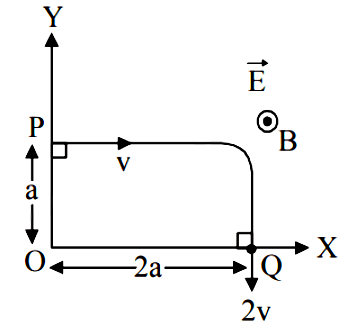
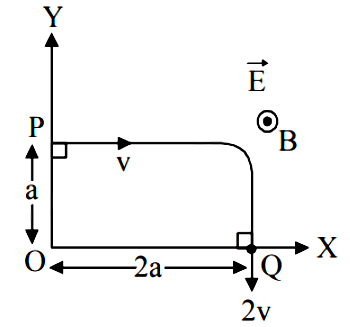
Two charges of −4µC and +4µC are placed at the points A(1, 0, 4)m and B(2, −1, 5)m located in an electric field The magnitude of the torque acting on the dipole is 8√α × 10−5 Nm, Where α = ____
Two charges of 5Q and −2Q are situated at the points (3a,0) and (−5a, 0) respectively. The electric flux through a sphere of radius ' 4a ' having center at origin is :
[29-Jan-2024 Shift 1]
Match List I with List II
Choose the correct answer from the options given below
An electron is moving under the influence of the electric field of a uniformly charged infinite plane sheet S having surface charge density +σ. The electron at t = 0 is at a distance of 1m from S and has a speed of 1m∕ s. The maximum value of σ if the electron strikes S at t = 1 s is the value of α is___
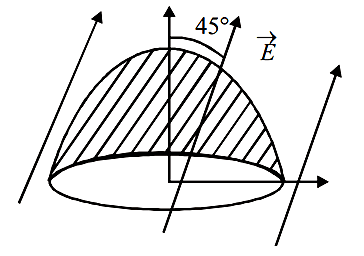
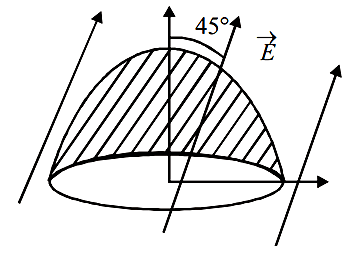
An electric field is given by The electric flux through a surface area lying in YZ-plane (in SI unit) is :
[29-Jan-2024 Shift 2]
The electrostatic potential due to an electric dipole at a distance ' r ' varies as :
[30-Jan-2024 Shift 1]
A particle of charge ' −q' and mass ' m ' moves in a circle of radius ' r ' around an infinitely long line charge of linear density ' +λ '. Then time period will be given as:
(Consider k as Coulomb's constant)
[30-Jan-2024 Shift 2]
Two identical charged spheres are suspended by string of equal lengths. The string make an angle of 37∘ with each other. When suspended in a liquid of density 0.7g∕cm3, the angle remains same. If density of material of the sphere is 1.4g∕cm3, the dielectric constant of the liquid is ______ (tan 37∘ = 3/4).
Two charges q and 3q are separated by a distance ' r ' in air. At a distance x from charge q, the resultant electric field is zero. The value of x is :
[31-Jan-2024 Shift 1]
Force between two point charges q1 and q2 placed in vacuum at ' r ' cm apart is F. Force between them when placed in a medium having dielectric K = 5 at ' r∕5 ' cm apart will be:
[31-Jan-2024 Shift 2]
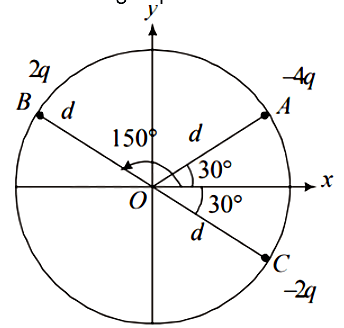
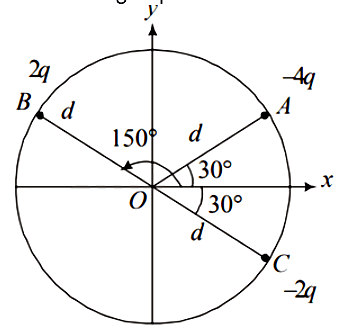
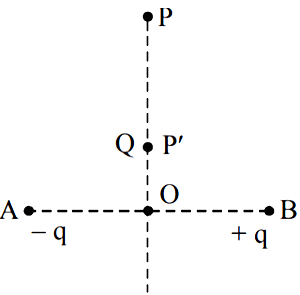
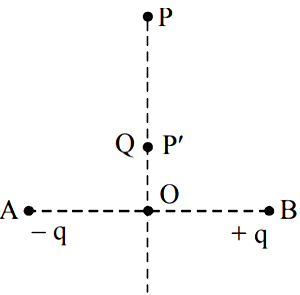
The distance between charges +q and −q is 2l and between +2q and −2q is 4l. The electrostatic potential at point P at a distance r from centre O is where the value of α is (Use 1/4πε0 = 9 × 10⁹NM2C-2)
Two identical charged spheres are suspended by strings of equal lengths. The strings make an angle θ with each other. When suspended in water the angle remains the same. If density of the material of the sphere is 1.5g∕cc, the dielectric constant of water will be _________(Take density of water = 1g∕cc)
[1-Feb-2024 Shift 1]
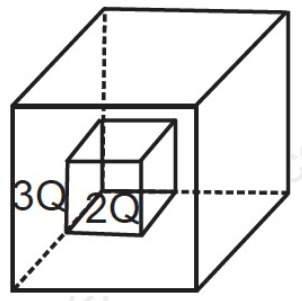
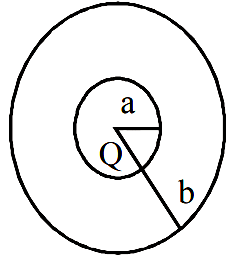
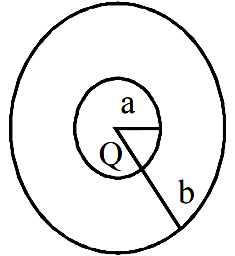
C1 and C2 are two hollow concentric cubes enclosing charges 2Q and 3Q respectively as shown in figure. The ratio of electric flux passing through C1 and C2 is :
[1-Feb-2024 Shift 2]
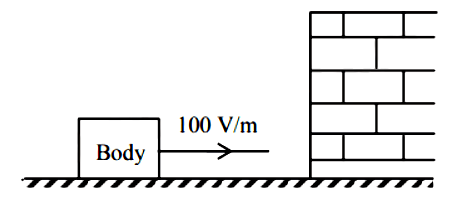
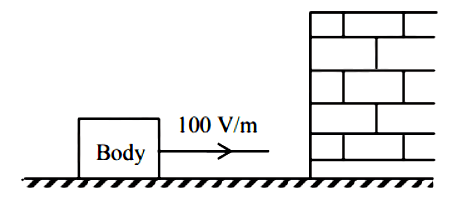
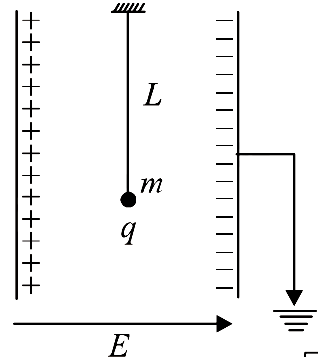
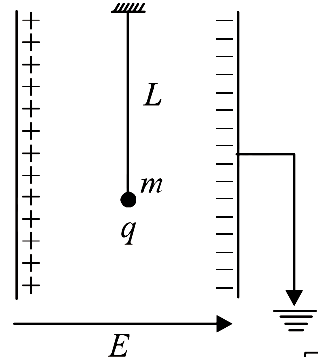
Suppose a uniformly charged wall provides a uniform electric field of 2 × 10⁴N∕C normally. A charged particle of mass 2g being suspended through a silk thread of length 20cm and remain stayed at a distance of 10cm from the wall. Then the charge on the particle will be where x =....[. use g = 10m∕ s2]



 ×
×
 Bank
Bank


 SSC
SSC


 Railway


 State
State


 Other
Other


 Teaching


 Insurance


 Medical


 Engineering


 Defence


 GATE
GATE


 NTA CUET

 UPSC
UPSC

 MBA Entrance


 LAW
LAW

 ReNEET UG 2026
 SSC Selection Post (Phase 14) 2026
 RRB NTPC 2026
 SSC CGL Tier-I 2026
 SSC JE 2026
 SBI PO Prelims 2026
 SSC Steno Grade C & D 2026
 SBI Clerk Prelims 2026
 IBPS PO Prelims 2026
 IBPS Clerk Prelims 2026
 SSC CPO Tier I 2026
 NDA II 2026
 CDS II 2026













 = 9 × 10⁹ SI units)
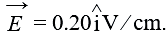 The magnitude of the torque acting on the dipole is 8√α × 10−5 Nm, Where α = ____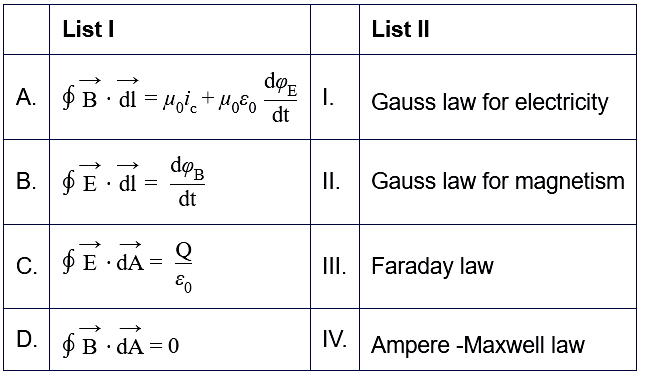
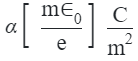 the value of α is___
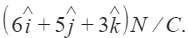 The electric flux through a surface area
  lying in YZ-plane (in SI unit) is :
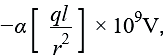 where the value of α is (Use 1/4πε0 = 9 × 10⁹NM2C-2)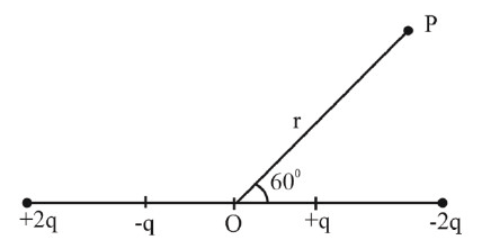
 where x =....[. use g = 10m∕ s2]


 Get latest Exam Updates