Please wait...
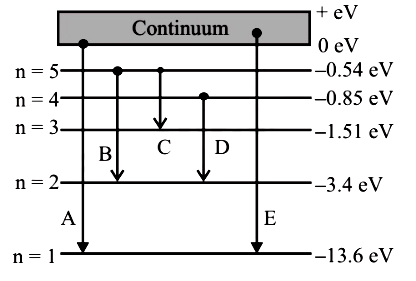
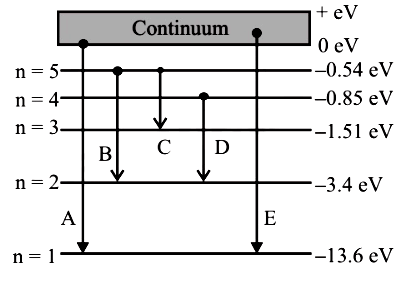
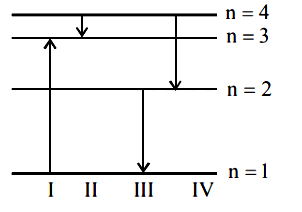
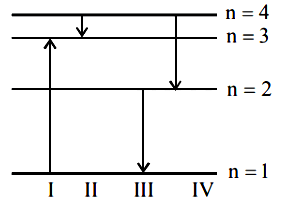
An electron in the hydrogen atom initially in the fourth excited state makes a transition to $\mathrm{n}^{\text {th }}$ energy state by emitting a photon of energy 2.86 eV . The integer value of n will be__________. JEE Main 2025 (Online) 3rd April Evening Shift
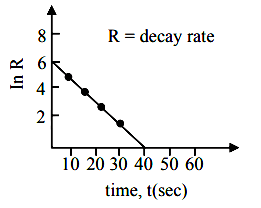
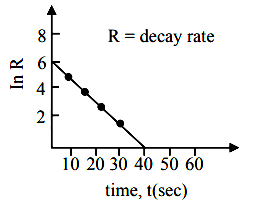
A radioactive nucleus $\mathrm{n}_2$ has 3 times the decay constant as compared to the decay constant of another radioactive nucleus $n_1$. If initial number of both nuclei are the same, what is the ratio of number of nuclei of $n_2$ to the number of nuclei of $n_1$, after one half-life of $n_1$ ?
Given below are two statements. One is labelled as Assertion (A) and the other is labelled as Reason (R).
Assertion (A) : The binding energy per nucleon is found to be practically independent of the atomic number A , for nuclei with mass numbers between 30 and 170 .
Reason (R) : Nuclear force is long range.In the light of the above statements, choose the correct answer from the options given below :
The energy E and momentum p of a moving body of mass m are related by some equation. Given that c represents the speed of light, identify the correct equation
Choose the correct nuclear process from the below options [ p : proton, n : neutron, $\mathrm{e}^{-}$: electron, $\mathrm{e}^{+}$: positron, $v:$ neutrino, $\bar{v}:$ antineutrino]
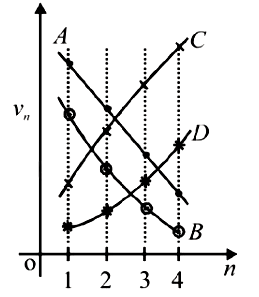
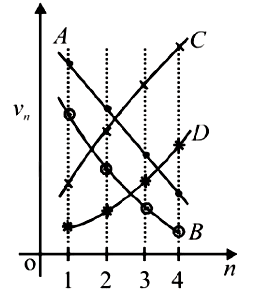
The frequency of revolution of the electron in Bohr's orbit varies with n, the principal quantum number as:
The number of spectral lines emitted by atomic hydrogen that is in the 4th energy level, is
Considering Bohr's atomic model for hydrogen atom :
(A) the energy of H atom in ground state is same as energy of $\mathrm{He}^{+}$ion in its first excited state.
(B) the energy of H atom in ground state is same as that for $\mathrm{Li}^{++}$ ion in its second excited state.
(C) the energy of H atom in its ground state is same as that of $\mathrm{He}^{+}$ion for its ground state.
(D) the energy of $\mathrm{He}^{+}$ion in its first excited state is same as that for $\mathrm{Li}^{++}$ion in its ground state.
Choose the correct answer from the options given below :
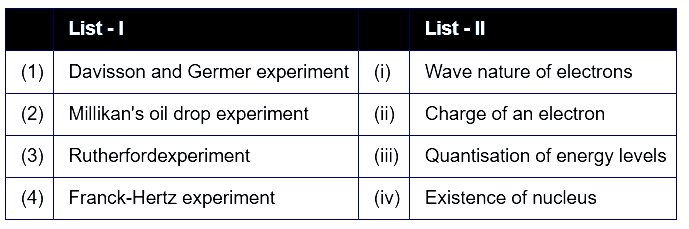
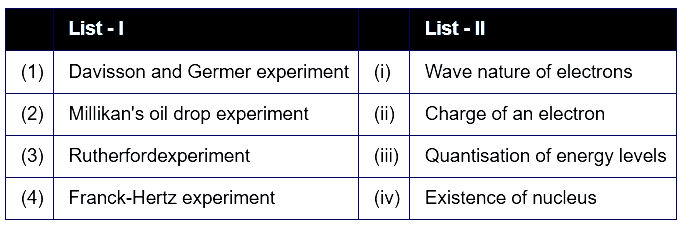
$$ \text { Match the LIST-I with LIST-II } $$
Given below are two statements: one is labelled as $\mathbf{A s s e r t i o n} \mathbf{A}$ and the other is labelled as Reason $\mathbf{R}$
Assertion A : The Bohr model is applicable to hydrogen and hydrogen-like atoms only.
Reason $\mathbf{R}$ : The formulation of Bohr model does not include repulsive force between electrons.
In the light of the above statements, choose the correct answer from the options given below
Considering the Bohr model of hydrogen like atoms, the ratio of the radius of $5^{\text {th }}$ orbit of the electron in $\mathrm{Li}^{2+}$ and $\mathrm{He}^{+}$is
Given below are two statements :
Statement (I) : The dimensions of Planck's constant and angular momentum are same.
Statement (II) : In Bohr's model electron revolve around the nucleus only in those orbits for which angular momentum is integral multiple of Planck's constant.
In the light of the above statements, choose the most appropriate answer from the options given below :
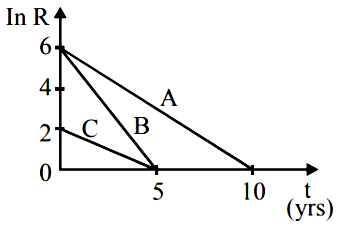
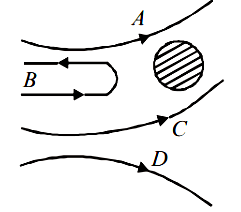
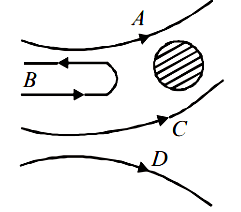
A radioactive material $P$ first decays into $Q$ and then $Q$ decays to non-radioactive material $R$. Which of the following figure represents time dependent mass of $P, Q$ and $R$ ?
For a hydrogen atom, the ratio of the largest wavelength of Lyman series to that of the Balmer series is
In a hydrogen like ion, the energy difference between the $2^{\text {nd }}$ excitation energy state and ground is 108.8 eV . The atomic number of the ion is:
Given below are two statements: one is labelled as Assertion (A) and the other is labelled as Reason (R).
Assertion (A): The density of the copper $(^ {64}_{29} \text{Cu})$ nucleus is greater than that of the carbon $(^ {12}_{6} \text{C})$ nucleus.
Reason (R): The nucleus of mass number A has a radius proportional to $ A^{1/3} $.
In the light of the above statements, choose the most appropriate answer from the options given below:
For a nucleus of mass number A and radius R, the mass density of nucleus can be represented as



 ×
×
 Bank
Bank


 SSC
SSC


 Railway


 State
State


 Other
Other


 Teaching


 Insurance


 Medical


 Engineering


 Defence


 GATE
GATE


 NTA CUET

 UPSC
UPSC

 MBA Entrance


 LAW
LAW

 ReNEET UG 2026
 SSC Selection Post (Phase 14) 2026
 RRB NTPC 2026
 SSC CGL Tier-I 2026
 SSC JE 2026
 SBI PO Prelims 2026
 SSC Steno Grade C & D 2026
 SBI Clerk Prelims 2026
 IBPS PO Prelims 2026
 IBPS Clerk Prelims 2026
 SSC CPO Tier I 2026
 NDA II 2026
 CDS II 2026


 Get latest Exam Updates