Please wait...
For a given Linear Programming problem, the objective function is
$$z=3 x+2 y$$
Subject to constraints are
$$\begin{aligned} & 4 x+3 y \leq 60 \\ & x \geq 3 \\ & y \leq 2 x \\ & y \geq 0 \end{aligned}$$
P is one of the corner points of the feasible region for the given Linear Programming problem. Then the coordinate of P is
Identify the final product $[Z]$ formed when Chlorobenzene undergoes the given series of reactions:
Match the metals in Column II with their characteristic properties given in Column I.
Convert Benzene $\rightarrow 3$-Bromophenol by choosing appropriate reagents [(i) to (v)] in the correct sequence.
(i) $\mathrm{NaNO}_2 / \mathrm{HCl}\left(0^{\circ} \mathrm{C}\right)$
(ii) Conc. $\mathrm{HNO}_3 / \mathrm{H}_2 \mathrm{SO}_4$
(iii) $\mathrm{H}_2 \mathrm{O} / 283 \mathrm{~K}$
(iv) $\mathrm{Fe} / \mathrm{HCl}$
(v) $\mathrm{Br} 2 / \mathrm{Fe}$
Two statements, One Assertion (A) and the other Reason (R) are given. Choose the right option.
Assertion: The rate constant $(\mathrm{k})$ for a chemical reaction gets nearly doubled for a $10^0$ rise in temperature.
Reason: The number of bimolecular collisions between reactant molecules increase with increase in temperature
What is the final product $[\mathrm{Z}]$ formed when the given reactions take place?
Two statements, one Assertion (A) and the other Reason (R) are given. Choose the correct option.
Assertion: Compound $[\mathrm{X}]$ reacts with Hydrazine in presence of $\mathrm{KOH} /$ Glycol to form the product $[\mathrm{Y}]$.
Reason: Reduction reaction occurs and Carbonyl group is reduced to Methylene group.
$$\mathrm{E}^0\left(\mathrm{Fe}^{3+} / \mathrm{Fe}^{2+}\right)=0.771 \mathrm{~V}$$
Both reactions (i) and (ii) give the same compound X as the major product. Identify X
(i). 3-Methylbut-1-ene $+\mathrm{HCl} \rightarrow \mathrm{X}$
(ii). Neopentyl alcohol $+\mathrm{HCl}\left(\right.$ anh. $\left.\mathrm{ZnCl}_2\right) \rightarrow \mathrm{X}$
Arrange the following compounds in the decreasing order of the molar conductivities of their aqueous solutions.
From the given covalent compounds (A to F) identify the pair of molecules which have:
(i) Two lone pairs of electrons on the central atom.
(ii) One lone pair of electrons on the central atom.
A. $\mathrm{SO}_2$ B. $\mathrm{ClF}_3$ C. $\mathrm{BF}_3$ D. $\mathrm{BrF}_5$ E. XeF 4 F. $\mathrm{SF}_6$
An organic compound $[\mathrm{X}]$ reacts with $\mathrm{H}_2 / \mathrm{Pd}-\mathrm{BaSO}_4$ to give compound $[\mathrm{Y}]$ which reduces Tollen's reagent and undergoes Cannizzaro's reaction. On rigorous oxidation of $[\mathrm{Y}]$ in presence of $\mathrm{KMnO}_4 / \mathrm{H}^{+}$Phthalic acid is the product obtained. What is $[\mathrm{X}]$ ?
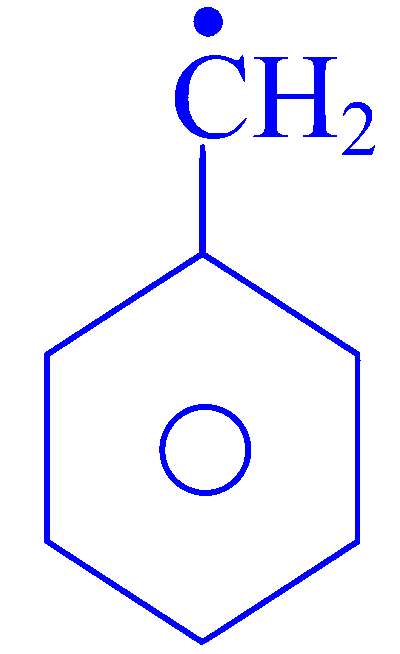
Arrange the following free radicals in the increasing order of their stability:
Match the coordination compounds in Column I having the given type of hybridisation of $\mathrm{M}^{\mathrm{n}+}$ ion and magnetic moment as given in Column II.
An unsaturated hydrocarbon $[\mathrm{A}]$ undergoes the following series of reactions. Identify $[\mathrm{A}]$.
Identify the compound which gives an optically active haloalkane on reaction with $\mathrm{H}_2$ / Ni on heating.
Arrange the following in the decreasing order of their $\mathrm{pK}_{\mathrm{a}}$ values.
Cyclohexanol undergoes a series of reactions as given. Identify compound (iv).
$\mathrm{C}_6 \mathrm{H}_{11} \mathrm{OH}+\mathrm{CrO}_3 \rightarrow(\mathrm{i})+\mathrm{C}_6 \mathrm{H}_5 \mathrm{MgI} \rightarrow(\mathrm{ii})+$ dil. $\mathrm{HCl} \rightarrow(\mathrm{iii})+$ Conc. $\mathrm{H}_3 \mathrm{PO}_4 \rightarrow(\mathrm{iv})$
Match the structures in Column I with their correct IUPAC names given in Column II.
Identify $[\mathrm{X}]$, the final product formed when 2 moles of Ethanal undergoes the following series of reactions with reagents [(i) to (iv)]
Assertion: Maltose, a disaccharide, is a reducing sugar and is obtained by the partial hydrolysis of starch in presence of the enzyme diastase.
Reason: Hydrolysis of one mole of Maltose gives one mole each of $\alpha-D-$ Glucose and $\beta-D-$ Fructose.
Which one of the following options represents the decreasing order of oxidation number of the central atom in:
$$\mathrm{Cr}_2 \mathrm{O}_7^{2-}, \mathrm{Cr} \mathrm{O}_2^{-}, \mathrm{MnO}_4^{-}, \mathrm{BrO}_3^{-}$$
What is the spin only magnetic moment of the metal ion in $\mathbf{P}$ and the oxidation number of Sulphur in the oxidised product Z ?
Assertion: 2-aminoethanoic acid and p-aminobenzene sulphonic acid can exist as Zwitter ions while p-aminobenzoic acid cannot.
Reason: When the acid group is a relatively strong proton donor and the $-\mathrm{NH}_2$ group is sufficiently basic it can accept a $\mathrm{H}^{+}$ion from the acid group to form the dipolar ion.
Match the reactions of Glucose given in Column I with the major product formed in the reaction as in Column II.
The following results were obtained during study of the reaction $2 \mathrm{NO}(\mathrm{g})+\mathrm{Cl}_2(\mathrm{~g}) \rightarrow 2 \mathrm{NOCl}(\mathrm{g})$. Determine the value of $[\mathrm{X}]$ in $\mathrm{mol} / \mathrm{L}$
Two statements, One Assertion [ A ] and the other Reason [ R ] are given. Identify the correct option
Assertion $[A]$ : The decreasing order of the acidic character of the following is $B>D>A>C$
Reason $[\mathbf{R}]$ : Fluorine has larger -I effect than Cl and Br .
The nuclear forces
a. are central forces, independent of the spin of the nucleons.
b. have a short-range dominant over a distance of about a few fermi
c. are stronger being hundred times stronger than that of electromagnetic forces.
d. are independent of the nuclear charge.
Which of the above is not true?
An ideal inductor is connected across a capacitor. Oscillations of energy $K$ are set up in the circuit. The capacitor plates are slowly drawn apart such that the frequency of oscillations is quadrupled. The work done in the process is
In a single slit Fraunhofer diffraction pattern obtained at normal incidence, at the angular position of the second diffraction minimum the phase difference (in radian) between the waves from the opposite edges of the slit is
A Si and a Ge diode has identical physical dimensions. The band gap in Si is larger than that in Ge. On applying identical reverse bias across these diodes,
For the charge configuration shown here, which of the following is not true?
Which, of the following is true of the Balmer series of the hydrogen spectrum?
a. The series is in the visible region.
b. The entire series falls in the ultraviolet region
c. The entire series falls in the infrared region
d. The series is partly in the visible region and partly in the infrared region
In the energy band diagram of a material shown below, open circles and filled circles denote holes and electrons respectively. The material is a
A bar magnet is oscillating in the earth's magnetic field with a period $T$. When the length of the bar magnet is doubled and its mass is quadrupled, the time period is $T_1$. The ratio of $T_1$ to $T$ is
A cylindrical tank 0.5 m in radius, rests on a platform 1.5 m high. Initially the tank is filled with water to a height of 2.5 m . A small plug whose area is $10^{-4} \mathrm{~m}^2$ is removed from an orifice located on the side of the tank at the bottom. The speed with which the water strikes the ground is: [Assume $g=10 \mathrm{~ms}^{-2}$ ]
A sample of an ideal gas is taken through the cyclic process ABCA as shown in figure below. It absorbs 60 J of heat during the part AB and rejects 80 J of heat during CA . There is no heat exchanged during the process $\mathrm{BC} . \mathrm{A}$ work of 40 J is done on the gas during the part BC . If the internal energy of the gas at A is 1450 J , then the work done by the gas during the part CA is: