Please wait...
If p, 1, q are in AP and p, 2, q are in GP, then which of the following statements is/are correct?
I. p, 4, q are in HP.
II. (1/p), (1/4), (1/q) are in AP.
Select the answer using the code given below.
यदि p, 1, q समांतर श्रेढ़ी में है और p, 2, q गुणोत्तर श्रेढ़ी में है, तो निम्नलिखित कथनों में से कौन-सा/कौन-से सही है/हैं?
I. p, 4, q हरात्मक श्रेढ़ी में है।
II. (1/p), (1/4), (1/q) समांतर श्रेढ़ी में है।
नीचे दिए गए कूट का प्रयोग कर सही उत्तर चुनिए।
If $\Delta = \begin{vmatrix} a & b & c \\ d & e & f \\ g & h & i \end{vmatrix} $
and A, B, C, D, G are the cofactors of the elements a, b, c, d, g respectively, then what is bB+cC−dD−gG equal to?
यदि $ \Delta = \begin{vmatrix} a & b & c \\ d & e & f \\ g & h & i \end{vmatrix} $
और A, B, C, D, G अवयवों a, b, c, d, g के क्रमशः सहखंड हैं, तो bB+cC−dD−gG किसके बराबर है?
. Consider the following statements in respect of the determinant
$ \Delta = \begin{vmatrix} k(k+2) & 2k+1 & 1 \\ 2k+1 & k+2 & 1 \\ 3 & 3 & 1 \end{vmatrix} $
I. Δ is positive if k>0.
II. Δ is negative if k<0.
III. Δ is zero if k=0.
How many of the statements given above are correct?
सारणिक के संदर्भ में निम्नलिखित कथनों पर विचार कीजिए:
I. Δ धनात्मक है, यदि k>0 है।
II. Δ ऋणात्मक है, यदि k<0 है।
III. Δ शून्य है, यदि k=0 है।
उपर्युक्त कथनों में से कितना/कितने सही है/हैं?
If $ \begin{vmatrix} 2 & 3+i & -1 \\ 3-i & 0 & i -1 \\ -1 &-1 -i & 1 \end{vmatrix} = A + iB $
where i= $\sqrt{-1}$ , then what is A+B equal to?
यदि $ \begin{vmatrix} 2 & 3+i & -1 \\ 3-i & 0 & i -1 \\ -1 &-1 -i & 1 \end{vmatrix} = A + iB $
जहाँ i= $\sqrt{-1 }$ है, तो A + B किसके बराबर है?
If A2+B2+C2=0, then what is the value of the following?
$\begin{vmatrix} 1& cosC& cosB\\ cosC&1&cosA \\ cosB&cosA&1 \end{vmatrix} $
यदि A2+B2+C2=0 है, तो निम्नलिखित का मान क्या है?
If ω is a non-real cube root of unity, then what is a root of the following equation?$ \begin{vmatrix} x+1 & \omega & \omega^2 \\ \omega & x+\omega^2 & 1 \\ \omega^2 & 1 & x+\omega \end{vmatrix} = 0 $
यदि ω इकाई का अवास्तविक घनमूल है, तो निम्नलिखित समीकरण का मूल क्या है?
$ \begin{vmatrix} x+1 & \omega & \omega^2 \\ \omega & x+\omega^2 & 1 \\ \omega^2 & 1 & x+\omega \end{vmatrix} = 0 $
If
$\begin{bmatrix} x & 1 & 1 \end{bmatrix} \begin{bmatrix} 1 & 2 & 3 \\ 4 & 5 & 6 \\ 7 & 8 & 9 \end{bmatrix} \begin{bmatrix} 1 \\ 1 \\ x \end{bmatrix} = \begin{bmatrix} 45 \end{bmatrix}$
then which one of the following is a value of x?
यदि
तो निम्नलिखित में से कौन-सा x का एक मान है?
$A = \begin{bmatrix} y & z & x \\ z & x & y \\ x & y & z \end{bmatrix} $
where x,y,z are integers, is an orthogonal matrix, then what is the value of x2+y2+z2?
$A = \begin{bmatrix} z & y & x \\ y & x & z \\ x & z & y \end{bmatrix}$
जहाँ x,y,z पूर्णांक है, एक लांबिक आव्यूह है, तो x2+y2+z2? का मान क्या है?
Consider the following in respect of a non-singular matrix M:
I. ∣M2∣=∣M∣2
II. ∣M∣=∣M−1∣
III. ∣M∣=∣MT∣
How many of the above are correct?
एक व्युत्क्रमणीय आव्यूह M के संदर्भ में, निम्नलिखित पर विचार कीजिए:
II. ∣M∣=∣M-1∣
उपर्युक्त में से कितने सही है?
If $A=\begin{bmatrix}x&y&z\\y&z&x\\z&x&y\end{bmatrix}$
where x,y,z are integers, is an orthogonal matrix, then what is A2 equal to?
यदि $A=\begin{bmatrix}x&y&z\\y&z&x\\z&x&y\end{bmatrix}$
जहाँ x,y,z पूर्णांक है, एक लांबिक आव्यूह है, तो A2 किसके बराबर है?
Consider the following statements:
I. The triangle is obtuse-angled triangle.
II. The sum of acute angles of the triangle is also acute.
Which of the statements given above is/are correct?
निम्नलिखित कथनों पर विचार कीजिए:
I. यह त्रिभुज एक अधिककोण त्रिभुज है।
II. इस त्रिभुज के न्यूनकोणों का योगफल भी न्यून है।
उपर्युक्त कथनों में से कौन-सा/कौन-से सही है?
I. The triangle is right-angled.
II. One of the sides of the triangle is 3 times the other.
III. The angles A, C and B of the triangle are in AP.
I. त्रिभुज समकोण त्रिभुज है।
II. त्रिभुज की एक भुजा, दूसरी भुजा की 3 गुनी है।
III. त्रिभुज के कोण A, C और B AP में हैं।
उपर्युक्त कथनों में से कौन-सा/से सही है?
Consider the following statements with respect to a vector d = (a × b) × c:
I. d is coplanar with a and b.
II. d is perpendicular to c.
सदिश d = (a × b) × c के संबंध में निम्नलिखित कथनों पर विचार करें:
I.d, a और b के साथ सहसमतलीय है।
II.d,c पर लंबवत है।
उपर्युक्त में से कौन सा/से कथन सही है/हैं?
The position vectors of three points A, B and C are a, b and c respectively such that What is AB:BC equal to?
तीन बिंदुओं A, B और C के स्थिति सदिश क्रमशः और इस प्रकार हैं कि है। तब AB:BC किसके बराबर है?
I. The function is continuous at x=−1.
II. The function is differentiable at x=1.
I. x=−1 पर फलन संतत है।
II. x=1 पर फलन अवकलनीय है।
What is ∫ydx equal to?
where c is the constant of integration.
∫ydx किसके बराबर है?
जहाँ c समाकलन-अचर है।
निम्नलिखित कथनों पर विचार कीजिए :L f(x) एक वर्धमान फलन है।II. f(x) का स्थानीय अधिकतम मान x = 0 पर है I



 ×
×
 Bank
Bank


 SSC
SSC


 Railway


 State
State


 Other
Other


 Teaching


 Insurance


 Medical


 Engineering


 Defence


 GATE
GATE


 NTA CUET

 UPSC
UPSC

 MBA Entrance


 LAW
LAW

 ReNEET UG 2026
 CUET UG 2026
 UP Police Constable 2026
 SSC Selection Post (Phase 14) 2026
 SSC GD 2025-26
 RRB NTPC 2026
 SSC CGL Tier-I 2026
 SSC JE 2026
 UPSC (CSE) 2026
 SBI PO Prelims 2026
 SSC Steno Grade C & D 2026
 SBI Clerk Prelims 2026
 IBPS PO Prelims 2026
 IBPS Clerk Prelims 2026
 SSC CPO Tier I 2026

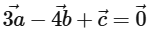 What is AB:BC equal to?


 Get latest Exam Updates