Please wait...

IBPS Clerk 2024 Reasoning Test - 7
Menu grid icon
Result Result point icon
IBPS Clerk 2024 Reasoning Test - 7
  • Goals icon

    /

    Score
  • Trophy icon

    -

    Rank
White alarm icon Time Taken: -
Result frame illustration
  • Question 1/10
    1 / -0.25

    Directions For Questions

    Directions: Study the following information and answer the given questions.

    Eight people P, Q, R, S, T, U, V, and W are sitting in a straight line but not necessarily in the same order. some of them are facing North while the remaining are facing south direction. U sits fourth to the right of Q. V sits second to the left of T. W is not an immediate neighbor of Q. Persons sitting at the extreme ends face the same direction. The immediate neighbor of P faces the same direction as V. Only three person sits between P and R. W faces north direction. Both the immediate neighbor of V face the same direction. V sits third to the right of Q. R faces south direction. Q and U are not sitting at the extreme end of the line. P sits second to the left of U. Only one of the immediate neighbors of W faces North direction. Q and U face opposite directions to each other. 

    ...view full instructions


    What is position of T with respect to the one who sit second to the right of U?

    Solutions

    People: P, Q, R, S, T, U, V, and W.

    1). U sits fourth to the right of Q.

    2). Q and U are not sitting at the extreme end of the line.

    3). Q and U face the opposite direction to each other.

    On Combining these 3 statements, we get 4 possible cases.

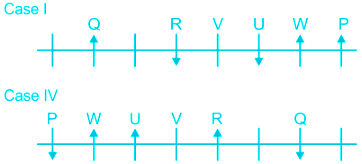
    Case I: When Q is facing North and sitting 2nd from the extreme end, so U will face South.

    Case II: When Q is facing North and sitting 3rd from the extreme end, so U will face South.

    Case III: When Q is facing South and sitting 3rd from the extreme end, so U will face North.

    Case IV: When Q is facing South and sitting 2nd from the extreme end, so U will face North.
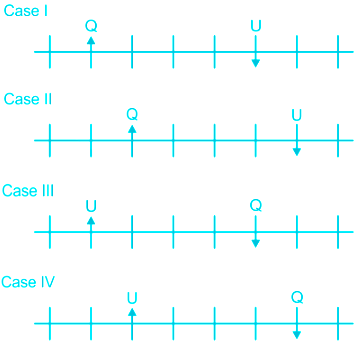
    4). V sits third to the right of Q.

    By this statement, U and V will be immediate neighbor to each other.
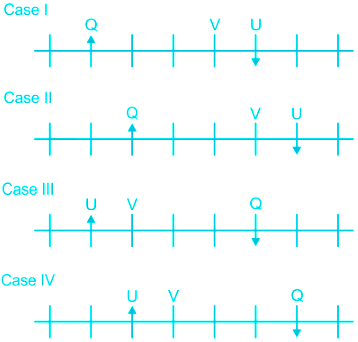
    5). P sits second to the left of U.

    From this statement, our Case II and Case III will be eliminated, as there will be no place for the sitting of P.
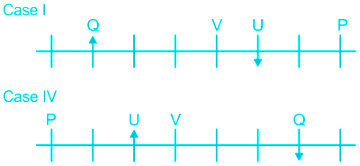
    6). Only three people sit between P and R.

    7). Both the immediate neighbor of V faces the same direction.

    From this 2 statement, we know that in Case I, R and U will face South direction and in Case IV, R and U will face North direction.
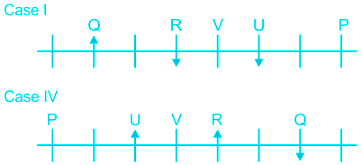
    8). W is not an immediate neighbor of Q.

    9). W faces north direction.

    10).  Only one of the immediate neighbors of W faces north direction. 

    On combining these three sentences, we get that:

    In Case I: W will be immediate neighbor of U and P, and P will face in North direction as U is already facing in South direction.

    In Case IV: W will be immediate neighbor of U and P, and P will face in South direction as U is already facing in North direction.
    11). V sits second to the left of T.

    12). People sitting at the extreme ends face the same direction.

    On Combining these two statements, we get:

    Case I: T will be immediate neighbor of Q and R and T will face in South direction.

    Case IV:  T will be immediate neighbor of Q and R and T will face in North direction.
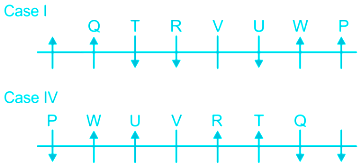
    13). R faces south directions.

    From this statement, our case IV get eliminated.

    14). The immediate neighbor of P faces the same directions as V.

    This implies V faces north direction as P neighbor's W face north direction.

    Since S is left, thus it occupies the left position and will face in North direction, because people sitting in Extreme ends are facing in same direction.

    The final arrangement:

    Now, R is sitting second to the right of U.

    And R is facing south direction, so T is in immediate right position from R.

    Hence, T is at immediate right position.

  • Question 2/10
    1 / -0.25

    Directions For Questions

    Directions: Study the following information and answer the given questions.

    Eight people P, Q, R, S, T, U, V, and W are sitting in a straight line but not necessarily in the same order. some of them are facing North while the remaining are facing south direction. U sits fourth to the right of Q. V sits second to the left of T. W is not an immediate neighbor of Q. Persons sitting at the extreme ends face the same direction. The immediate neighbor of P faces the same direction as V. Only three person sits between P and R. W faces north direction. Both the immediate neighbor of V face the same direction. V sits third to the right of Q. R faces south direction. Q and U are not sitting at the extreme end of the line. P sits second to the left of U. Only one of the immediate neighbors of W faces North direction. Q and U face opposite directions to each other.

    ...view full instructions


    How many people are facing south direction in the final arrangements?

    Solutions

    People: P, Q, R, S, T, U, V, and W.

    1). U sits fourth to the right of Q.

    2). Q and U are not sitting at the extreme end of the line.

    3). Q and U face the opposite direction to each other.

    On Combining these 3 statements, we get 4 possible cases.

    Case I: When Q is facing North and sitting 2nd from the extreme end, so U will face South.

    Case II: When Q is facing North and sitting 3rd from the extreme end, so U will face South.

    Case III: When Q is facing South and sitting 3rd from the extreme end, so U will face North.

    Case IV: When Q is facing South and sitting 2nd from the extreme end, so U will face North.

    4). V sits third to the right of Q.

    By this statement, U and V will be immediate neighbor to each other.

    5). P sits second to the left of U.

    From this statement, our Case II and Case III will be eliminated, as there will be no place for the sitting of P.

    6). Only three people sit between P and R.

    7). Both the immediate neighbor of V faces the same direction.

    From this 2 statement, we know that in Case I, R and U will face South direction and in Case IV, R and U will face North direction.

    8). W is not an immediate neighbor of Q.

    9). W faces north direction.

    10).  Only one of the immediate neighbors of W faces north direction. 

    On combining these three sentences, we get that:

    In Case I: W will be immediate neighbor of U and P, and P will face in North direction as U is already facing in South direction.

    In Case IV: W will be immediate neighbor of U and P, and P will face in South direction as U is already facing in North direction.

    11). V sits second to the left of T.

    12). People sitting at the extreme ends face the same direction.

    On Combining these two statements, we get:

    Case I: T will be immediate neighbor of Q and R and T will face in South direction.

    Case IV:  T will be immediate neighbor of Q and R and T will face in North direction.

    13). R faces south directions.

    From this statement, our case IV get eliminated.

    14). The immediate neighbor of P faces the same directions as V.

    This implies V faces north direction as P neighbor's W face north direction.

    Since S is left, thus it occupies the left position and will face in North direction, because people sitting in Extreme ends are facing in same direction.

    The final arrangement:

    Hence, Only three people face south direction.

  • Question 3/10
    1 / -0.25

    Directions For Questions

    Directions: Study the following information and answer the given questions.

    Eight people P, Q, R, S, T, U, V, and W are sitting in a straight line but not necessarily in the same order. some of them are facing North while the remaining are facing south direction. U sits fourth to the right of Q. V sits second to the left of T. W is not an immediate neighbor of Q. Persons sitting at the extreme ends face the same direction. The immediate neighbor of P faces the same direction as V. Only three person sits between P and R. W faces north direction. Both the immediate neighbor of V face the same direction. V sits third to the right of Q. R faces south direction. Q and U are not sitting at the extreme end of the line. P sits second to the left of U. Only one of the immediate neighbors of W faces North direction. Q and U face opposite directions to each other.

    ...view full instructions


    How many people sits between the one who sits immediate left of Q and the one who sits immediate right of V?

    Solutions

    People: P, Q, R, S, T, U, V, and W.

    1). U sits fourth to the right of Q.

    2). Q and U are not sitting at the extreme end of the line.

    3). Q and U face the opposite direction to each other.

    On Combining these 3 statements, we get 4 possible cases.

    Case I: When Q is facing North and sitting 2nd from the extreme end, so U will face South.

    Case II: When Q is facing North and sitting 3rd from the extreme end, so U will face South.

    Case III: When Q is facing South and sitting 3rd from the extreme end, so U will face North.

    Case IV: When Q is facing South and sitting 2nd from the extreme end, so U will face North.

    4). V sits third to the right of Q.

    By this statement, U and V will be immediate neighbor to each other.

    5). P sits second to the left of U.

    From this statement, our Case II and Case III will be eliminated, as there will be no place for the sitting of P.

    6). Only three people sit between P and R.

    7). Both the immediate neighbor of V faces the same direction.

    From this 2 statement, we know that in Case I, R and U will face South direction and in Case IV, R and U will face North direction.

    8). W is not an immediate neighbor of Q.

    9). W faces north direction.

    10).  Only one of the immediate neighbors of W faces north direction. 

    On combining these three sentences, we get that:

    In Case I: W will be immediate neighbor of U and P, and P will face in North direction as U is already facing in South direction.

    In Case IV: W will be immediate neighbor of U and P, and P will face in South direction as U is already facing in North direction.

    11). V sits second to the left of T.

    12). People sitting at the extreme ends face the same direction.

    On Combining these two statements, we get:

    Case I: T will be immediate neighbor of Q and R and T will face in South direction.

    Case IV:  T will be immediate neighbor of Q and R and T will face in North direction.

    13). R faces south directions.

    From this statement, our case IV get eliminated.

    14). The immediate neighbor of P faces the same directions as V.

    This implies V faces north direction as P neighbor's W face north direction.

    Since S is left, thus it occupies the left position and will face in North direction, because people sitting in Extreme ends are facing in same direction.

    The final arrangement:

    S is sitting in immediate left of Q

    U is sitting in immediate right of V.

    Hence, Four people sit between them.

  • Question 4/10
    1 / -0.25

    Directions For Questions

    Directions: Study the following information and answer the given questions.

    Eight people P, Q, R, S, T, U, V, and W are sitting in a straight line but not necessarily in the same order. some of them are facing North while the remaining are facing south direction. U sits fourth to the right of Q. V sits second to the left of T. W is not an immediate neighbor of Q. Persons sitting at the extreme ends face the same direction. The immediate neighbor of P faces the same direction as V. Only three person sits between P and R. W faces north direction. Both the immediate neighbor of V face the same direction. V sits third to the right of Q. R faces south direction. Q and U are not sitting at the extreme end of the line. P sits second to the left of U. Only one of the immediate neighbors of W faces North direction. Q and U face opposite directions to each other.

    ...view full instructions


    Which of the following statements are correct?

    Solutions

    People: P, Q, R, S, T, U, V, and W.

    1). U sits fourth to the right of Q.

    2). Q and U are not sitting at the extreme end of the line.

    3). Q and U face the opposite direction to each other.

    On Combining these 3 statements, we get 4 possible cases.

    Case I: When Q is facing North and sitting 2nd from the extreme end, so U will face South.

    Case II: When Q is facing North and sitting 3rd from the extreme end, so U will face South.

    Case III: When Q is facing South and sitting 3rd from the extreme end, so U will face North.

    Case IV: When Q is facing South and sitting 2nd from the extreme end, so U will face North.

    4). V sits third to the right of Q.

    By this statement, U and V will be immediate neighbor to each other.

    5). P sits second to the left of U.

    From this statement, our Case II and Case III will be eliminated, as there will be no place for the sitting of P.

    6). Only three people sit between P and R.

    7). Both the immediate neighbor of V faces the same direction.

    From this 2 statement, we know that in Case I, R and U will face South direction and in Case IV, R and U will face North direction.

    8). W is not an immediate neighbor of Q.

    9). W faces north direction.

    10).  Only one of the immediate neighbors of W faces north direction. 

    On combining these three sentences, we get that:

    In Case I: W will be immediate neighbor of U and P, and P will face in North direction as U is already facing in South direction.

    In Case IV: W will be immediate neighbor of U and P, and P will face in South direction as U is already facing in North direction.

    11). V sits second to the left of T.

    12). People sitting at the extreme ends face the same direction.

    On Combining these two statements, we get:

    Case I: T will be immediate neighbor of Q and R and T will face in South direction.

    Case IV:  T will be immediate neighbor of Q and R and T will face in North direction.

    13). R faces south directions.

    From this statement, our case IV get eliminated.

    14). The immediate neighbor of P faces the same directions as V.

    This implies V faces north direction as P neighbor's W face north direction.

    Since S is left, thus it occupies the left position and will face in North direction, because people sitting in Extreme ends are facing in same direction.

    The final arrangement:

    Hence, Only One people sit between V and W is the correct statement.

  • Question 5/10
    1 / -0.25

    Directions For Questions

    Direction: Study the following information to answer the given questions:

    Eight persons I, J, K, L, M, N, O, and P were born in different months among June, July, August, and September but not necessarily in the same order. Each of them was born on either 10th or 16th of the month. Each of them was born in the same year. No two persons were born on the same day.

    M was born after I, who was born after P. L was born just before J, and both were born in the month, which has 30 days. N was born in July. K was born on 10th September. Two persons were born between N and O.

    ...view full instructions


    Who was born on 16th September?

    Solutions

    Persons: I, J, K, L, M, N, O, and P.

    1) K was born on 10th September.

    2) N was born in July.

    3) Two persons were born between N and O. So, O must have born on either 16th August or 10th June.

    4) L was born just before J and both were born in the month, which has 30 days. So, case 2 would be invalid as it contradicts the given statement.

    5) M was born after I, who was born after P.

    Hence, M was born on 16th September.

  • Question 6/10
    1 / -0.25

    Directions For Questions

    Direction: Study the following information to answer the given questions:

    Eight persons I, J, K, L, M, N, O, and P were born in different months among June, July, August, and September but not necessarily in the same order. Each of them was born on either 10th or 16th of the month. Each of them was born in the same year. No two persons were born on the same day.

    M was born after I, who was born after P. L was born just before J, and both were born in the month, which has 30 days. N was born in July. K was born on 10th September. Two persons were born between N and O.

    ...view full instructions


    Who was born just after J?

    Solutions

    Persons: I, J, K, L, M, N, O, and P.

    1) K was born on 10th September.

    2) N was born in July.

    3) Two persons were born between N and O. So, O must have born on either 16th August or 10th June.

    4) L was born just before J and both were born in the month, which has 30 days. So, case 2 would be invalid as it contradicts the given statement.

    5) M was born after I, who was born after P.

    Hence, N was born just after J.

  • Question 7/10
    1 / -0.25

    Directions For Questions

    Direction: Study the following information to answer the given questions:

    Eight persons I, J, K, L, M, N, O, and P were born in different months among June, July, August, and September but not necessarily in the same order. Each of them was born on either 10th or 16th of the month. Each of them was born in the same year. No two persons were born on the same day.

    M was born after I, who was born after P. L was born just before J, and both were born in the month, which has 30 days. N was born in July. K was born on 10th September. Two persons were born between N and O.

    ...view full instructions


    Who among the following is the oldest?

    Solutions

    Persons: I, J, K, L, M, N, O, and P.

    1) K was born on 10th September.

    2) N was born in July.

    3) Two persons were born between N and O. So, O must have born on either 16th August or 10th June.

    4) L was born just before J and both were born in the month, which has 30 days. So, case 2 would be invalid as it contradicts the given statement.

    5) M was born after I, who was born after P.

    Hence, L is the oldest.

  • Question 8/10
    1 / -0.25

    Directions For Questions

    Direction: Study the following information to answer the given questions:

    Eight persons I, J, K, L, M, N, O, and P were born in different months among June, July, August, and September but not necessarily in the same order. Each of them was born on either 10th or 16th of the month. Each of them was born in the same year. No two persons were born on the same day.

    M was born after I, who was born after P. L was born just before J, and both were born in the month, which has 30 days. N was born in July. K was born on 10th September. Two persons were born between N and O.

    ...view full instructions


    How many persons were born between P and O?

    Solutions

    Persons: I, J, K, L, M, N, O, and P.

    1) K was born on 10th September.

    2) N was born in July.

    3) Two persons were born between N and O. So, O must have born on either 16th August or 10th June.

    4) L was born just before J and both were born in the month, which has 30 days. So, case 2 would be invalid as it contradicts the given statement.

    5) M was born after I, who was born after P.

    Hence, one person was born between P and O.

  • Question 9/10
    1 / -0.25

    Directions For Questions

    Direction: Study the following information to answer the given questions:

    Eight persons I, J, K, L, M, N, O, and P were born in different months among June, July, August, and September but not necessarily in the same order. Each of them was born on either 10th or 16th of the month. Each of them was born in the same year. No two persons were born on the same day.

    M was born after I, who was born after P. L was born just before J, and both were born in the month, which has 30 days. N was born in July. K was born on 10th September. Two persons were born between N and O.

    ...view full instructions


    On which day was O born?

    Solutions

    Persons: I, J, K, L, M, N, O, and P.

    1) K was born on 10th September.

    2) N was born in July.

    3) Two persons were born between N and O. So, O must have born on either 16th August or 10th June.

    4) L was born just before J and both were born in the month, which has 30 days. So, case 2 would be invalid as it contradicts the given statement.

    5) M was born after I, who was born after P.

    Hence, O was born on 16th August.

  • Question 10/10
    1 / -0.25

    In these Questions, Relationship between different elements is shown in the statements. These Statements are followed by 2 Conclusions. Marks Answer as option given.

    Statements:

    A > E ≥ G < K; D ≥ K ≤ L

    Conclusions:

    I. G < L

    II. D > G 

    Solutions

    Combined Statement: A > E ≥ G < K ≤ D and A > E ≥ G < K ≤ L

    I. G < L → True (As, G < K ≤ L Here, in between G and L common sign is < towards L. So, G < L)

    II. D > G → True As, G < K ≤ D Here, in between D and G common sign is < towards D. So, D > G)

    Hence, both I and II follows.

Close button icon
User Profile
-

Correct (-)

Wrong (-)

Skipped (-)


  • 1
  • 2
  • 3
  • 4
  • 5
  • 6
  • 7
  • 8
  • 9
  • 10
Mockers logo Get latest Exam Updates
& Study Material Alerts!
No, Thanks
Arrow pointer icon
Click on Allow to receive notifications
Notification bell icon ×
Open Now
