Please wait...

SSC GD 2025 General Study Test - 2
Menu grid icon
Result Result point icon
SSC GD 2025 General Study Test - 2
  • Goals icon

    /

    Score
  • Trophy icon

    -

    Rank
White alarm icon Time Taken: -
Result frame illustration
  • Question 1/10
    2 / -0.5

    One horse power is equals to

    Solutions

    Power of a machine is the rate of doing work or rate at which it can perform work.
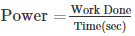
    The absolute unit of power is Watt (W).

    1 Watt = 1J/s

    The practical unit of power is the Horse Power (H.P). One Horse power is the amount of work a standard horse can do in one second.

    • 1 Metric H.P = 735.5 Watts
    • 1 British H.P = 746 Watts

    Horsepower is defined by Scottish engineer James Watt in the eighteenth century.

  • Question 2/10
    2 / -0.5

    Blue Revolution was first launched in India during which of the following Five Year Plans?

    Solutions

    The correct answer is 7th Five Year Plan.

    Key Points

    • BLUE REVOLUTION
      • The Blue Revolution was first launched in India as the 'Nili Kranti Mission' during the 7th Five Year Plan (1985-1990).
      • Fish Farmers Development  Agency (FFDA) was sponsored by the central government.
      • The Intensive Marine Fisheries Program was subsequently launched during the 8th Five Year Plan (1992-97).
      • As a result, the fishing harbors were later established over time in Vishakhapatnam, Kochi, Tuticorin, Porbandar, and Port Blair.
      • The scheme was restructured by the Ministry of Agriculture and Farmers Welfare along with the Department of Animal Husbandry, Dairying & Fisheries into 'Blue Revolution' by merging it with the other ongoing schemes.
      • The scheme was controlled by the National Fisheries Development Board (NFDB).
      • Following were the objectives of the Blue Revolution:
        • ​To triple the production in the marine sector by the year 2020.
        • Utilization of new technologies to transform the fisheries sector into a modern industry.
        • To double the income of fishers by improving the post-harvest activities like marketing through e-commerce, etc.
        • To promote the economically weaker sections of the society.
        • To encourage entrepreneurship development, private investment, and Public-Private Partnership (PPP) in the fisheries industry.

    Additional Information

    • Other important revolutions related to the agriculture sector are
      • Pink Revolution - Meat and Poultry sector; Onion production, Pharmaceuticals, and Prawn production
      • White Revolution - Increasing Milk production
      • Yellow Revolution - Increasing Edible Oilseeds production
      • Green Revolution - Increasing Foodgrains production
      • Golden Revolution - Increasing Horticulture and Honey production
      • Golden Fibre Revolution - Increasing Jute Production
  • Question 3/10
    2 / -0.5

    Which instruments made in Miraj have received Geographical Indication (GI) tags?

    Solutions

    The correct answer is Sitar and Tanpura

    In News

    • Made-in-Miraj sitars and tanpuras received geographical indication (GI) tags, highlighting the unique craftsmanship of string instruments in Miraj.

    Key Points

    • Craftsmen in Miraj have been renowned for their exceptional sitars and tanpuras for nearly 200 years, contributing to the town's musical legacy.
    • The GI tags were granted on March 30, distinguishing Miraj Musical Instrument Cluster for sitar and Soultune Musical Instrument Producer Company for tanpura.
    • Mohsin Mirajkar, head of the Miraj Musical Instrument Cluster, expressed that the GI tags would enhance Miraj's identity as a "music city" exporting string instruments.
    • Mubin Mirajkar, head of Soultune Musical Instrument Producer Company, highlighted the usage of locally available wood and thick-skinned pumpkin gourds from specific areas for crafting the instruments.
    • Approximately 25 families of hereditary craftsmen, spanning multiple generations, continue to specialize in making various string musical instruments in Miraj.
    • Instruments crafted by Miraj craftsmen include tanpura, sitar, dilruba, sarangi, taus, rudraveena, and surbahar, showcasing the town's rich musical heritage.
  • Question 4/10
    2 / -0.5

    Who was appointed as the Lokpal chairperson in India in February, 2024?

    Solutions

    The correct answer is Justice A M Khanwilkar.

    In News

    • A M Khanwilkar was appointed as the Lokpal chairperson in India.

    Key Points

    • He is a former judge of the Supreme Court, having retired in July 2022.
    • The appointment was made by the Rashtrapati Bhavan, according to a communiqué.
    • Additionally, former high court judges Lingappa Narayana Swamy, Sanjay Yadav, and Ritu Raj Awasthi were appointed as judicial members of the Lokpal.
    • Sushil Chandra, Pankaj Kumar, and Ajay Tirkey were appointed as non-judicial members of the anti-corruption ombudsman.
    • This appointment marks a significant development in India's anti-corruption efforts, ensuring effective oversight and accountability.

    Additional Information

    • THE LOKPAL AND LOKAYUKTAS ACT, 2013
      • ​An Act to provide for the establishment of a body of Lokpal for the Union and Lokayukta for States to inquire into allegations of corruption against certain public functionaries and for matters connected therewith or incidental thereto.
      • It extends to the whole of India.
      • It shall apply to public servants in and outside India.
      • ESTABLISHMENT OF LOKPAL
        • ​Lokpal is a multi-member body, that consists of one chairperson and a maximum of 8 members.
        • A Chairperson, who is or has been a Chief Justice of India or is or has been a Judge of the Supreme Court or an eminent person who fulfills the eligibility specified in clause (b) of sub-section (3);
        • Such number of Members, not exceeding eight out of whom fifty percent. shall be Judicial Members: Provided that not less than fifty percent. of the Members of the Lokpal shall be from amongst the persons belonging to the Scheduled Castes, the Scheduled Tribes, Other Backward Classes, Minorities and women.
      • Appointment of Chairperson and Members on recommendations of Selection Committee.
        • The Chairperson and Members shall be appointed by the President after obtaining the recommendations of a Selection Committee consisting of the
          • Prime Minister—Chairperson;
          • the Speaker of the House of the People—Member;
          • the Leader of Opposition in the House of the People—Member;
          • the Chief Justice of India or a Judge of the Supreme Court nominated by him—Member;
          • one eminent jurist, as recommended by the Chairperson and Members to be nominated by the President—Member
      • The term of office for Lokpal Chairman and Members is 5 years or till the age of 70 years.
      • Jurisdiction of Lokpal includes Prime Minister, Ministers, members of Parliament, Groups A, B, C and D officers and officials of Central Government.
  • Question 5/10
    2 / -0.5

    "Indica" which is an account of Mauryan India was authored by

    Solutions

    Indica is written by Megasthenes.

    • Megasthenes stayed in the Mauryan Capital Pataliputra for five years.
    • Whatever he saw during that time in India is given in detail in this book. 
    • From this book, we came to know about Chandragupta Maurya's Palace, capital, military organization, town planning, and Indian society.

    Additional Information

    • Fa-Hein was the first traveler who visited India from China.
      • He studied the Sanskrit language for about three years in the city of Patliputra.
      • He has written about the culture of Buddhism in India and the Gupta Empire in his book ‘Record of the Buddhistic Kingdoms'.
      • Fa-Hien wrote about India in his book Fo-kwo-ki (Travels of Fa-hien).
    • During the reign of Harshvardhana who was a member of the Vardhana dynasty, the famous Chinese traveler Hiuen Tsang came to India.
      • He was a Chinese Buddhist monk, scholar, translator, and traveler who came to India in the seventh century.
      • The “Great Tang Records on the Western Regions” is a book written by him which describes his travels that took place between the years 626 and 645.
      • During his journey, he visited many sacred Buddhist sites of Pakistan, India, Nepal, and Bangladesh.
  • Question 6/10
    2 / -0.5

    In which year did India first participate in the Olympic games?

    Solutions

    The correct answer is 1900.

    Key Points

    • India first participated in the Olympic Games in 1900.
    • The International Olympic Committee is a governing body of the Olympics.
    • The first modern Olympics were held in 1896 in Athens, Greece.
    • Norman Pritchard represented India at the 1900 Olympics, making it the nation’s first Olympic appearance. India sent its first contingent at the 1920 Olympics.
    • India first sent a team to the Summer Olympic Games in 1920.
    • India won its first gold medal in Hockey at Amsterdam Olympics 1928 and until 1956 Indian men's Hockey team remained unbeaten in Olympics.
    • India’s last gold medal in Hockey was in the year 1980 Moscow Olympics.
    • In the 1952 Summer Olympics wrestler K.D. Jadhav won the first individual medal for independent India.
    • Milkha Singh is the first Indian athlete to reach the Olympic finals in Athletics.
  • Question 7/10
    2 / -0.5

    Which Indian state is the largest bauxite producing state?

    Solutions

    The correct answer is Odisha.

    • Odisha is the largest bauxite producing state in India.
      • Odisha consists of more than 50% of India's resources of bauxite.
      • Bauxite is an ore of aluminum.
      • Bauxite deposits are formed by the decomposition of a wide variety of rocks that consists of aluminium silicates.
      • Major bauxite producing areas are Odisha, Jharkhand, Chhattisgarh, Madhya Pradesh, Gujarat, Maharashtra, and Tamil Nadu
      • Bauxite is mainly used to produce alumina through the Bayer process.
    • Important bauxite mines in India are:
      • Bilaspur & Maikal Hills.
      • Singhbhum.
      • Jamnagar.
      • Balangir.
      • Bargarh.
      • Koraput.
      • Kalahandi.
      • Sambalpur.
      • Sundergarh.

    Additional Information

  • Question 8/10
    2 / -0.5

    Which Indian mass movement began with the famous 'Dandi March' of Mahatma Gandhi?

    Solutions

    The correct answer is the Civil Disobedience Movement.

    Important Points

    • The Salt March or Dandi March was started on 12th March 1930 from Sabarmati Ashram and reached Dandi on 6th April 1930.
    • They covered 240 miles in 24 days.
    • Gandhiji violated the salt law by making salt from seawater. 
    • It is also known as the Salt Satyagraha or Civil Disobedience Movement.
    • Lord Irwin was viceroy during the launch of the Civil Disobedience Movement.
    • Sarojini Naidu was among the leaders who accompanied Mahatma Gandhi during the Dandi March

    Additional Information

    Khilafat Movement (1919 AD-1922 AD):

    • The Ali Brothers–Mohammad Ali and Shaukat Ali–launched an anti-British movement in 1919.
    • The movement was for the restoration of the Khilafat Movement.
    • Maulana Abul Kalam Azad also led the movement.
    • It was supported by Mahatma Gandhi and INC.
    • On October 17, 1919, ‘Khilafat Day’ was celebrated

    Non-Co-operation Movement:

    • The movement was launched formally on 1 August, 1920, by Gandhiji.
    • He announced his plan to start Non-Cooperation with the government as a series to the Rowlatt Act, Jallianwala Bagh massacre, and the Khilafat Movement.
    • The main purpose of non-cooperation was moved by C.R. Das and approved by the Indian National Congress at the Nagpur session in December, 1920.
    • The programs of the Non-Cooperation Movement were:
      • Surrender of titles and honorary positions.
      • Resignation of membership from the local bodies.
      • Boycott of elections included under the provisions of the 1919 Act.
      • Boycott of government functions.
      • Boycott of courts, government schools, and colleges.
      • Boycott of foreign goods.
      • Endowment of national schools, colleges, and private panchayat courts.
      • Popularizing swadeshi goods and khadi.​

    The Quit India Movement

    • Also known as the India August Movement or August Kranti.
    • It was officially launched by the Indian National Congress (INC) led by Mahatma Gandhi on 8 August 1942.
    • The movement gave the slogan Quit India’ or ‘Bharat Chodo’.
    • Gandhi ji gave the slogan to the people – ‘Do or die’.
    • In line with the Congress ideology, it was supposed to be a peaceful non-violent movement aimed at urging the British to grant India independence.
    • The Quit India Resolution was passed by the Congress Working Committee on 8 August 1942 in Bombay. Gandhi ji was named the movement’s leader.
  • Question 9/10
    2 / -0.5

    Dairy comes under which sector of economic activity?

    Solutions

    The correct answer is Primary sector.

    Key Points:

    • Activities that generate income are termed as economic activities.
    • On the basis of economic activities, the Indian economy can be divided into 3 major sectors that are the primary sector, the secondary sector, and the tertiary sector.
    • Dairy comes under the primary sector.
    • Primary sector: Primary activities are directly dependent on the environment as these refer to the utilization of the earth’s resources. It, thus includes hunting and gathering, pastoral activities, fishing, apiculture, etc.
    • Secondary sector: Secondary activities add value to natural resources by transforming raw materials into valuable products. Therefore, they are concerned with manufacturing, processing and construction industries. For eg: Shoe factory.
    • Tertiary sector: Tertiary activities include both production and exchange. The production involves the ‘provision’ of services that are consumed. The exchange involves trade, transport and communication facilities that are used to overcome distance. For eg: Consultancy.
  • Question 10/10
    2 / -0.5

    Chlorophyll absorbs _________ wavelengths of the sunlight.

    Solutions

    The correct answer is -red and blue.

    Key Points

    • Chlorophyll
      • Chlorophyll is the pigment found abundantly in green plants.
      • It absorbs most efficiently in the blue and red regions of the visible light spectrum.
      • Sunlight contains a large spectrum of light from red to blue spectrum, including green light.
      • Chlorophyll absorbs light in the
        • blue region of the spectrum the most, with peaks around 450 and 650 nanometers
        • The absorbed red light with a peak at 700 nanometers.
      • The green region of the spectrum is reflected, giving chlorophyll its green color.
      • Chlorophyll a and b are the most abundant types of chlorophyll.
    • Other pigments found in plants, such as carotenoids and phycobilins, also absorb light in different regions of the spectrum
    • If the plants have large amounts of carotenoids, they appear red as they reflect red light.
Close button icon
User Profile
-

Correct (-)

Wrong (-)

Skipped (-)


  • 1
  • 2
  • 3
  • 4
  • 5
  • 6
  • 7
  • 8
  • 9
  • 10
Mockers logo Get latest Exam Updates
& Study Material Alerts!
No, Thanks
Arrow pointer icon
Click on Allow to receive notifications
Notification bell icon ×
Open Now