Please wait...
/
-
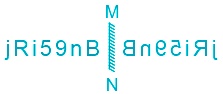
Select the correct mirror image of the given figure when the mirror is placed at MN as shown below.
Verify mobile number to view the solution
The correct mirror image of the given figure is:
Hence, the correct answer is "Option 4".
Consider the given statement to be true and decide which of the following assumptions is/are implicit in the statement.
Statement:
Company X announced that in their company, 10 clerical jobs will be filled, with the minimum eligibility criteria being bachelor's degree pass.
Assumptions:
1. Those who have passed the bachelor's degree can apply.
2. Masters can also apply.
Given Statement:
1. Those who have passed the bachelor's degree can apply - True (Because Company X's minimum eligibility criteria being bachelor's degree).
2. Masters can also apply - True (Because Masters is the higher degree than bachelor's, and Company X's minimum eligibility criteria being bachelor's degree, so the person who has done Masters degree, will also have the bachelor's degree, so candidates having the Masters degree can also apply).
So, Both assumptions 1 and 2 are implicit.
How many paper are not bottles?
According to the given Venn diagram:
The shaded area shows the "total number of paper are not bottles".
So, the total number of paper are not bottles = 8 + 3 = 11.
Hence, the correct answer is "11".
In the following series, how many times is the number 8 NOT followed by the number 4 but is preceded by the number 5?
65823581258343565458658458
The logic followed here is:
Condition to be checked:
i) The number 8 not followed by the number 4 but is preceded by the number 5 are given below:-
5 → 8 → Not 4 (4)
6 5 8 23 5 8 1 2 5 8 3 4 3 5 6 5 4 5 8 6 5 8 4 5 8
So, there are 5 pairs in which the number 8 is not followed by the number 4 but is preceded by the number 5.
Hence, "option 1" is the correct answer.
Mistake Points
Immediately preceded by means immediately before or to come just before.
Immediately followed by means immediately after or to come just after.
Which of the following letter-clusters will replace the question mark (?) in the given series?
EIMC, DKOD, CMQE, ?, AQUG
Here, 'BOSF' is the missing term.
Hence, the correct answer is "Option (4)".
Directions For Questions
In this question, a statement is given followed by two conclusions numbered i and ii. You have to assume everything in the statement to be true, then consider the two conclusions together and decide which of them logically follows beyond a reasonable doubt from the information given in the statement.
In John's class, 50% of the boys who appeared for the examination, passed. There are 48 boys in his class.
Conclusion:
i) In John's class, 50% of the boys who appeared for the examination, failed.
ii) 24 boys passed the examination.
...view full instructions
Choose the appropriate one from the following options
(A) Only conclusion i follows
(B) Only conclusion ii follows
(C) Either i or ii follows
(D) Neither i nor ii follows and
(E) Both i and ii follow.
i) In John's class, 50% of the boys who appeared for the examination, failed → True (Because 50% of the boys who appeared for the examination, passed).
ii) 24 boys passed the examination → False (Because we don;t know how many student appeared in exam)
This conclusion cannot be logically inferred from the statement. The statement only provides information about the percentage of boys who appeared in the examination.
Therefore, "Only conclusion I follows".
Hence, "Option (3)" is the correct answer.
Which one of the following images numbered as (1), (2), (3), (4) will be the next image for the given series?
Select the option that is related to the fifth number in the same way as the second number is related to the first number and the fourth number is related to the third number.
129 : 32 :: 109 : 27 :: 289 : ?
Logic: (1st number - 1) ÷ 4 = 2nd number.
Now,
For 129 : 32
→ (129 - 1) ÷ 4
→ 128 ÷ 4 = 32.
For 109 : 27
→ (109 - 1) ÷ 4
→ 108 ÷ 4 = 27.
Similarly, for 289 : ?
→ (289 - 1) ÷ 4
→ 288 ÷ 4 = 72.
Hence, the correct answer is "Option 3".
In the following number-pairs, the second number is obtained by applying certain mathematical operations to the first number. Select the set in which the numbers are related in the same way as are the numbers of the following sets.
(NOTE : Operations should be performed on the whole numbers, without breaking down the numbers into its constituent digits. E.g. 13 - Operations on 13 such as adding/subtracting\multiplying etc. to 13 can be performed. Breaking down 13 into 1 and 3 and then performing mathematical operations on 1 and 3 is not allowed.)
(45, 80)
(37, 64)
Logic : (1st number × 2) - 10 = 2nd number
Given :
(45 × 2) - 10 = 80
90 - 10 = 80
80 = 80 (LHS = RHS)
(37 × 2) - 10 = 64
74 - 10 = 64
64 = 64 (LHS = RHS)
So,
(41 × 2) - 10 = 73
82 - 10 = 73
72 ≠ 73 (LHS ≠ RHS)
(52 × 2) - 10 = 114
104 - 10 = 114
94 ≠ 114 (LHS ≠ RHS)
(65 × 2) - 10 = 120
130 - 10 = 120
120 = 120 (LHS = RHS)
(39 × 2) - 10 = 69
78 - 10 = 69
68 ≠ 69 (LHS ≠ RHS)
Hence, "Option - (3)" is the correct answer.
Select the option that is related to the fifth letter - cluster in the same way as the second letter - cluster is related to the first letter - cluster and the fourth letter - cluster is related to the third letter - cluster.
CYCLE : BXBKF :: TYRE : SXQF :: SCOOTER : ?
Hence, the correct answer is "Option (2)".
Correct (-)
Wrong (-)
Skipped (-)


 Time Taken: -
 Bank
Bank


 SSC
SSC


 Railway


 State
State


 Other
Other


 Teaching


 Insurance


 Medical


 Engineering


 Defence


 GATE
GATE


 NTA CUET

 UPSC
UPSC

 MBA Entrance


 LAW
LAW

 ReNEET UG 2026
 CUET UG 2026
 UP Police Constable 2026
 SSC Selection Post (Phase 14) 2026
 SSC GD 2025-26
 RRB NTPC 2026
 SSC CGL Tier-I 2026
 SSC JE 2026
 UPSC (CSE) 2026
 SBI PO Prelims 2026
 SSC Steno Grade C & D 2026
 SBI Clerk Prelims 2026
 IBPS PO Prelims 2026
 IBPS Clerk Prelims 2026
 SSC CPO Tier I 2026