Please wait...

IBPS Clerk 2025 Aptitude Test - 1
Menu grid icon
Result Result point icon
IBPS Clerk 2025 Aptitude Test - 1
  • Goals icon

    /

    Score
  • Trophy icon

    -

    Rank
White alarm icon Time Taken: -
Result frame illustration
  • Question 1/10
    1 / -0.25

    Directions For Questions

    Study the following information carefully and answer the following questions.

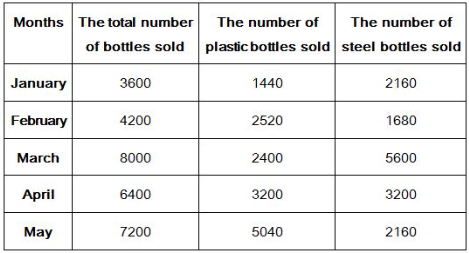
    The given line graph shows the total number of bottles sold in 100's and the percentage of the number of plastic bottles sold in five different months namely January, February, March, April and May.

    Note: The total number of bottles sold = The number of plastic bottles sold + The number of steel bottles sold

    ...view full instructions


    In January, out of the total number of bottles manufactured, 60% were sold and the rest of them were unsold. If the ratio of the number of plastic bottles sold to unsold is 8:5, then find the difference between the number of steel bottles sold and unsold.

    Solutions

    In January:

    The total number of bottles sold = (36 * 100) = 3600

    The number of plastic bottles sold = 3600 * 40/100 = 1440

    The number of steel bottles sold = 3600 * 60/100 = 2160

    In February:

    The total number of bottles sold = (42 * 10) = 4200

    The number of plastic bottles sold = 4200 * 60/100 = 2520

    The number of steel bottles sold = 4200 * 40/100 = 1680

    In March:

    The total number of bottles sold = (80 * 100) = 8000

    The number of plastic bottles sold = 8000 * 30/100 = 2400

    The number of steel bottles sold = 8000 * 70/100 = 5600

    In April:

    The total number of bottles sold = 64 * 100 = 6400

    The number of plastic bottles sold = 6400 * 50/100 = 3200

    The number of steel bottles sold = 6400 * 50/100 = 3200

    In May:

    The total number of bottles sold = (72 * 100) = 7200

    The number of plastic bottles sold = 7200 * 70/100 = 5040

    The number of steel bottles sold = 7200 * 30/100 = 2160
    Answer: D

    The total number of bottles manufactured in January = 3600 * 100/60 = 6000

    The total number of bottles unsold in January = (6000 - 3600) = 2400

    The number of plastic bottles unsold in January = 1440 * 5/8 = 900

    The number of steel bottles unsold in January = (2400 - 900) = 1500

    The number of steel bottles sold in January = 2160

    Required difference = (2160 - 1500) = 660

    Hence, the correct answer is option D.

  • Question 2/10
    1 / -0.25

    Directions For Questions

    Study the following information carefully and answer the following questions.

    The given line graph shows the total number of bottles sold in 100's and the percentage of the number of plastic bottles sold in five different months namely January, February, March, April and May.

    Note: The total number of bottles sold = The number of plastic bottles sold + The number of steel bottles sold

    ...view full instructions


    The ratio of the number of plastic bottles sold in March and April together to the number of steel bottles sold in June is z:7. If the number of steel bottles sold in June is 1/8 less than that in March, and the number of plastic bottles sold in June is 120z, then find the total number of (plastic + steel) bottles sold in June.

    Solutions

    In January:

    The total number of bottles sold = (36 * 100) = 3600

    The number of plastic bottles sold = 3600 * 40/100 = 1440

    The number of steel bottles sold = 3600 * 60/100 = 2160

    In February:

    The total number of bottles sold = (42 * 10) = 4200

    The number of plastic bottles sold = 4200 * 60/100 = 2520

    The number of steel bottles sold = 4200 * 40/100 = 1680

    In March:

    The total number of bottles sold = (80 * 100) = 8000

    The number of plastic bottles sold = 8000 * 30/100 = 2400

    The number of steel bottles sold = 8000 * 70/100 = 5600

    In April:

    The total number of bottles sold = 64 * 100 = 6400

    The number of plastic bottles sold = 6400 * 50/100 = 3200

    The number of steel bottles sold = 6400 * 50/100 = 3200

    In May:

    The total number of bottles sold = (72 * 100) = 7200

    The number of plastic bottles sold = 7200 * 70/100 = 5040

    The number of steel bottles sold = 7200 * 30/100 = 2160

    Answer: E

    The number of steel bottles sold in June = 5600 - 5600/8 = 4900

    The total number of plastic bottles sold in March and April together = (2400 + 3200) = 5600

    z : 7 = 5600: 4900

    z : 7 = 8: 7

    z = 8

    The number of plastic bottles sold in June = 120 * 8 = 960.

    The total number of bottles sold in June = (4900 + 960) = 5860

    Hence, the correct answer is option E

  • Question 3/10
    1 / -0.25

    Directions For Questions

    Study the following information carefully and answer the following questions.

    The given line graph shows the total number of bottles sold in 100's and the percentage of the number of plastic bottles sold in five different months namely January, February, March, April and May.

    Note: The total number of bottles sold = The number of plastic bottles sold + The number of steel bottles sold

    ...view full instructions


    The number of wooden bottles sold in May is 12.5% more that of steel bottles sold and the average number of wooden bottles sold in January, February and May is 2410. If the number of wooden bottles sold in January is 200 more than that in February, then find the number of wooden bottles sold in January.

    Solutions

    In January:

    The total number of bottles sold = (36 * 100) = 3600

    The number of plastic bottles sold = 3600 * 40/100 = 1440

    The number of steel bottles sold = 3600 * 60/100 = 2160

    In February:

    The total number of bottles sold = (42 * 10) = 4200

    The number of plastic bottles sold = 4200 * 60/100 = 2520

    The number of steel bottles sold = 4200 * 40/100 = 1680

    In March:

    The total number of bottles sold = (80 * 100) = 8000

    The number of plastic bottles sold = 8000 * 30/100 = 2400

    The number of steel bottles sold = 8000 * 70/100 = 5600

    In April:

    The total number of bottles sold = 64 * 100 = 6400

    The number of plastic bottles sold = 6400 * 50/100 = 3200

    The number of steel bottles sold = 6400 * 50/100 = 3200

    In May:

    The total number of bottles sold = (72 * 100) = 7200

    The number of plastic bottles sold = 7200 * 70/100 = 5040

    The number of steel bottles sold = 7200 * 30/100 = 2160

    Answer: B

    The number of wooden bottles sold in May = 2160 * 112.5/100 = 2430

    The total number of wooden bottles sold in January, February and May together = (2410 * 3) = 7230

    The total number of wooden bottles sold in January and February together = (7230 - 2430) = 4800

    The number of wooden bottles sold in January = (4800 + 200)/2 = 5000/2 = 2500

    Hence, the correct answer is option B

  • Question 4/10
    1 / -0.25

    Directions For Questions

    Study the following information carefully and answer the following questions.

    The given line graph shows the total number of bottles sold in 100's and the percentage of the number of plastic bottles sold in five different months namely January, February, March, April and May.

    Note: The total number of bottles sold = The number of plastic bottles sold + The number of steel bottles sold

    ...view full instructions


    Find the sum of the number of plastic bottles sold in May and the difference between the number of steel bottles sold in February and March.

    Solutions

    In January:

    The total number of bottles sold = (36 * 100) = 3600

    The number of plastic bottles sold = 3600 * 40/100 = 1440

    The number of steel bottles sold = 3600 * 60/100 = 2160

    In February:

    The total number of bottles sold = (42 * 10) = 4200

    The number of plastic bottles sold = 4200 * 60/100 = 2520

    The number of steel bottles sold = 4200 * 40/100 = 1680

    In March:

    The total number of bottles sold = (80 * 100) = 8000

    The number of plastic bottles sold = 8000 * 30/100 = 2400

    The number of steel bottles sold = 8000 * 70/100 = 5600

    In April:

    The total number of bottles sold = 64 * 100 = 6400

    The number of plastic bottles sold = 6400 * 50/100 = 3200

    The number of steel bottles sold = 6400 * 50/100 = 3200

    In May:

    The total number of bottles sold = (72 * 100) = 7200

    The number of plastic bottles sold = 7200 * 70/100 = 5040

    The number of steel bottles sold = 7200 * 30/100 = 2160

    Answer: A

    The number of plastic bottles sold in May = 5040

    The difference between the number of steel bottles sold in February and March = (5600 - 1680) = 3920

    Required sum = (5040 + 3920) = 8960

    Hence, the correct answer is option A

  • Question 5/10
    1 / -0.25

    Directions For Questions

    Study the following information carefully and answer the following questions.

    The given line graph shows the total number of bottles sold in 100's and the percentage of the number of plastic bottles sold in five different months namely January, February, March, April and May.

    Note: The total number of bottles sold = The number of plastic bottles sold + The number of steel bottles sold

    ...view full instructions


    The total number of bottles sold in January is what percentage more than the number of steel bottles sold in April?

    Solutions

    In January:

    The total number of bottles sold = (36 * 100) = 3600

    The number of plastic bottles sold = 3600 * 40/100 = 1440

    The number of steel bottles sold = 3600 * 60/100 = 2160

    In February:

    The total number of bottles sold = (42 * 10) = 4200

    The number of plastic bottles sold = 4200 * 60/100 = 2520

    The number of steel bottles sold = 4200 * 40/100 = 1680

    In March:

    The total number of bottles sold = (80 * 100) = 8000

    The number of plastic bottles sold = 8000 * 30/100 = 2400

    The number of steel bottles sold = 8000 * 70/100 = 5600

    In April:

    The total number of bottles sold = 64 * 100 = 6400

    The number of plastic bottles sold = 6400 * 50/100 = 3200

    The number of steel bottles sold = 6400 * 50/100 = 3200

    In May:

    The total number of bottles sold = (72 * 100) = 7200

    The number of plastic bottles sold = 7200 * 70/100 = 5040

    The number of steel bottles sold = 7200 * 30/100 = 2160

    Answer: D

    The total number of bottles sold in January = 3600

    The number of steel bottles sold in April = 3200

    Required percentage = (3600 - 3200)/3200 * 100 = 12.5%

    Hence, the correct answer is option D

  • Question 6/10
    1 / -0.25

    Priya bought an article and sold it at a profit of 20%. Had she bought it for Rs. 220 less and sold it for Rs. 648 more, she would have earned a profit of 60%. Find the difference between the original selling price and the original cost price of the article.

    Solutions

    Answer: C

    Let, the original cost price of the article = Rs. 100x

    The original selling price of the article = 100x * 120/100 = Rs. 120x

    The reduced cost price of the article = Rs. (100x - 220)

    According to the question,

    (100x - 220) * 160/100 = (120x + 648)

    (100x - 220) * 1.6 = (120x + 648)

    160x - 352 = 120x + 648

    40x = 1000

    x = 25

    The original cost price of the article = 100 * 25 = Rs. 2500

    The original selling price of the article = 120 * 25 = Rs. 3000

    Required difference = (3000 - 2500) = Rs. 500

    Hence, the correct answer is option C

  • Question 7/10
    1 / -0.25

    616 litres of mixture contains milk and water in the ratio 11:3. If (x + 16) litres of milk and 168 litres of water is added in the mixture, then the quantity of milk becomes 70%. Find the value of x.

    Solutions

    Answer: D

    The total quantity of milk and water in the mixture = 616 litres

    The initial quantity of milk in the mixture = 616 * 11/14 = 484 litres

    The initial quantity of water in the mixture = 616 * 3/14 = 132 litres

    The ratio of the final quantity of milk to water in the mixture = 70: 30 = 7: 3

    [484 + (x + 16)]/(132 + 168) = 7/3

    (500 + x)/300 = 7/3

    500 + x = 700

    x = 200

    Hence, the correct answer is option D

  • Question 8/10
    1 / -0.25

    The length and breadth of the rectangle is (y + 10) cm and (y - 5) cm respectively and the perimeter of the rectangle is 130 cm. If the radius of the cylinder is 12 cm less than the length of the rectangle and the height of the cylinder is 1/5th of the breadth of the rectangle, then find the volume of the cylinder.

    Solutions

    Answer: A

    The length of the rectangle = (y + 10) cm

    The breadth of the rectangle = (y - 5) cm

    The perimeter of the rectangle = 2(l + b) cm

    130 = 2 * (y + 10 + y - 5)

    130 = 2 * (2y + 5)

    2y + 5 = 65

    2y = 60

    y = 30

    The length of the rectangle = (30 + 10) = 40 cm

    The breadth of the rectangle = (30 - 5) = 25 cm

    The radius of the cylinder = (40 - 12) = 28 cm

    The height of the cylinder = (25/5) = 5 cm

    The volume of the cylinder = Πr2h cm3

    = (22/7) * 28 * 28 * 5

    = 12320 cm3

    Hence, the correct answer is option A

  • Question 9/10
    1 / -0.25

    The average number of shirts in bags A and B together is 40 and the ratio of the number of shirts in bag A to B is 5:3. If 80% and 60% of the shirts in bag B and bag A, respectively, are black shirts, then find the sum of the probability of selecting a brown shirt from bags A and B. (Only two-colored shirts are in both bags: black and brown)

    Solutions

    Answer: B

    The total number of shirts in bags A and B together = (40 * 2) = 80

    The number of shirts in bag A = 80 * 5/8 = 50

    The number of shirts in bag B = 80 * 3/5 = 30

    The number of brown colour shirts in bag A = 50 * 40/100 = 20

    The number of brown colour shirts in bag B = 30 * 20/100 = 6

    The probability of selecting a brown shirt from bag A = 20C1/50C1 = 2/5

    The probability of selecting a brown shirt from bag B = 6C1/30C1 = 1/5

    Required sum = (2/5 + 1/5) = 3/5

    Hence, the correct answer is option B

  • Question 10/10
    1 / -0.25

    A can complete the work alone in 21 days, which is 25% less than the time taken by B alone to complete the work. The time taken by C to destroy the work is 7 days more than the time by B to complete the work. Find the approximate time taken by all three working together to complete the work.

    Solutions

    Answer: A

    The time taken by B alone to complete the work = 21 * 100/75 = 28 days

    The time taken by C alone to destroy the work = 28 + 7 = 35 days

    LCM = (21, 28, 35)

    Let, the total work = 420 units

    The efficiency of A = 420/21 = 20 units/day

    The efficiency of B = 420/28 = 15 units/day

    The efficiency of C = 420/35 = 12 units/day

    Required time taken = 420/(20 + 15 - 12) = 420/23 = 18.26 = 18 days

    Hence, the correct answer is option A

Close button icon
User Profile
-

Correct (-)

Wrong (-)

Skipped (-)


  • 1
  • 2
  • 3
  • 4
  • 5
  • 6
  • 7
  • 8
  • 9
  • 10
Mockers logo Get latest Exam Updates
& Study Material Alerts!
No, Thanks
Arrow pointer icon
Click on Allow to receive notifications
Notification bell icon ×
Open Now
