Please wait...

Puzzles Test 3
Menu grid icon
Result Result point icon
Puzzles Test 3
  • Goals icon

    /

    Score
  • Trophy icon

    -

    Rank
White alarm icon Time Taken: -
Result frame illustration
  • Question 1/10
    1 / -0

    Directions For Questions

    DIRECTIONS: These questions are based on the following information.

    In a class, six students - P, Q, R, S, T and U got the top six ranks such that no two of them got the same rank and they are wearing a different coloured dresses among - red, blue, green, yellow, orange and white. We know the following information:

    (i) The number of students whose ranks are between the ranks of S and the person who is wearing orange coloured dress is two.

    (ii) R is wearing yellow coloured dress but U is not wearing green coloured dress.

    (iii) At least one student got a rank between the ranks of any two of Q, T and U and at most one of Q, T and U got either the first rank or the sixth rank.

    (iv) The students wearing blue and orange coloured dresses got the consecutive ranks.

    (v) The number of students whose ranks are between the ranks of T and the student wearing white coloured dress is two.

    ...view full instructions


    How many students got the ranks between the ranks of the students wearing orange and white colored dresses?

    Solutions

    As, Q is wearing orange coloured dress, there are two students who got the ranks between the ranks of the students wearing orange and white colored dress.

    From (iii), we have the following two possibilities:
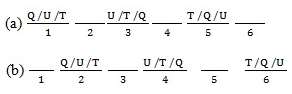
    From (i) and (iv), one of Q,U and T is wearing  orange colored dress. 

    → One of P  and S  is wearing blue colored dress.

    From (i) and above results, S can’t wear blue colored dress.

    → P is wearing blue colored dress.

    From (v), none of Q, T and U is wearing white colored dress.

    → S is wearing white colored dress.

    → Q, U, T are wearing red, green and orange colored dress in any order.

    From (i), (v) and above results, T must be wearing orange colored dress.

    From (ii) as U is not wearing green colored dress, U must be wearing red colored dress.

    → Q is wearing green colored dress.

  • Question 2/10
    1 / -0

    Directions For Questions

    DIRECTIONS: These questions are based on the following information.

    In a class, six students - P, Q, R, S, T and U got the top six ranks such that no two of them got the same rank and they are wearing a different coloured dresses among - red, blue, green, yellow, orange and white. We know the following information:

    (i) The number of students whose ranks are between the ranks of S and the person who is wearing orange coloured dress is two.

    (ii) R is wearing yellow coloured dress but U is not wearing green coloured dress.

    (iii) At least one student got a rank between the ranks of any two of Q, T and U and at most one of Q, T and U got either the first rank or the sixth rank.

    (iv) The students wearing blue and orange coloured dresses got the consecutive ranks.

    (v) The number of students whose ranks are between the ranks of T and the student wearing white coloured dress is two.

    ...view full instructions


    Who is wearing red coloured dress?

    Solutions

    U is wearing red colored dress.

    From (iii), we have the following two possibilities:

    From (i) and (iv), one of Q,U and T is wearing  orange colored dress. 

    → One of P  and S  is wearing blue colored dress.

    From (i) and above results, S can’t wear blue colored dress.

    → P is wearing blue colored dress.

    From (v), none of Q, T and U is wearing white colored dress.

    → S is wearing white colored dress.

    → Q, U, T are wearing red, green and orange colored dress in any order.

    From (i), (v) and above results, T must be wearing orange colored dress.

    From (ii) as U is not wearing green colored dress, U must be wearing red colored dress.

    → Q is wearing green colored dress.

  • Question 3/10
    1 / -0

    Directions For Questions

    DIRECTIONS: These questions are based on the following information.

    In a class, six students - P, Q, R, S, T and U got the top six ranks such that no two of them got the same rank and they are wearing a different coloured dresses among - red, blue, green, yellow, orange and white. We know the following information:

    (i) The number of students whose ranks are between the ranks of S and the person who is wearing orange coloured dress is two.

    (ii) R is wearing yellow coloured dress but U is not wearing green coloured dress.

    (iii) At least one student got a rank between the ranks of any two of Q, T and U and at most one of Q, T and U got either the first rank or the sixth rank.

    (iv) The students wearing blue and orange coloured dresses got the consecutive ranks.

    (v) The number of students whose ranks are between the ranks of T and the student wearing white coloured dress is two.

    ...view full instructions


    Which coloured dress is T wearing?

    Solutions

    T is wearing orange coulored dress

    From (iii), we have the following two possibilities:

    From (i) and (iv), one of Q,U and T is wearing  orange colored dress. 

    → One of P  and S  is wearing blue colored dress.

    From (i) and above results, S can’t wear blue colored dress.

    → P is wearing blue colored dress.

    From (v), none of Q, T and U is wearing white colored dress.

    → S is wearing white colored dress.

    → Q, U, T are wearing red, green and orange colored dress in any order.

    From (i), (v) and above results, T must be wearing orange colored dress.

    From (ii) as U is not wearing green colored dress, U must be wearing red colored dress.

    → Q is wearing green colored dress.

  • Question 4/10
    1 / -0

    Directions For Questions

    DIRECTIONS: These questions are based on the following information.

    In a class, six students - P, Q, R, S, T and U got the top six ranks such that no two of them got the same rank and they are wearing a different coloured dresses among - red, blue, green, yellow, orange and white. We know the following information:

    (i) The number of students whose ranks are between the ranks of S and the person who is wearing orange coloured dress is two.

    (ii) R is wearing yellow coloured dress but U is not wearing green coloured dress.

    (iii) At least one student got a rank between the ranks of any two of Q, T and U and at most one of Q, T and U got either the first rank or the sixth rank.

    (iv) The students wearing blue and orange coloured dresses got the consecutive ranks.

    (v) The number of students whose ranks are between the ranks of T and the student wearing white coloured dress is two.

    ...view full instructions


    If T got the first rank, then who is wearing green coloured dress?

    Solutions

    Q is wearing green coloured dress.

    From (iii), we have the following two possibilities:

    From (i) and (iv), one of Q,U and T is wearing  orange colored dress. 

    → One of P  and S  is wearing blue colored dress.

    From (i) and above results, S can’t wear blue colored dress.

    → P is wearing blue colored dress.

    From (v), none of Q, T and U is wearing white colored dress.

    → S is wearing white colored dress.

    → Q, U, T are wearing red, green and orange colored dress in any order.

    From (i), (v) and above results, T must be wearing orange colored dress.

    From (ii) as U is not wearing green colored dress, U must be wearing red colored dress.

    → Q is wearing green colored dress.

  • Question 5/10
    1 / -0

    Directions For Questions

    DIRECTIONS: These questions are based on the following information.

    In a class, six students - P, Q, R, S, T and U got the top six ranks such that no two of them got the same rank and they are wearing a different coloured dresses among - red, blue, green, yellow, orange and white. We know the following information:

    (i) The number of students whose ranks are between the ranks of S and the person who is wearing orange coloured dress is two.

    (ii) R is wearing yellow coloured dress but U is not wearing green coloured dress.

    (iii) At least one student got a rank between the ranks of any two of Q, T and U and at most one of Q, T and U got either the first rank or the sixth rank.

    (iv) The students wearing blue and orange coloured dresses got the consecutive ranks.

    (v) The number of students whose ranks are between the ranks of T and the student wearing white coloured dress is two.

    ...view full instructions


    If the students who are wearing green and orange coloured dress got the first and the fifth ranks in any order then who is wearing blue coloured dress?

    Solutions

    P is wearing blue coloured dress.

    From (iii), we have the following two possibilities:

    From (i) and (iv), one of Q,U and T is wearing  orange colored dress. 

    → One of P  and S  is wearing blue colored dress.

    From (i) and above results, S can’t wear blue colored dress.

    → P is wearing blue colored dress.

    From (v), none of Q, T and U is wearing white colored dress.

    → S is wearing white colored dress.

    → Q, U, T are wearing red, green and orange colored dress in any order.

    From (i), (v) and above results, T must be wearing orange colored dress.

    From (ii) as U is not wearing green colored dress, U must be wearing red colored dress.

    → Q is wearing green colored dress.

  • Question 6/10
    1 / -0

    Directions For Questions

    DIRECTIONS: These questions are based on the data given below.

    Nine students Aliya, Tiya, Binny, Chintu, Dinki, Emili, Firoz, Gagan and Heera are planning to enjoy car racing. There are only two cars and following are the conditions:

    (i)  One car can accommodate maximum five and minimum four students.

    (ii)  Aliya will sit in the same car in which Dinki is sitting but Heera is not in the same car.

    (iii) Binny and Chintu can’t sit in the same car in which Dinki is sitting.

    (iv)   Firoz will sit in the car of four people. Tiya  is not sitting  with Aliya and Emili but certainly with Gagan.

    ...view full instructions


    If Heera and Gagan are sitting in the same car, who are other two students sitting in the same car?

    Solutions
    CAR 1 CAR 2
    Heera Aliya
    Binny Dinki
    Chintu Firoz
    Tiya Emili
    Gagan
  • Question 7/10
    1 / -0

    Directions For Questions

    DIRECTIONS: These questions are based on the data given below.

    Nine students Aliya, Tiya, Binny, Chintu, Dinki, Emili, Firoz, Gagan and Heera are planning to enjoy car racing. There are only two cars and following are the conditions:

    (i)  One car can accommodate maximum five and minimum four students.

    (ii)  Aliya will sit in the same car in which Dinki is sitting but Heera is not in the same car.

    (iii) Binny and Chintu can’t sit in the same car in which Dinki is sitting.

    (iv)   Firoz will sit in the car of four people. Tiya  is not sitting  with Aliya and Emili but certainly with Gagan.

    ...view full instructions


    If Emili and Aliya are sitting in the same car, which of the following statements is true?

    Solutions
    CAR 1 CAR 2
    Heera Aliya
    Binny Dinki
    Chintu Firoz
    Tiya Emili
    Gagan
  • Question 8/10
    1 / -0

    Directions For Questions

    DIRECTIONS: These questions are based on the data given below.

    Nine students Aliya, Tiya, Binny, Chintu, Dinki, Emili, Firoz, Gagan and Heera are planning to enjoy car racing. There are only two cars and following are the conditions:

    (i)  One car can accommodate maximum five and minimum four students.

    (ii)  Aliya will sit in the same car in which Dinki is sitting but Heera is not in the same car.

    (iii) Binny and Chintu can’t sit in the same car in which Dinki is sitting.

    (iv)  Firoz will sit in the car of four people. Tiya  is not sitting  with Aliya and Emili but certainly with Gagan.

    ...view full instructions


    Which of the following statements is superfluous for the above sitting arrangements?

    Solutions
    CAR 1 CAR 2
    Heera Aliya
    Binny Dinki
    Chintu Firoz
    Tiya Emili
    Gagan
  • Question 9/10
    1 / -0

    Directions For Questions

    DIRECTIONS: These questions are based on the data given below.

    Nine students Aliya, Tiya, Binny, Chintu, Dinki, Emili, Firoz, Gagan and Heera are planning to enjoy car racing. There are only two cars and following are the conditions:

    (i)  One car can accommodate maximum five and minimum four students.

    (ii)  Aliya will sit in the same car in which Dinki is sitting but Heera is not in the same car.

    (iii) Binny and Chintu can’t sit in the same car in which Dinki is sitting.

    (iv)   Firoz will sit in the car of four people. Tiya  is not sitting  with Aliya and Emili but certainly with Gagan.

    ...view full instructions


    Which of the following conditions is true?

    Solutions
    CAR 1 CAR 2
    Heera Aliya
    Binny Dinki
    Chintu Firoz
    Tiya Emili
    Gagan
  • Question 10/10
    1 / -0

    Directions For Questions

    DIRECTIONS: These questions are based on the data given below.

    Nine students Aliya, Tiya, Binny, Chintu, Dinki, Emili, Firoz, Gagan and Heera are planning to enjoy car racing. There are only two cars and following are the conditions:

    (i)  One car can accommodate maximum five and minimum four students.

    (ii)  Aliya will sit in the same car in which Dinki is sitting but Heera is not in the same car.

    (iii) Binny and Chintu can’t sit in the same car in which Dinki is sitting.

    (iv)   Firoz will sit in the car of four people. Tiya  is not sitting  with Aliya and Emili but certainly with Gagan.

    ...view full instructions


    Tiya is sitting with?

    Solutions
    CAR 1 CAR 2
    Heera Aliya
    Binny Dinki
    Chintu Firoz
    Tiya Emili
    Gagan
Close button icon
User Profile
-

Correct (-)

Wrong (-)

Skipped (-)


  • 1
  • 2
  • 3
  • 4
  • 5
  • 6
  • 7
  • 8
  • 9
  • 10
Mockers logo Get latest Exam Updates
& Study Material Alerts!
No, Thanks
Arrow pointer icon
Click on Allow to receive notifications
Notification bell icon ×
Open Now
