Please wait...

IBPS Clerk 2019 Reasoning Test - 9
Menu grid icon
Result Result point icon
IBPS Clerk 2019 Reasoning Test - 9
  • Goals icon

    /

    Score
  • Trophy icon

    -

    Rank
White alarm icon Time Taken: -
Result frame illustration
  • Question 1/10
    1 / -0

    Directions For Questions

    8 persons Amar, Bikram, Charan, Deepak, Edward, Flint, Gautham and Hari are sitting in 2 parallel rows. Both the rows are facing the north and 4 persons are sitting in each of the rows. The rows are arranged such that exactly one person from the second row sits behind a person from the first row. Each one of them likes a different colour among yellow, blue, orange, red, green, white, black and cyan. Further, the following information is known about them.

    Amar sits behind the person who likes yellow. The person who likes blue is sitting to the left of Bikram and he is the only neighbour of Bikram. Amar and Bikram are not sitting in the same row. The person who likes yellow is sitting adjacent to the person who likes blue. Amar is sitting adjacent to the person who likes green. The person who likes green is not sitting behind the person who likes blue. Charan is sitting behind the person who likes cyan. Charan does not like green. The persons who like red and orange are sitting adjacent to each other. None of them is a neighbour of the person who likes green. Charan does not like red. Deepak likes white. Flint is sitting adjacent to the person who likes blue. Edward does not like red but he is a neighbour of Amar. Gautham does not like blue.

    ...view full instructions


    Who likes red?

    Solutions

    Let us denote Amar by A, Bikram by B and so on in the diagram.

    The person who likes blue is the only neighbour of Bikram and he is sitting to the left of Bikram. Therefore, Bikram must be sitting at the right corner. Bikram and Amar are not sitting in the same row. Therefore, Amar must be sitting in row 2. Amar sits behind the person who likes yellow. The person who likes yellow is sitting adjacent to the person who likes blue.
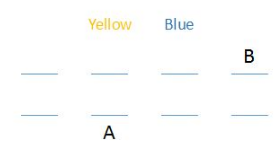
    Amar is sitting adjacent to the person who likes green. The person who likes green is not sitting behind the person who likes blue. Therefore, the person who likes green must be sitting at the left corner of row 2. Charan is sitting behind the person who likes cyan. Charan does not like green. Therefore, Charan must be sitting behind B and B must be liking cyan.
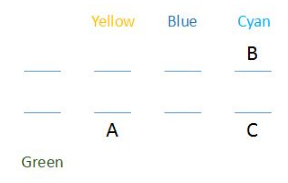
    The persons who like red and orange are sitting adjacent to each other. None of them is a neighbour of the person who likes green. Therefore, Charan and his neighbour must be liking red and orange. Charan does not like red. Therefore, Charan must be likeing orange and his neighbour must be liking red. Deepak likes white. Therefore, Deepak must be sitting at the left corner of row 1. Amar must be liking black.
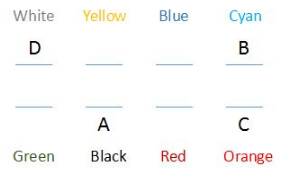
    Flint is sitting adjacent to the person who likes blue. Therefore, Flint must be liking yellow. Edward does not like red but he is a neighbour of A. Therefore, Edward must be liking green. Gautham does not like blue. Therefore, Gautham must be liking red and Harish must be liking blue. The final arrangement is as follows:
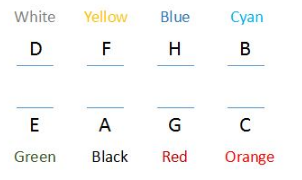
    Gautham likes red. Therefore, option C is the right answer.


  • Question 2/10
    1 / -0

    Directions For Questions

    8 persons Amar, Bikram, Charan, Deepak, Edward, Flint, Gautham and Hari are sitting in 2 parallel rows. Both the rows are facing the north and 4 persons are sitting in each of the rows. The rows are arranged such that exactly one person from the second row sits behind a person from the first row. Each one of them likes a different colour among yellow, blue, orange, red, green, white, black and cyan. Further, the following information is known about them.

    Amar sits behind the person who likes yellow. The person who likes blue is sitting to the left of Bikram and he is the only neighbour of Bikram. Amar and Bikram are not sitting in the same row. The person who likes yellow is sitting adjacent to the person who likes blue. Amar is sitting adjacent to the person who likes green. The person who likes green is not sitting behind the person who likes blue. Charan is sitting behind the person who likes cyan. Charan does not like green. The persons who like red and orange are sitting adjacent to each other. None of them is a neighbour of the person who likes green. Charan does not like red. Deepak likes white. Flint is sitting adjacent to the person who likes blue. Edward does not like red but he is a neighbour of Amar. Gautham does not like blue.

    ...view full instructions


    Who is sitting behind Flint?

    Solutions

    Let us denote Amar by A, Bikram by B and so on in the diagram.

    The person who likes blue is the only neighbour of Bikram and he is sitting to the left of Bikram. Therefore, Bikram must be sitting at the right corner. Bikram and Amar are not sitting in the same row. Therefore, Amar must be sitting in row 2. Amar sits behind the person who likes yellow. The person who likes yellow is sitting adjacent to the person who likes blue.

    Amar is sitting adjacent to the person who likes green. The person who likes green is not sitting behind the person who likes blue. Therefore, the person who likes green must be sitting at the left corner of row 2. Charan is sitting behind the person who likes cyan. Charan does not like green. Therefore, Charan must be sitting behind B and B must be liking cyan.

    The persons who like red and orange are sitting adjacent to each other. None of them is a neighbour of the person who likes green. Therefore, Charan and his neighbour must be liking red and orange. Charan does not like red. Therefore, Charan must be likeing orange and his neighbour must be liking red. Deepak likes white. Therefore, Deepak must be sitting at the left corner of row 1. Amar must be liking black.

    Flint is sitting adjacent to the person who likes blue. Therefore, Flint must be liking yellow. Edward does not like red but he is a neighbour of A. Therefore, Edward must be liking green. Gautham does not like blue. Therefore, Gautham must be liking red and Harish must be liking blue. The final arrangement is as follows:

    Amar is sitting behind Flint. Therefore, option B is the right answer.


  • Question 3/10
    1 / -0

    Directions For Questions

    8 persons Amar, Bikram, Charan, Deepak, Edward, Flint, Gautham and Hari are sitting in 2 parallel rows. Both the rows are facing the north and 4 persons are sitting in each of the rows. The rows are arranged such that exactly one person from the second row sits behind a person from the first row. Each one of them likes a different colour among yellow, blue, orange, red, green, white, black and cyan. Further, the following information is known about them.

    Amar sits behind the person who likes yellow. The person who likes blue is sitting to the left of Bikram and he is the only neighbour of Bikram. Amar and Bikram are not sitting in the same row. The person who likes yellow is sitting adjacent to the person who likes blue. Amar is sitting adjacent to the person who likes green. The person who likes green is not sitting behind the person who likes blue. Charan is sitting behind the person who likes cyan. Charan does not like green. The persons who like red and orange are sitting adjacent to each other. None of them is a neighbour of the person who likes green. Charan does not like red. Deepak likes white. Flint is sitting adjacent to the person who likes blue. Edward does not like red but he is a neighbour of Amar. Gautham does not like blue.

    ...view full instructions


    What colour does the person sitting behind the person who likes white like?

    Solutions

    Let us denote Amar by A, Bikram by B and so on in the diagram.

    The person who likes blue is the only neighbour of Bikram and he is sitting to the left of Bikram. Therefore, Bikram must be sitting at the right corner. Bikram and Amar are not sitting in the same row. Therefore, Amar must be sitting in row 2. Amar sits behind the person who likes yellow. The person who likes yellow is sitting adjacent to the person who likes blue.

    Amar is sitting adjacent to the person who likes green. The person who likes green is not sitting behind the person who likes blue. Therefore, the person who likes green must be sitting at the left corner of row 2. Charan is sitting behind the person who likes cyan. Charan does not like green. Therefore, Charan must be sitting behind B and B must be liking cyan.

    The persons who like red and orange are sitting adjacent to each other. None of them is a neighbour of the person who likes green. Therefore, Charan and his neighbour must be liking red and orange. Charan does not like red. Therefore, Charan must be likeing orange and his neighbour must be liking red. Deepak likes white. Therefore, Deepak must be sitting at the left corner of row 1. Amar must be liking black.

    Flint is sitting adjacent to the person who likes blue. Therefore, Flint must be liking yellow. Edward does not like red but he is a neighbour of A. Therefore, Edward must be liking green. Gautham does not like blue. Therefore, Gautham must be liking red and Harish must be liking blue. The final arrangement is as follows:

    Edward is the person sitting behind the person who likes white. Edward likes green.


  • Question 4/10
    1 / -0

    Directions For Questions

    8 persons Amar, Bikram, Charan, Deepak, Edward, Flint, Gautham and Hari are sitting in 2 parallel rows. Both the rows are facing the north and 4 persons are sitting in each of the rows. The rows are arranged such that exactly one person from the second row sits behind a person from the first row. Each one of them likes a different colour among yellow, blue, orange, red, green, white, black and cyan. Further, the following information is known about them.

    Amar sits behind the person who likes yellow. The person who likes blue is sitting to the left of Bikram and he is the only neighbour of Bikram. Amar and Bikram are not sitting in the same row. The person who likes yellow is sitting adjacent to the person who likes blue. Amar is sitting adjacent to the person who likes green. The person who likes green is not sitting behind the person who likes blue. Charan is sitting behind the person who likes cyan. Charan does not like green. The persons who like red and orange are sitting adjacent to each other. None of them is a neighbour of the person who likes green. Charan does not like red. Deepak likes white. Flint is sitting adjacent to the person who likes blue. Edward does not like red but he is a neighbour of Amar. Gautham does not like blue.

    ...view full instructions


    Who likes cyan?

    Solutions

    Let us denote Amar by A, Bikram by B and so on in the diagram.

    The person who likes blue is the only neighbour of Bikram and he is sitting to the left of Bikram. Therefore, Bikram must be sitting at the right corner. Bikram and Amar are not sitting in the same row. Therefore, Amar must be sitting in row 2. Amar sits behind the person who likes yellow. The person who likes yellow is sitting adjacent to the person who likes blue.

    Amar is sitting adjacent to the person who likes green. The person who likes green is not sitting behind the person who likes blue. Therefore, the person who likes green must be sitting at the left corner of row 2. Charan is sitting behind the person who likes cyan. Charan does not like green. Therefore, Charan must be sitting behind B and B must be liking cyan.

    The persons who like red and orange are sitting adjacent to each other. None of them is a neighbour of the person who likes green. Therefore, Charan and his neighbour must be liking red and orange. Charan does not like red. Therefore, Charan must be likeing orange and his neighbour must be liking red. Deepak likes white. Therefore, Deepak must be sitting at the left corner of row 1. Amar must be liking black.

    Flint is sitting adjacent to the person who likes blue. Therefore, Flint must be liking yellow. Edward does not like red but he is a neighbour of A. Therefore, Edward must be liking green. Gautham does not like blue. Therefore, Gautham must be liking red and Harish must be liking blue. The final arrangement is as follows:

    Bikram likes cyan. Therefore, option A is the right answer.


  • Question 5/10
    1 / -0

    Directions For Questions

    8 persons Amar, Bikram, Charan, Deepak, Edward, Flint, Gautham and Hari are sitting in 2 parallel rows. Both the rows are facing the north and 4 persons are sitting in each of the rows. The rows are arranged such that exactly one person from the second row sits behind a person from the first row. Each one of them likes a different colour among yellow, blue, orange, red, green, white, black and cyan. Further, the following information is known about them.

    Amar sits behind the person who likes yellow. The person who likes blue is sitting to the left of Bikram and he is the only neighbour of Bikram. Amar and Bikram are not sitting in the same row. The person who likes yellow is sitting adjacent to the person who likes blue. Amar is sitting adjacent to the person who likes green. The person who likes green is not sitting behind the person who likes blue. Charan is sitting behind the person who likes cyan. Charan does not like green. The persons who like red and orange are sitting adjacent to each other. None of them is a neighbour of the person who likes green. Charan does not like red. Deepak likes white. Flint is sitting adjacent to the person who likes blue. Edward does not like red but he is a neighbour of Amar. Gautham does not like blue.

    ...view full instructions


    What colour does Amar like?

    Solutions

    Let us denote Amar by A, Bikram by B and so on in the diagram.

    The person who likes blue is the only neighbour of Bikram and he is sitting to the left of Bikram. Therefore, Bikram must be sitting at the right corner. Bikram and Amar are not sitting in the same row. Therefore, Amar must be sitting in row 2. Amar sits behind the person who likes yellow. The person who likes yellow is sitting adjacent to the person who likes blue.

    Amar is sitting adjacent to the person who likes green. The person who likes green is not sitting behind the person who likes blue. Therefore, the person who likes green must be sitting at the left corner of row 2. Charan is sitting behind the person who likes cyan. Charan does not like green. Therefore, Charan must be sitting behind B and B must be liking cyan.

    The persons who like red and orange are sitting adjacent to each other. None of them is a neighbour of the person who likes green. Therefore, Charan and his neighbour must be liking red and orange. Charan does not like red. Therefore, Charan must be likeing orange and his neighbour must be liking red. Deepak likes white. Therefore, Deepak must be sitting at the left corner of row 1. Amar must be liking black.

    Flint is sitting adjacent to the person who likes blue. Therefore, Flint must be liking yellow. Edward does not like red but he is a neighbour of A. Therefore, Edward must be liking green. Gautham does not like blue. Therefore, Gautham must be liking red and Harish must be liking blue. The final arrangement is as follows:

    Amar likes black. Therefore, option C is the right answer.


  • Question 6/10
    1 / -0

    Directions For Questions

    Read the following information carefully and answer the questions which follow.

    12 friends A, B, C, D, E, F, G, H, I, J, K and L are seated in two parallel rows. People sitting in row 1 are facing south and the people sitting in row 2 are facing north. All the people sitting in any row are equidistant and each person in any row is exactly opposite to someone in the opposite row. Further, the following information is also known.

    1. C, D and L are seated in the row 1 and B, I and K are seated in the row 2.

    2. G is third to the right of H and L is directly opposite to K.

    3. There are exactly two people sitting between A and C and A is not opposite to E.

    4. B is opposite to G and E is third to the right of F but E is not sitting at an end position.

    5. J is adjacent to K and opposite to H. Neither G nor H is sitting at the end position.

    ...view full instructions


    Who is sitting opposite to E?

    Solutions

    We have been given that people in row 1 are facing south and people in row 2, are facing north. C, D and L are seated in row 1. L is opposite to K. So one of them is sitting in row 1 and the other person is sitting in row 2. J is adjacent to K and opposite to H. This means that J is sitting in the same row as K and H is sitting in the same row as L. G is third to the right of H. Hence both G and H are in the same row. A is in the same row as C. Hence G, H, L, C, D and A are sitting in row 1 and B, E, F, I, J and K are in row 2. G is third to the right of H and none of them are at end positions. Hence there is only one possibility. H at 5 and G at 2. B is opposite to G and E is third to the right of F. Hence E can be at 4 or 6. But since E is not at an end position so E must be at 4. Hence F will be at 1. J and K has to be at 5 and 6 respectively. (Since H is opposite to J and cannot sit at end position). Neither A nor C is opposite to I. Hence D must be opposite to I and A must be first and C must be 4th. Thus, final arrangement is like the one shown below.


  • Question 7/10
    1 / -0

    Directions For Questions

    Read the following information carefully and answer the questions which follow.

    12 friends A, B, C, D, E, F, G, H, I, J, K and L are seated in two parallel rows. People sitting in row 1 are facing south and the people sitting in row 2 are facing north. All the people sitting in any row are equidistant and each person in any row is exactly opposite to someone in the opposite row. Further, the following information is also known.

    1. C, D and L are seated in the row 1 and B, I and K are seated in the row 2.

    2. G is third to the right of H and L is directly opposite to K.

    3. There are exactly two people sitting between A and C and A is not opposite to E.

    4. B is opposite to G and E is third to the right of F but E is not sitting at an end position.

    5. J is adjacent to K and opposite to H. Neither G nor H is sitting at the end position.

    ...view full instructions


    Which of the following groups consist of all the people who are sitting at the end positions?

    Solutions

    We have been given that people in row 1 are facing south and people in row 2, are facing north. C, D and L are seated in row 1. L is opposite to K. So one of them is sitting in row 1 and the other person is sitting in row 2. J is adjacent to K and opposite to H. This means that J is sitting in the same row as K and H is sitting in the same row as L. G is third to the right of H. Hence both G and H are in the same row. A is in the same row as C. Hence G, H, L, C, D and A are sitting in row 1 and B, E, F, I, J and K are in row 2. G is third to the right of H and none of them are at end positions. Hence there is only one possibility. H at 5 and G at 2. B is opposite to G and E is third to the right of F. Hence E can be at 4 or 6. But since E is not at an end position so E must be at 4. Hence F will be at 1. J and K has to be at 5 and 6 respectively. (Since H is opposite to J and cannot sit at end position). Neither A nor C is opposite to I. Hence D must be opposite to I . A cannot sir opposite to E. A must be first and C must be 4th. Thus, final arrangement is like the one shown below.


  • Question 8/10
    1 / -0

    Directions For Questions

    Read the following information carefully and answer the questions which follow.

    12 friends A, B, C, D, E, F, G, H, I, J, K and L are seated in two parallel rows. People sitting in row 1 are facing south and the people sitting in row 2 are facing north. All the people sitting in any row are equidistant and each person in any row is exactly opposite to someone in the opposite row. Further, the following information is also known.

    1. C, D and L are seated in the row 1 and B, I and K are seated in the row 2.

    2. G is third to the right of H and L is directly opposite to K.

    3. There are exactly two people sitting between A and C and A is not opposite to E.

    4. B is opposite to G and E is third to the right of F but E is not sitting at an end position.

    5. J is adjacent to K and opposite to H. Neither G nor H is sitting at the end position.

    ...view full instructions


    Which of the following is correct?

    Solutions

    We have been given that people in row 1 are facing south and people in row 2, are facing north. C, D and L are seated in row 1. L is opposite to K. So one of them is sitting in row 1 and the other person is sitting in row 2. J is adjacent to K and opposite to H. This means that J is sitting in the same row as K and H is sitting in the same row as L. G is third to the right of H. Hence both G and H are in the same row. A is in the same row as C. Hence G, H, L, C, D and A are sitting in row 1 and B, E, F, I, J and K are in row 2. G is third to the right of H and none of them are at end positions. Hence there is only one possibility. H at 5 and G at 2. B is opposite to G and E is third to the right of F. Hence E can be at 4 or 6. But since E is not at an end position so E must be at 4. Hence F will be at 1. J and K has to be at 5 and 6 respectively. (Since H is opposite to J and cannot sit at end position). Neither A nor C is opposite to I. Hence D must be opposite to I and A must be first and C must be 4th. Thus, final arrangement is like the one shown below.


  • Question 9/10
    1 / -0

    Directions For Questions

    Read the following information carefully and answer the questions which follow.

    12 friends A, B, C, D, E, F, G, H, I, J, K and L are seated in two parallel rows. People sitting in row 1 are facing south and the people sitting in row 2 are facing north. All the people sitting in any row are equidistant and each person in any row is exactly opposite to someone in the opposite row. Further, the following information is also known.

    1. C, D and L are seated in the row 1 and B, I and K are seated in the row 2.

    2. G is third to the right of H and L is directly opposite to K.

    3. There are exactly two people sitting between A and C and A is not opposite to E.

    4. B is opposite to G and E is third to the right of F but E is not sitting at an end position.

    5. J is adjacent to K and opposite to H. Neither G nor H is sitting at the end position.

    ...view full instructions


    Which of the following groups consist of all the people from the same row?

    Solutions

    We have been given that people in row 1 are facing south and people in row 2, are facing north. C, D and L are seated in row 1. L is opposite to K. So one of them is sitting in row 1 and the other person is sitting in row 2. J is adjacent to K and opposite to H. This means that J is sitting in the same row as K and H is sitting in the same row as L. G is third to the right of H. Hence both G and H are in the same row. A is in the same row as C. Hence G, H, L, C, D and A are sitting in row 1 and B, E, F, I, J and K are in row 2. G is third to the right of H and none of them are at end positions. Hence there is only one possibility. H at 5 and G at 2. B is opposite to G and E is third to the right of F. Hence E can be at 4 or 6. But since E is not at an end position so E must be at 4. Hence F will be at 1. J and K has to be at 5 and 6 respectively. (Since H is opposite to J and cannot sit at end position). Neither A nor C is opposite to I. Hence D must be opposite to I and A must be first and C must be 4th. Thus, final arrangement is like the one shown below.


  • Question 10/10
    1 / -0

    Directions For Questions

    Read the following information carefully and answer the questions which follow.

    12 friends A, B, C, D, E, F, G, H, I, J, K and L are seated in two parallel rows. People sitting in row 1 are facing south and the people sitting in row 2 are facing north. All the people sitting in any row are equidistant and each person in any row is exactly opposite to someone in the opposite row. Further, the following information is also known.

    1. C, D and L are seated in the row 1 and B, I and K are seated in the row 2.

    2. G is third to the right of H and L is directly opposite to K.

    3. There are exactly two people sitting between A and C and A is not opposite to E.

    4. B is opposite to G and E is third to the right of F but E is not sitting at an end position.

    5. J is adjacent to K and opposite to H. Neither G nor H is sitting at the end position.

    ...view full instructions


    Who are the immediate neighbours of E?

    Solutions

    We have been given that people in row 1 are facing south and people in row 2, are facing north. C, D and L are seated in row 1. L is opposite to K. So one of them is sitting in row 1 and the other person is sitting in row 2. J is adjacent to K and opposite to H. This means that J is sitting in the same row as K and H is sitting in the same row as L. G is third to the right of H. Hence both G and H are in the same row. A is in the same row as C. Hence G, H, L, C, D and A are sitting in row 1 and B, E, F, I, J and K are in row 2. G is third to the right of H and none of them are at end positions. Hence there is only one possibility. H at 5 and G at 2. B is opposite to G and E is third to the right of F. Hence E can be at 4 or 6. But since E is not at an end position so E must be at 4. Hence F will be at 1. J and K has to be at 5 and 6 respectively. (Since H is opposite to J and cannot sit at end position). Neither A nor C is opposite to I. Hence D must be opposite to I and A must be first and C must be 4th. Thus, final arrangement is like the one shown below.


Close button icon
User Profile
-

Correct (-)

Wrong (-)

Skipped (-)


  • 1
  • 2
  • 3
  • 4
  • 5
  • 6
  • 7
  • 8
  • 9
  • 10
Mockers logo Get latest Exam Updates
& Study Material Alerts!
No, Thanks
Arrow pointer icon
Click on Allow to receive notifications
Notification bell icon ×
Open Now