Please wait...

LIC AAO & AE 2020 Reasoning Test - 15
Menu grid icon
Result Result point icon
LIC AAO & AE 2020 Reasoning Test - 15
  • Goals icon

    /

    Score
  • Trophy icon

    -

    Rank
White alarm icon Time Taken: -
Result frame illustration
  • Question 1/11
    1 / -0

    Directions For Questions

    Study the following information carefully and answer the below questions.

    A word arrangement machine when given an input line of words rearranges them following a particular rule. The following is an illustration of input and rearrangement.

    Input: Lion Money Picture Freeze Juck River Goose Ice Ostrich

    Step I: Freeze Lion Money Picture Juck River Goose Ice Ostrich

    Step II: Freeze Goose Lion Money Picture Juck River Ice Ostrich

    Step III: Freeze Goose Juck Lion Money Picture River Ice Ostrich

    Step IV: Freeze Goose Juck Ice Lion Money Picture River Ostrich

    Step V: Freeze Goose Juck Ice Lion Money Picture Ostrich River

    Step V is the last step of the above input.

    Input: Horse Kanpur Quick Volume Sparrow Duck Cucumber Lotus Pot

    ...view full instructions


    If all the words are arranged in ascending order from left to right according to the number of letters in the word then how many words retain their original position in the last step? (If the words have same letter then arrange it’s in alphabetical order)

    Solutions

    Words started with even letters (Separately) and odd letters (Separately) arranged in ascending order alternatively. 

    Input: Horse Kanpur Quick Volume Sparrow Duck Cucumber Lotus Pot

    Step I: Duck Horse Kanpur Quick Volume Sparrow Cucumber Lotus Pot

    Step II: Duck Cucumber Horse Kanpur Quick Volume Sparrow Lotus Pot

    Step III: Duck Cucumber Horse Kanpur Lotus Quick Volume Sparrow Pot

    Step IV: Duck Cucumber Horse Kanpur Lotus Quick Pot Volume Sparrow

    Step V: Duck Cucumber Horse Kanpur Lotus Quick Pot Sparrow Volume

    Duck Cucumber Horse Kanpur Lotus Quick Pot Sparrow Volume

    Pot Duck Horse Lotus Quick Kanpur Volume Sparrow Cucumber


  • Question 2/11
    1 / -0

    Directions For Questions

    Study the following information carefully and answer the below questions.

    Ten friends H, I, J, K, L, M, N, P, Q, and R are sitting in the rectangular table. All of them like different numbers from 1 to 10. Four members sit in each of the longer sides and one member sits in each of the smaller sides. All of them are facing inside the table. All the above information is not necessarily in the same order.

    H and M are diagonally opposite to each other. L faces an immediate neighbour of Q who sits third to the right of I. One who likes 4 faces P. K likes 5. The immediate neighbour of Q likes 7. Neither L nor I is an immediate neighbour of K. The one who likes 10 and 8 are immediate neighbours. K sits fourth to the left of M, who sits longer side, also sits third from the end of the table. Two persons sit between L and J, who likes odd number, also sits at the end of the table. Either R or I is an immediate neighbour of M but both R and I are immediate neighbours. P does not sit on a longer side and likes even number. J faces one who likes 8 who is an immediate neighbour of M. L likes odd prime number. The difference of H and L is same as the difference of J and H. Neither H nor P likes 7. Q likes 1.

    ...view full instructions


    Who among the following sits fourth to the right of M?

    Solutions

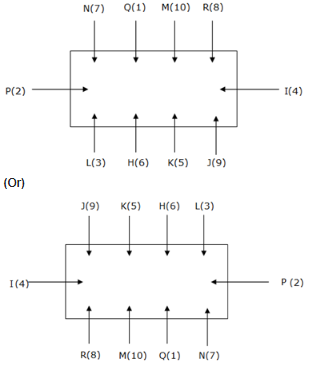
    H and M are diagonally opposite to each other. K sits fourth to the left of M, who sits longer side, also sits third from the end of the table.

    J faces one who likes 8 who is an immediate neighbour of M. J sits in end of the table.
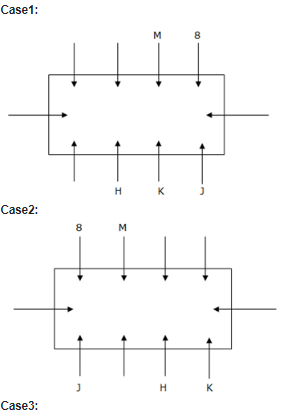
    Two persons sit between L and J, who likes odd number, also sits at the end of the table. L faces an immediate neighbour of Q who sits third to the right of I. K likes 5. Q likes 1.

    Either R or I is an immediate neighbour of M but both R and I are immediate neighbours. P does not sit in a longer side and likes even number.

    One who likes 4 faces P. One who likes 10 and 8 are immediate neighbours.

    The immediate neighbour of Q likes 7.

    L likes odd prime number.

    The difference of H and L is same as the difference of J and H.


  • Question 3/11
    1 / -0

    Directions For Questions

    Study the following information carefully and answer the below questions.

    Ten friends H, I, J, K, L, M, N, P, Q, and R are sitting in the rectangular table. All of them like different numbers from 1 to 10. Four members sit in each of the longer sides and one member sits in each of the smaller sides. All of them are facing inside the table. All the above information is not necessarily in the same order.

    H and M are diagonally opposite to each other. L faces an immediate neighbour of Q who sits third to the right of I. One who likes 4 faces P. K likes 5. The immediate neighbour of Q likes 7. Neither L nor I is an immediate neighbour of K. The one who likes 10 and 8 are immediate neighbours. K sits fourth to the left of M, who sits longer side, also sits third from the end of the table. Two persons sit between L and J, who likes odd number, also sits at the end of the table. Either R or I is an immediate neighbour of M but both R and I are immediate neighbours. P does not sit on a longer side and likes even number. J faces one who likes 8 who is an immediate neighbour of M. L likes odd prime number. The difference of H and L is same as the difference of J and H. Neither H nor P likes 7. Q likes 1.

    ...view full instructions


    Who among the following person likes 7?

    Solutions

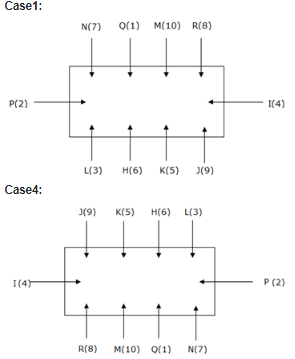
    H and M are diagonally opposite to each other. K sits fourth to the left of M, who sits longer side, also sits third from the end of the table.

    J faces one who likes 8 who is an immediate neighbour of M. J sits in end of the table.
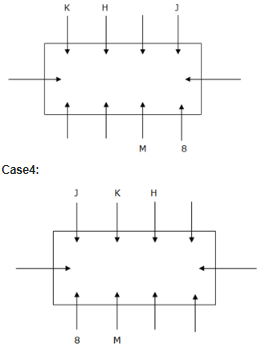
    Two persons sit between L and J, who likes odd number, also sits at the end of the table. L faces an immediate neighbour of Q who sits third to the right of I. K likes 5. Q likes 1.

    Either R or I is an immediate neighbour of M but both R and I are immediate neighbours. P does not sit in a longer side and likes even number.
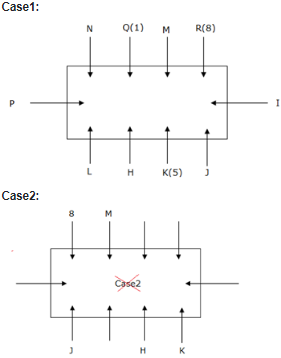
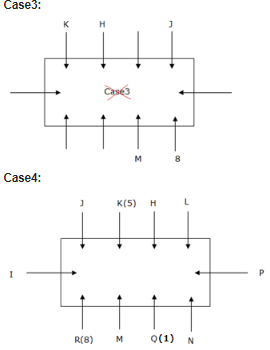
    One who likes 4 faces P. One who likes 10 and 8 are immediate neighbours.

    The immediate neighbour of Q likes 7.

    L likes odd prime number.

    The difference of H and L is same as the difference of J and H.
     

  • Question 4/11
    1 / -0

    Directions For Questions

    Study the following information carefully and answer the below questions.

    Ten friends H, I, J, K, L, M, N, P, Q, and R are sitting in the rectangular table. All of them like different numbers from 1 to 10. Four members sit in each of the longer sides and one member sits in each of the smaller sides. All of them are facing inside the table. All the above information is not necessarily in the same order.

    H and M are diagonally opposite to each other. L faces an immediate neighbour of Q who sits third to the right of I. One who likes 4 faces P. K likes 5. The immediate neighbour of Q likes 7. Neither L nor I is an immediate neighbour of K. The one who likes 10 and 8 are immediate neighbours. K sits fourth to the left of M, who sits longer side, also sits third from the end of the table. Two persons sit between L and J, who likes odd number, also sits at the end of the table. Either R or I is an immediate neighbour of M but both R and I are immediate neighbours. P does not sit on a longer side and likes even number. J faces one who likes 8 who is an immediate neighbour of M. L likes odd prime number. The difference of H and L is same as the difference of J and H. Neither H nor P likes 7. Q likes 1.

    ...view full instructions


    Which of the following combination is true?

    Solutions

    H and M are diagonally opposite to each other. K sits fourth to the left of M, who sits longer side, also sits third from the end of the table.

    J faces one who likes 8 who is an immediate neighbour of M. J sits in end of the table.

    Two persons sit between L and J, who likes odd number, also sits at the end of the table. L faces an immediate neighbour of Q who sits third to the right of I. K likes 5. Q likes 1.

    Either R or I is an immediate neighbour of M but both R and I are immediate neighbours. P does not sit in a longer side and likes even number.

    One who likes 4 faces P. One who likes 10 and 8 are immediate neighbours.

    The immediate neighbour of Q likes 7.

    L likes odd prime number.

    The difference of H and L is same as the difference of J and H.


  • Question 5/11
    1 / -0

    Directions For Questions

    Study the following information carefully and answer the below questions.

    Ten friends H, I, J, K, L, M, N, P, Q, and R are sitting in the rectangular table. All of them like different numbers from 1 to 10. Four members sit in each of the longer sides and one member sits in each of the smaller sides. All of them are facing inside the table. All the above information is not necessarily in the same order.

    H and M are diagonally opposite to each other. L faces an immediate neighbour of Q who sits third to the right of I. One who likes 4 faces P. K likes 5. The immediate neighbour of Q likes 7. Neither L nor I is an immediate neighbour of K. The one who likes 10 and 8 are immediate neighbours. K sits fourth to the left of M, who sits longer side, also sits third from the end of the table. Two persons sit between L and J, who likes odd number, also sits at the end of the table. Either R or I is an immediate neighbour of M but both R and I are immediate neighbours. P does not sit on a longer side and likes even number. J faces one who likes 8 who is an immediate neighbour of M. L likes odd prime number. The difference of H and L is same as the difference of J and H. Neither H nor P likes 7. Q likes 1.

    ...view full instructions


    Four of the following five are alike in a certain way based on the above arrangement. Which of the following does not belong to that group?

    Solutions

    H and M are diagonally opposite to each other. K sits fourth to the left of M, who sits longer side, also sits third from the end of the table.

    J faces one who likes 8 who is an immediate neighbour of M. J sits in end of the table.

    Two persons sit between L and J, who likes odd number, also sits at the end of the table. L faces an immediate neighbour of Q who sits third to the right of I. K likes 5. Q likes 1.

    Either R or I is an immediate neighbour of M but both R and I are immediate neighbours. P does not sit in a longer side and likes even number.

    One who likes 4 faces P. One who likes 10 and 8 are immediate neighbours.

    The immediate neighbour of Q likes 7.

    L likes odd prime number.

    The difference of H and L is same as the difference of J and H.


  • Question 6/11
    1 / -0

    Directions For Questions

    Study the following information carefully and answer the below questions.

    Ten friends H, I, J, K, L, M, N, P, Q, and R are sitting in the rectangular table. All of them like different numbers from 1 to 10. Four members sit in each of the longer sides and one member sits in each of the smaller sides. All of them are facing inside the table. All the above information is not necessarily in the same order.

    H and M are diagonally opposite to each other. L faces an immediate neighbour of Q who sits third to the right of I. One who likes 4 faces P. K likes 5. The immediate neighbour of Q likes 7. Neither L nor I is an immediate neighbour of K. The one who likes 10 and 8 are immediate neighbours. K sits fourth to the left of M, who sits longer side, also sits third from the end of the table. Two persons sit between L and J, who likes odd number, also sits at the end of the table. Either R or I is an immediate neighbour of M but both R and I are immediate neighbours. P does not sit on a longer side and likes even number. J faces one who likes 8 who is an immediate neighbour of M. L likes odd prime number. The difference of H and L is same as the difference of J and H. Neither H nor P likes 7. Q likes 1.

    ...view full instructions


    If K and M, Q and P interchange their positions, then who sits third to the left of M?

    Solutions

    H and M are diagonally opposite to each other. K sits fourth to the left of M, who sits longer side, also sits third from the end of the table.

    J faces one who likes 8 who is an immediate neighbour of M. J sits in end of the table.

    Two persons sit between L and J, who likes odd number, also sits at the end of the table. L faces an immediate neighbour of Q who sits third to the right of I. K likes 5. Q likes 1.

    Either R or I is an immediate neighbour of M but both R and I are immediate neighbours. P does not sit in a longer side and likes even number.

    One who likes 4 faces P. One who likes 10 and 8 are immediate neighbours.

    The immediate neighbour of Q likes 7.

    L likes odd prime number.

    The difference of H and L is same as the difference of J and H.


  • Question 7/11
    1 / -0

    Directions For Questions

    Study the following information carefully and answer the below questions.

    Ten friends H, I, J, K, L, M, N, P, Q, and R are sitting in the rectangular table. All of them like different numbers from 1 to 10. Four members sit in each of the longer sides and one member sits in each of the smaller sides. All of them are facing inside the table. All the above information is not necessarily in the same order.

    H and M are diagonally opposite to each other. L faces an immediate neighbour of Q who sits third to the right of I. One who likes 4 faces P. K likes 5. The immediate neighbour of Q likes 7. Neither L nor I is an immediate neighbour of K. The one who likes 10 and 8 are immediate neighbours. K sits fourth to the left of M, who sits longer side, also sits third from the end of the table. Two persons sit between L and J, who likes odd number, also sits at the end of the table. Either R or I is an immediate neighbour of M but both R and I are immediate neighbours. P does not sit on a longer side and likes even number. J faces one who likes 8 who is an immediate neighbour of M. L likes odd prime number. The difference of H and L is same as the difference of J and H. Neither H nor P likes 7. Q likes 1.

    ...view full instructions


    If K and M, Q and P interchange their positions, then who sits third to the left of M?

    Solutions

    H and M are diagonally opposite to each other. K sits fourth to the left of M, who sits longer side, also sits third from the end of the table.

    J faces one who likes 8 who is an immediate neighbour of M. J sits in end of the table.

    Two persons sit between L and J, who likes odd number, also sits at the end of the table. L faces an immediate neighbour of Q who sits third to the right of I. K likes 5. Q likes 1.

    Either R or I is an immediate neighbour of M but both R and I are immediate neighbours. P does not sit in a longer side and likes even number.

    One who likes 4 faces P. One who likes 10 and 8 are immediate neighbours.

    The immediate neighbour of Q likes 7.

    L likes odd prime number.

    The difference of H and L is same as the difference of J and H.


  • Question 8/11
    1 / -0

    Directions For Questions

    Study the following information carefully and answer the below questions.

    ‘A&B’ means ‘Point A is 4m North of Point B’

    ‘A@B’ means ‘Point A is 7m South of Point B’

    ‘A^B’ means ‘Point A is 10m West of Point B’

    ‘A$B’ means ‘Point A is 3m East of Point B’

    ...view full instructions


    If Q@W&R^T$Y then, in which direction is Point Q with respect to Point Y?

    Solutions


  • Question 9/11
    1 / -0

    Directions For Questions

    Study the following information carefully and answer the below questions.

    ‘A&B’ means ‘Point A is 4m North of Point B’

    ‘A@B’ means ‘Point A is 7m South of Point B’

    ‘A^B’ means ‘Point A is 10m West of Point B’

    ‘A$B’ means ‘Point A is 3m East of Point B’

    ...view full instructions


    If H$J@K$L^G then, how far and in which direction is Point K with respect to Point G?

    Solutions


  • Question 10/11
    1 / -0

    How many such pairs of letters are there in the word ‘TOUCHSCREEN’ each of which has as many letters between them in the word as in the English alphabet?

    Solutions


  • Question 11/11
    1 / -0

    Some students are standing in a row facing north. Arun stands 11th from the left end and Aravind is 18th from the right end. If they interchange their position, Arun would be 6th from the left end. How many students are there in the row?

    Solutions


Close button icon
User Profile
-

Correct (-)

Wrong (-)

Skipped (-)


  • 1
  • 2
  • 3
  • 4
  • 5
  • 6
  • 7
  • 8
  • 9
  • 10
  • 11
Mockers logo Get latest Exam Updates
& Study Material Alerts!
No, Thanks
Arrow pointer icon
Click on Allow to receive notifications
Notification bell icon ×
Open Now