Please wait...

Circular Arrangement Test 2
Menu grid icon
Result Result point icon
Circular Arrangement Test 2
  • Goals icon

    /

    Score
  • Trophy icon

    -

    Rank
White alarm icon Time Taken: -
Result frame illustration
  • Question 1/15
    1 / -0

    Directions For Questions

    Directions: Study the following information and answer the given questions.

    Eight people A, B, C, D, E, F, G and H are sitting in a circle facing the center. All eight belong to different countries –India, USA, Russia, China, Canada, Brazil, Australia and England. They are not necessarily seated in mentioned order.

    A is sitting second to the right of the person from Russia while C is sitting second to the right of D. The person from Australia is to the immediate left of G and G is not from India. Neither A nor B is an immediate neighbor of G. The person from china is sitting immediately to the left of F. The person from Brazil is sitting fourth to the right of the person from Russia. The person from Canada is sitting second to the right of G. C, the person from USA is sitting between the person from Brazil and H. The person from India is sitting fifth to the left of the person from Canada. B is sitting fourth to the right of D.

    ...view full instructions


    Who belong to USA and what is its position from A?
    Solutions

    People: A, B, C, D, E, F, G and H

    Countries: India, USA, Russia, China, Canada, Brazil, Australia and England

    1) A is sitting second to the right of the person form Russia and the person from Brazil is sitting fourth to the right of the person from Russia.
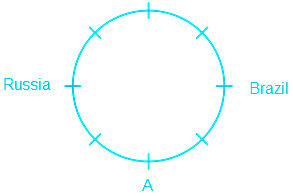
    2) C, the person from USA is sitting between the person from Brazil and H.
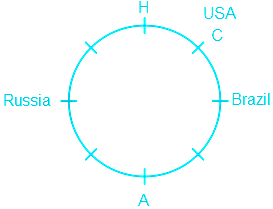
    3) C is sitting second to the right of D that means D is to the second left of C.
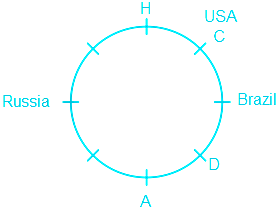
    4) B is sitting fourth to the right of D.
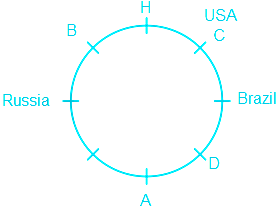
    5) Neither A nor is B an immediate neighbour of G. The person from Australia is to the immediate left of G and G is not the person from India.
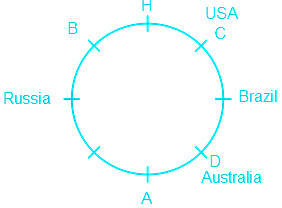
    6) The person from Canada is sitting second to the right of G and the person from India is sitting fifth to the left of the person from Canada
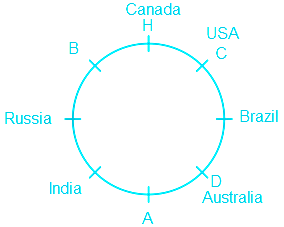
    7) The person from China is sitting to the immediate left of F. The only position with missing alphabet at right and missing nationality at left is with the person from Russia as F and the person from China as B.
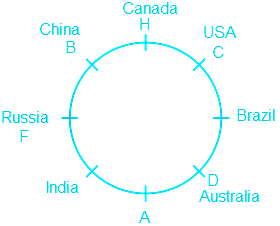
    8) The remaining position for E and the person from England can be filled.

    The final arrangement will be:
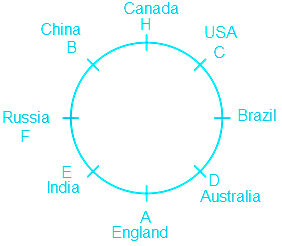
    C belongs to USA and is sitting third to the left of A.

    Hence, C, third to the right is the correct answer.
  • Question 2/15
    1 / -0

    Directions For Questions

    Directions: Study the following information and answer the given questions.

    Eight people A, B, C, D, E, F, G and H are sitting in a circle facing the center. All eight belong to different countries –India, USA, Russia, China, Canada, Brazil, Australia and England. They are not necessarily seated in mentioned order.

    A is sitting second to the right of the person from Russia while C is sitting second to the right of D. The person from Australia is to the immediate left of G and G is not from India. Neither A nor B is an immediate neighbor of G. The person from china is sitting immediately to the left of F. The person from Brazil is sitting fourth to the right of the person from Russia. The person from Canada is sitting second to the right of G. C, the person from USA is sitting between the person from Brazil and H. The person from India is sitting fifth to the left of the person from Canada. B is sitting fourth to the right of D.

    ...view full instructions


    How many people are sitting between the person from China and D?
    Solutions

    People: A, B, C, D, E, F, G and H

    Countries: India, USA, Russia, China, Canada, Brazil, Australia and England

    1) A is sitting second to the right of the person form Russia and the person from Brazil is sitting fourth to the right of the person from Russia.

    2) C, the person from USA is sitting between the person from Brazil and H.

    3) C is sitting second to the right of D that means D is to the second left of C.

    4) B is sitting fourth to the right of D.

    5) Neither A nor is B an immediate neighbour of G. The person from Australia is to the immediate left of G and G is not the person from India.

    6) The person from Canada is sitting second to the right of G and the person from India is sitting fifth to the left of the person from Canada

    7) The person from China is sitting to the immediate left of F. The only position with missing alphabet at right and missing nationality at left is with the person from Russia as F and the person from China as B.

    8) The remaining position for E and the person from England can be filled.

    The final arrangement will be:

    The person from China and D are sitting opposite to each other.

    Hence, the correct answer is 3.

  • Question 3/15
    1 / -0

    Directions For Questions

    Directions: Study the following information and answer the given questions.

    Eight people A, B, C, D, E, F, G and H are sitting in a circle facing the center. All eight belong to different countries –India, USA, Russia, China, Canada, Brazil, Australia and England. They are not necessarily seated in mentioned order.

    A is sitting second to the right of the person from Russia while C is sitting second to the right of D. The person from Australia is to the immediate left of G and G is not from India. Neither A nor B is an immediate neighbor of G. The person from china is sitting immediately to the left of F. The person from Brazil is sitting fourth to the right of the person from Russia. The person from Canada is sitting second to the right of G. C, the person from USA is sitting between the person from Brazil and H. The person from India is sitting fifth to the left of the person from Canada. B is sitting fourth to the right of D.

    ...view full instructions


    What is the position of A with respect to B?
    Solutions

    People: A, B, C, D, E, F, G and H

    Countries: India, USA, Russia, China, Canada, Brazil, Australia and England

    1) A is sitting second to the right of the person form Russia and the person from Brazil is sitting fourth to the right of the person from Russia.

    2) C, the person from USA is sitting between the person from Brazil and H.

    3) C is sitting second to the right of D that means D is to the second left of C.

    4) B is sitting fourth to the right of D.

    5) Neither A nor is B an immediate neighbour of G. The person from Australia is to the immediate left of G and G is not the person from India.

    6) The person from Canada is sitting second to the right of G and the person from India is sitting fifth to the left of the person from Canada

    7) The person from China is sitting to the immediate left of F. The only position with missing alphabet at right and missing nationality at left is with the person from Russia as F and the person from China as B.

    8) The remaining position for E and the person from England can be filled.

    The final arrangement will be:

    A is sitting at third position to the right of B.

    Hence, third to the right is the correct answer.
  • Question 4/15
    1 / -0

    Directions For Questions

    Directions: Study the following information and answer the given questions.

    Eight people A, B, C, D, E, F, G and H are sitting in a circle facing the center. All eight belong to different countries –India, USA, Russia, China, Canada, Brazil, Australia and England. They are not necessarily seated in mentioned order.

    A is sitting second to the right of the person from Russia while C is sitting second to the right of D. The person from Australia is to the immediate left of G and G is not from India. Neither A nor B is an immediate neighbor of G. The person from china is sitting immediately to the left of F. The person from Brazil is sitting fourth to the right of the person from Russia. The person from Canada is sitting second to the right of G. C, the person from USA is sitting between the person from Brazil and H. The person from India is sitting fifth to the left of the person from Canada. B is sitting fourth to the right of D.

    ...view full instructions


    Who is sitting exactly opposite to the person from India?
    Solutions

    People: A, B, C, D, E, F, G and H

    Countries: India, USA, Russia, China, Canada, Brazil, Australia and England

    1) A is sitting second to the right of the person form Russia and the person from Brazil is sitting fourth to the right of the person from Russia.

    2) C, the person from USA is sitting between the person from Brazil and H.

    3) C is sitting second to the right of D that means D is to the second left of C.

    4) B is sitting fourth to the right of D.

    5) Neither A nor is B an immediate neighbour of G. The person from Australia is to the immediate left of G and G is not the person from India.

    6) The person from Canada is sitting second to the right of G and the person from India is sitting fifth to the left of the person from Canada

    7) The person from China is sitting to the immediate left of F. The only position with missing alphabet at right and missing nationality at left is with the person from Russia as F and the person from China as B.

    8) The remaining position for E and the person from England can be filled.

    The final arrangement will be:

    Hence, C is sitting exactly opposite to the person from India.

  • Question 5/15
    1 / -0

    Directions For Questions

    Directions: Study the following information and answer the given questions.

    Eight people A, B, C, D, E, F, G and H are sitting in a circle facing the center. All eight belong to different countries –India, USA, Russia, China, Canada, Brazil, Australia and England. They are not necessarily seated in mentioned order.

    A is sitting second to the right of the person from Russia while C is sitting second to the right of D. The person from Australia is to the immediate left of G and G is not from India. Neither A nor B is an immediate neighbor of G. The person from china is sitting immediately to the left of F. The person from Brazil is sitting fourth to the right of the person from Russia. The person from Canada is sitting second to the right of G. C, the person from USA is sitting between the person from Brazil and H. The person from India is sitting fifth to the left of the person from Canada. B is sitting fourth to the right of D.

    ...view full instructions


    Who among the following belong to Australia?
    Solutions

    People: A, B, C, D, E, F, G and H

    Countries: India, USA, Russia, China, Canada, Brazil, Australia and England

    1) A is sitting second to the right of the person form Russia and the person from Brazil is sitting fourth to the right of the person from Russia.

    2) C, the person from USA is sitting between the person from Brazil and H.

    3) C is sitting second to the right of D that means D is to the second left of C.

    4) B is sitting fourth to the right of D.

    5) Neither A nor is B an immediate neighbour of G. The person from Australia is to the immediate left of G and G is not the person from India.

    6) The person from Canada is sitting second to the right of G and the person from India is sitting fifth to the left of the person from Canada

    7) The person from China is sitting to the immediate left of F. The only position with missing alphabet at right and missing nationality at left is with the person from Russia as F and the person from China as B.

    8) The remaining position for E and the person from England can be filled.

    The final arrangement will be:

    Hence, D belong to Australia.
  • Question 6/15
    1 / -0

    Directions For Questions

    Directions: Study the following information carefully and answer the questions follows:

    A certain number of people sits at the circular table facing towards the centre.

    i) Only three peoples sit between A & C.

    ii) Only five peoples sit between E & D,when counted from the left of E.

    iii) G sits fourth to the left of B.

    iv) F sits second to the left of E.

    v) B is one of the immediate neighbours of C.

    vi) Only three people sit between C & E.

    vii) Not more than four people sit between G & F. When counted from the left of F.

    viii) Only six people sit between E & B(counted anticlockwise from E).

    ix) G is not an immediate neighbour of E.

    ...view full instructions


    How many known people are sitting between A & C, when counted from the right of A?
    Solutions

    1) Only five peoples sit between E & D. When counted from the left of E.

    2) F sits second to the left of E.

    3) Only three people sit between C & E.

    From the above statement, we have two cases. i.e. Case-1 & Case-2.

    4) B is one of the immediate neighbours of C.

    5) G sits fourth to the left of B.

    6) G is not an immediate neighbour of E.

    From the above two conditions ; we can’t place B in Case-1.

    Though Condition (vi) is violated.

    So, Case -1is eliminated.

    For Case-2, We have 2 cases; Case-2(i) & Case-2(ii)

    7) Not more than four people sit between G & F. When counted from the left of F.

    From the above statement, Case-2(ii) is eliminated.

    8) Only six people sit between E & B. (counted anticlockwise from E)

    Thus 2 known people are sitting between A and C when counted from the right of A.
  • Question 7/15
    1 / -0

    Directions For Questions

    Directions: Study the following information carefully and answer the questions follows:

    A certain number of people sits at the circular table facing towards the centre.

    i) Only three peoples sit between A & C.

    ii) Only five peoples sit between E & D,when counted from the left of E.

    iii) G sits fourth to the left of B.

    iv) F sits second to the left of E.

    v) B is one of the immediate neighbours of C.

    vi) Only three people sit between C & E.

    vii) Not more than four people sit between G & F. When counted from the left of F.

    viii) Only six people sit between E & B(counted anticlockwise from E).

    ix) G is not an immediate neighbour of E.

    ...view full instructions


    How many people sit in this circular arrangement?
    Solutions

    1) Only five peoples sit between E & D. When counted from the left of E.

    2) F sits second to the left of E.

    3) Only three people sit between C & E.

    From the above statement, we have two cases. i.e. Case-1 & Case-2.

    4) B is one of the immediate neighbours of C.

    5) G sits fourth to the left of B.

    6) G is not an immediate neighbour of E.

    From the above two conditions ; we can’t place B in Case-1.

    Though Condition (vi) is violated.

    So, Case -1is eliminated.

    For Case-2, We have 2 cases; Case-2(i) & Case-2(ii)

    7) Not more than four people sit between G & F. When counted from the left of F.

    From the above statement, Case-2(ii) is eliminated.

    8) Only six people sit between E & B. (counted anticlockwise from E)

    Thus 10 people are sitting in this circular arrangement.
  • Question 8/15
    1 / -0

    Directions For Questions

    Directions: Study the following information carefully and answer the questions follows:

    A certain number of people sits at the circular table facing towards the centre.

    i) Only three peoples sit between A & C.

    ii) Only five peoples sit between E & D,when counted from the left of E.

    iii) G sits fourth to the left of B.

    iv) F sits second to the left of E.

    v) B is one of the immediate neighbours of C.

    vi) Only three people sit between C & E.

    vii) Not more than four people sit between G & F. When counted from the left of F.

    viii) Only six people sit between E & B(counted anticlockwise from E).

    ix) G is not an immediate neighbour of E.

    ...view full instructions


    Who sits 4th to the left E?
    Solutions

    1) Only five peoples sit between E & D. When counted from the left of E.

    2) F sits second to the left of E.

    3) Only three people sit between C & E.

    From the above statement, we have two cases. i.e. Case-1 & Case-2.

    4) B is one of the immediate neighbours of C.

    5) G sits fourth to the left of B.

    6) G is not an immediate neighbour of E.

    From the above two conditions ; we can’t place B in Case-1.

    Though Condition (vi) is violated.

    So, Case -1is eliminated.

    For Case-2, We have 2 cases; Case-2(i) & Case-2(ii)

    7) Not more than four people sit between G & F. When counted from the left of F.

    From the above statement, Case-2(ii) is eliminated.

    8) Only six people sit between E & B. (counted anticlockwise from A)

    Thus C sits 4th to the left of E.
  • Question 9/15
    1 / -0

    Directions For Questions

    Directions: Study the following information carefully and answer the questions follows:

    A certain number of people sits at the circular table facing towards the centre.

    i) Only three peoples sit between A & C.

    ii) Only five peoples sit between E & D,when counted from the left of E.

    iii) G sits fourth to the left of B.

    iv) F sits second to the left of E.

    v) B is one of the immediate neighbours of C.

    vi) Only three people sit between C & E.

    vii) Not more than four people sit between G & F. When counted from the left of F.

    viii) Only six people sit between E & B(counted anticlockwise from E).

    ix) G is not an immediate neighbour of E.

    ...view full instructions


    Who are the immediate neighbours of G?
    Solutions

    1) Only five peoples sit between E & D. When counted from the left of E.

    2) F sits second to the left of E.

    3) Only three people sit between C & E.

    From the above statement, we have two cases. i.e. Case-1 & Case-2.

    4) B is one of the immediate neighbours of C.

    5) G sits fourth to the left of B.

    6) G is not an immediate neighbour of E.

    From the above two conditions ; we can’t place B in Case-1.

    Though Condition (vi) is violated.

    So, Case -1is eliminated.

    For Case-2, We have 2 cases; Case-2(i) & Case-2(ii)

    7) Not more than four people sit between G & F. When counted from the left of F.

    From the above statement, Case-2(ii) is eliminated.

    8) Only six people sit between E & B. (counted anticlockwise from E)

    Thus D and A are the immediate neighbours of G.
  • Question 10/15
    1 / -0

    Directions For Questions

    Directions: Study the following information carefully and answer the questions follows:

    A certain number of people sits at the circular table facing towards the centre.

    i) Only three peoples sit between A & C.

    ii) Only five peoples sit between E & D,when counted from the left of E.

    iii) G sits fourth to the left of B.

    iv) F sits second to the left of E.

    v) B is one of the immediate neighbours of C.

    vi) Only three people sit between C & E.

    vii) Not more than four people sit between G & F. When counted from the left of F.

    viii) Only six people sit between E & B(counted anticlockwise from E).

    ix) G is not an immediate neighbour of E.

    ...view full instructions


    If C & E interchange their positions, then who will be the 6th to the right of E?
    Solutions

    1) Only five peoples sit between E & D. When counted from the left of E.

    2) F sits second to the left of E.

    3) Only three people sit between C & E.

    From the above statement, we have two cases. i.e. Case-1 & Case-2.

    4) B is one of the immediate neighbours of C.

    5) G sits fourth to the left of B.

    6) G is not an immediate neighbour of E.

    From the above two conditions ; we can’t place B in Case-1.

    Though Condition (vi) is violated.

    So, Case -1is eliminated.

    For Case-2, We have 2 cases; Case-2(i) & Case-2(ii)

    7) Not more than four people sit between G & F. When counted from the left of F.

    From the above statement, Case-2(ii) is eliminated.

    8) Only six people sit between E & B. (counted anticlockwise from E)

    Thus if C & E interchange their positions, A will be 6th to the right of E.
  • Question 11/15
    1 / -0

    Directions For Questions

    Direction: Study the information carefully and answer the given questions.

    Eight persons viz. Akshay, Sujay, Sunil, Prajwal, Sumant, Rahul, Pramod, and Shekhar are sitting around a square table but not necessarily in the same order. Four people are sitting at the corners of the table and facing outside. Remaining four people are sitting on the edges of table and faces inside the table.

    Sujay who faces outside the table is sitting second to the left of Akshay. Pramod is not an immediate neighbour of Sujay. Sunil and Sujay are sitting opposite to each other. Prajwal who is facing inside the table is an immediate neighbour of Shekhar who is sitting to the immediate right of Sumant.

    ...view full instructions


    Who among the following is facing inside the table?
    Solutions

    1) Sujay who faces outside the table is sitting second to the left of Akshay.

    2) Sunil and Sujay are sitting opposite to each other.

    3) Prajwal who is facing inside the table is an immediate neighbour of Shekhar who is sitting to the immediate right of Sumant.

    4) Pramod is not an immediate neighbour of Sujay.

    Therefore, Pramod will sit between Sunil and Akshay and the only left person Rahul will sit between Akshay and Sujay.

    Hence, Sumant and Pramod both are facing inside the table.
  • Question 12/15
    1 / -0

    Directions For Questions

    Direction: Study the information carefully and answer the given questions.

    Eight persons viz. Akshay, Sujay, Sunil, Prajwal, Sumant, Rahul, Pramod, and Shekhar are sitting around a square table but not necessarily in the same order. Four people are sitting at the corners of the table and facing outside. Remaining four people are sitting on the edges of table and faces inside the table.

    Sujay who faces outside the table is sitting second to the left of Akshay. Pramod is not an immediate neighbour of Sujay. Sunil and Sujay are sitting opposite to each other. Prajwal who is facing inside the table is an immediate neighbour of Shekhar who is sitting to the immediate right of Sumant.

    ...view full instructions


    Who is sitting third to the right of Rahul?
    Solutions

    1) Sujay who faces outside the table is sitting second to the left of Akshay.

    2) Sunil and Sujay are sitting opposite to each other.

    3) Prajwal who is facing inside the table is an immediate neighbour of Shekhar who is sitting to the immediate right of Sumant.

    4) Pramod is not an immediate neighbour of Sujay.

    Therefore, Pramod will sit between Sunil and Akshay and the only left person Rahul will sit between Akshay and Sujay.

    Hence, Shekhar is sitting third to the right of Rahul.

  • Question 13/15
    1 / -0

    Directions For Questions

    Direction: Study the information carefully and answer the given questions.

    Eight persons viz. Akshay, Sujay, Sunil, Prajwal, Sumant, Rahul, Pramod, and Shekhar are sitting around a square table but not necessarily in the same order. Four people are sitting at the corners of the table and facing outside. Remaining four people are sitting on the edges of table and faces inside the table.

    Sujay who faces outside the table is sitting second to the left of Akshay. Pramod is not an immediate neighbour of Sujay. Sunil and Sujay are sitting opposite to each other. Prajwal who is facing inside the table is an immediate neighbour of Shekhar who is sitting to the immediate right of Sumant.

    ...view full instructions


    Who is sitting between Sunil and Shekhar?
    Solutions

    1) Sujay who faces outside the table is sitting second to the left of Akshay.

    2) Sunil and Sujay are sitting opposite to each other.

    3) Prajwal who is facing inside the table is an immediate neighbour of Shekhar who is sitting to the immediate right of Sumant.

    4) Pramod is not an immediate neighbour of Sujay.

    Therefore, Pramod will sit between Sunil and Akshay and the only left person Rahul will sit between Akshay and Sujay.

    Hence, Prajwal is sitting between Sunil and Shekhar.

  • Question 14/15
    1 / -0

    Directions For Questions

    Direction: Study the information carefully and answer the given questions.

    Eight persons viz. Akshay, Sujay, Sunil, Prajwal, Sumant, Rahul, Pramod, and Shekhar are sitting around a square table but not necessarily in the same order. Four people are sitting at the corners of the table and facing outside. Remaining four people are sitting on the edges of table and faces inside the table.

    Sujay who faces outside the table is sitting second to the left of Akshay. Pramod is not an immediate neighbour of Sujay. Sunil and Sujay are sitting opposite to each other. Prajwal who is facing inside the table is an immediate neighbour of Shekhar who is sitting to the immediate right of Sumant.

    ...view full instructions


    Which among the following pair is neighbour of Sunil?
    Solutions

    1) Sujay who faces outside the table is sitting second to the left of Akshay.

    2) Sunil and Sujay are sitting opposite to each other.

    3) Prajwal who is facing inside the table is an immediate neighbour of Shekhar who is sitting to the immediate right of Sumant.

    4) Pramod is not an immediate neighbour of Sujay.

    Therefore, Pramod will sit between Sunil and Akshay and the only left person Rahul will sit between Akshay and Sujay.

    Hence, Pramod and Prajwal are the neighbours of Sunil.

  • Question 15/15
    1 / -0

    Directions For Questions

    Direction: Study the information carefully and answer the given questions.

    Eight persons viz. Akshay, Sujay, Sunil, Prajwal, Sumant, Rahul, Pramod, and Shekhar are sitting around a square table but not necessarily in the same order. Four people are sitting at the corners of the table and facing outside. Remaining four people are sitting on the edges of table and faces inside the table.

    Sujay who faces outside the table is sitting second to the left of Akshay. Pramod is not an immediate neighbour of Sujay. Sunil and Sujay are sitting opposite to each other. Prajwal who is facing inside the table is an immediate neighbour of Shekhar who is sitting to the immediate right of Sumant.

    ...view full instructions


    If Sumant is related to Pramod and Sunil is related to Sujay then in the same way who is related to Akshay?
    Solutions

    1) Sujay who faces outside the table is sitting second to the left of Akshay.

    2) Sunil and Sujay are sitting opposite to each other.

    3) Prajwal who is facing inside the table is an immediate neighbour of Shekhar who is sitting to the immediate right of Sumant.

    4) Pramod is not an immediate neighbour of Sujay.

    Therefore, Pramod will sit between Sunil and Akshay and the only left person Rahul will sit between Akshay and Sujay.

    Sumant is sitting opposite to Pramod and Sunil is sitting opposite to Sujay. Shekhar is sitting opposite to Akshay.

    Hence, Shekhar is the correct answer.
Close button icon
User Profile
-

Correct (-)

Wrong (-)

Skipped (-)


  • 1
  • 2
  • 3
  • 4
  • 5
  • 6
  • 7
  • 8
  • 9
  • 10
  • 11
  • 12
  • 13
  • 14
  • 15
Mockers logo Get latest Exam Updates
& Study Material Alerts!
No, Thanks
Arrow pointer icon
Click on Allow to receive notifications
Notification bell icon ×
Open Now