Please wait...

Linear Arrangement Test 3
Menu grid icon
Result Result point icon
Linear Arrangement Test 3
  • Goals icon

    /

    Score
  • Trophy icon

    -

    Rank
White alarm icon Time Taken: -
Result frame illustration
  • Question 1/15
    1 / -0

    Directions For Questions

    Study the following information carefully and answer the questions following it.

    Eight students K, L, M, N, O, P, Q, and R are seated in a row facing north. Q is a neighbour of P. Only one person is sitting between N and P and neither of them is sitting at the extreme ends.

    There are exactly two persons sitting to the left of L. M sits to the left of K. Three persons sit between K and R and neither of K or R is a neighbour of L.

    ...view full instructions


    Who is sitting at the extreme right end?
    Solutions

    Eight students: K, L, M, N, O, P, Q and R

    i)There are exactly two persons sitting to the left of L.

    ii) 3 people sit between K and R and neither of K nor R is a neighbour of L.

    (This means K and R can’t occupy the 2nd and 4th position.

    Also, they can’t occupy the position after that because there are 4 vacant places and there are 3 people to be accommodated in between K and R which totals to 5 which is not possible. Hence, either K or R occupies the 1st position.)

    iii) M sits to the left of K.

    (So, K can’t be at the extreme left.)

    iv) Only one person is sitting between N and P and neither of them is sitting at the extreme ends.

    v) Q is a neighbour of P. It means P can’t occupy positions between R and L and L and K as the positions surrounding them are already occupied.

    Therefore, the final arrangement is as follows:

    Hence, O sits at the extreme right.

  • Question 2/15
    1 / -0

    Directions For Questions

    Study the following information carefully and answer the questions following it.

    Eight students K, L, M, N, O, P, Q, and R are seated in a row facing north. Q is a neighbour of P. Only one person is sitting between N and P and neither of them is sitting at the extreme ends.

    There are exactly two persons sitting to the left of L. M sits to the left of K. Three persons sit between K and R and neither of K or R is a neighbour of L.

    ...view full instructions


    Who is sitting in the position second to the left of K?
    Solutions

    Eight students: K, L, M, N, O, P, Q and R

    i)There are exactly two persons sitting to the left of L.

    ii) 3 people sit between K and R and neither of K nor R is a neighbour of L.

    (This means K and R can’t occupy the 2nd and 4th position.

    Also, they can’t occupy the position after that because there are 4 vacant places and there are 3 people to be accommodated in between K and R which totals to 5 which is not possible. Hence, either K or R occupies the 1st position.)

    iii) M sits to the left of K.

    (So, K can’t be at the extreme left.)

    iv) Only one person is sitting between N and P and neither of them is sitting at the extreme ends.

    v) Q is a neighbor of P. It means P can’t occupy positions between R and L and L and K as the positions surrounding them are already occupied.

    Therefore, the final arrangement is as follows:

    Hence, L sits second to the left of K.

  • Question 3/15
    1 / -0

    Directions For Questions

    Study the following information carefully and answer the questions following it.

    Eight students K, L, M, N, O, P, Q, and R are seated in a row facing north. Q is a neighbour of P. Only one person is sitting between N and P and neither of them is sitting at the extreme ends.

    There are exactly two persons sitting to the left of L. M sits to the left of K. Three persons sit between K and R and neither of K or R is a neighbour of L.

    ...view full instructions


    How many students sit between M and Q?
    Solutions

    Eight students: K, L, M, N, O, P, Q and R

    i)There are exactly two persons sitting to the left of L.

    ii) 3 people sit between K and R and neither of K nor R is a neighbour of L.

    (This means K and R can’t occupy the 2nd and 4th position.

    Also, they can’t occupy the position after that because there are 4 vacant places and there are 3 people to be accommodated in between K and R which totals to 5 which is not possible. Hence, either K or R occupies the 1st position.)

    iii) M sits to the left of K.

    (So, K can’t be at the extreme left.)

    iv) Only one person is sitting between N and P and neither of them is sitting at the extreme ends.

    v) Q is a neighbour of P. It means P can’t occupy positions between R and L and L and K as the positions surrounding them are already occupied.

    Therefore, the final arrangement is as follows:

    Hence, there are four students sits between M and Q.

  • Question 4/15
    1 / -0

    Directions For Questions

    Study the following information carefully and answer the questions following it.

    Certain people are seating in a single row facing north.

    A is sitting in third place form the right end. There are 2 people between A and C. There is one person between C and D. E is to the second left of D. H is to the fifth right of C. A is exactly sitting between B and F who is to the right of A. G is to the second left of J who is to the second left of I who is an immediate neighbor of B.

    ...view full instructions


    Who is sitting exactly between G and I?
    Solutions

    1) A is sitting in third place form the right end.

    2) There are 2 people between A and C.

    3) There is one person between C and D.

    4) E is to the second left of D.

    5) H is to the fifth right of C.

    6) A is exactly sitting between B and F who is to the right of A.

    7) G is to the second left of J who is to the second left of I.

    Hence, J is exactly sitting between G and I.

  • Question 5/15
    1 / -0

    Directions For Questions

    Study the following information carefully and answer the questions following it.

    Certain people are seating in a single row facing north.

    A is sitting in third place form the right end. There are 2 people between A and C. There is one person between C and D. E is to the second left of D. H is to the fifth right of C. A is exactly sitting between B and F who is to the right of A. G is to the second left of J who is to the second left of I who is an immediate neighbor of B.

    ...view full instructions


    Which of the following statements is true?
    Solutions

    1) A is sitting in third place form the right end. 

    2) There are 2 people between A and C. 

    3) There is one person between C and D. 

    4) E is to the second left of D. 

    5) H is to the fifth right of C. 

    6) A is exactly sitting between B and F who is to the right of A. 

    7) G is to the second left of J who is to the second left of I.

    Hence, the statement given only in option 2 is correct.

  • Question 6/15
    1 / -0

    Directions For Questions

    Study the following information carefully and answer the questions following it.

    Certain people are seating in a single row facing north.

    A is sitting in third place form the right end. There are 2 people between A and C. There is one person between C and D. E is to the second left of D. H is to the fifth right of C. A is exactly sitting between B and F who is to the right of A. G is to the second left of J who is to the second left of I who is an immediate neighbor of B.

    ...view full instructions


    How many people are sitting between C and F?
    Solutions

    1) A is sitting in third place form the right end. 

    2) There are 2 people between A and C. 

    3) There is one person between C and D. 

    4) E is to the second left of D. 

    5) H is to the fifth right of C. 

    6) A is exactly sitting between B and F who is to the right of A. 

    7) G is to the second left of J who is to the second left of I.

    Hence, there are 3 persons are sitting between C and F.

  • Question 7/15
    1 / -0

    Directions For Questions

    Direction: Study the following information to answer the given questions.

    Seven persons – T, U, V, W, X, Y and Z are sitting in a row but not necessarily in the same order. Among them some are facing south, and some are facing north. If it is given that both are facing the same direction, then both the persons face either south or north. If it is given that the persons are facing different directions, then if one person faces the north then the other person faces south. The following information is known about them.

    T sits fourth to the left of U. X and W are neighbours and they face the same direction. Z sits to the immediate right of W. The neighbours of T face the same direction and do not sit to the right of W. V sits three places away from X, who faces north. No three adjacent persons face the same direction. U and V face different directions.

    ...view full instructions


    What is the position of T with respect to Z?
    Solutions

    Persons - T, U, V, W, X, Y and Z

    People are facing both directions North and South.

    1. V sits three places away from X, who faces north. X and W are neighbours and they face the same direction. Z sits to the immediate right of W.

    So, W faces north.

    Case 1:

    Case 2:

    2. T sits fourth to the left of U. The neighbours of T face the same direction and do not sit to the right of W.

    This is not possible in case 2. So, case 1 is correct.

    3. No three adjacent persons face the same direction. U and V face different directions.

    So, V, T and Z face the south direction.

    Hence, T sits third to the right of Z.

  • Question 8/15
    1 / -0

    Directions For Questions

    Direction: Study the following information to answer the given questions.

    Seven persons – T, U, V, W, X, Y and Z are sitting in a row but not necessarily in the same order. Among them some are facing south, and some are facing north. If it is given that both are facing the same direction, then both the persons face either south or north. If it is given that the persons are facing different directions, then if one person faces the north then the other person faces south. The following information is known about them.

    T sits fourth to the left of U. X and W are neighbours and they face the same direction. Z sits to the immediate right of W. The neighbours of T face the same direction and do not sit to the right of W. V sits three places away from X, who faces north. No three adjacent persons face the same direction. U and V face different directions.

    ...view full instructions


    If Z and Y interchange their positions, who among the following sits to the immediate left of T?
    Solutions

    Persons - T, U, V, W, X, Y and Z

    People are facing both directions North and South.

    1. V sits three places away from X, who faces north. X and W are neighbours and they face the same direction. Z sits to the immediate right of W.

    So, W faces north.

    Case 1:

    Case 2:

    2. T sits fourth to the left of U. The neighbours of T face the same direction and do not sit to the right of W.

    This is not possible in case 2. So, case 1 is correct.

    3. No three adjacent persons face the same direction. U and V face different directions.

    So, V, T and Z face the south direction.

    Hence, if Z and Y interchange their places, X sits to the immediate left of T.

  • Question 9/15
    1 / -0

    Directions For Questions

    Direction: Study the following information to answer the given questions.

    Seven persons – T, U, V, W, X, Y and Z are sitting in a row but not necessarily in the same order. Among them some are facing south, and some are facing north. If it is given that both are facing the same direction, then both the persons face either south or north. If it is given that the persons are facing different directions, then if one person faces the north then the other person faces south. The following information is known about them.

    T sits fourth to the left of U. X and W are neighbours and they face the same direction. Z sits to the immediate right of W. The neighbours of T face the same direction and do not sit to the right of W. V sits three places away from X, who faces north. No three adjacent persons face the same direction. U and V face different directions.

    ...view full instructions


    Four of the following are alike in a certain way and hence form a group. Which is the one that does not belong to that group?
    Solutions

    Persons - T, U, V, W, X, Y and Z

    People are facing both directions North and South.

    1. V sits three places away from X, who faces north. X and W are neighbours and they face the same direction. Z sits to the immediate right of W.

    So, W faces north.

    Case 1:

    Case 2:

    2. T sits fourth to the left of U. The neighbours of T face the same direction and do not sit to the right of W.

    This is not possible in case 2. So, case 1 is correct.

    3. No three adjacent persons face the same direction. U and V face different directions.

    So, V, T and Z face the south direction.

    Hence, except WZ in all other options the second person sits to the immediate left of the first person.

  • Question 10/15
    1 / -0

    Directions For Questions

    Directions: Study the following information carefully and answer the given questions.

    There are six persons A, B, C, D, E and F sitting in a straight line (not necessarily in the same order) facing towards the north and each of them likes different number i.e., 1, 2, 3, 4, 5, 6 (not necessarily in the same order)

    The neighbours of E do not like even numbers. C sits immediate right of E. F sits one of the extreme ends and likes number 6. There are two persons amid the one who likes number 4 and the one who likes number 3. There is a gap of two persons between B and F. The person who sits on one of the extreme position likes number 1. D does not like an odd number. A does not sit immediately next to either F or B. There are either one or three persons between E and F.

    ...view full instructions


    Who sits on the immediate right of B?
    Solutions

    Persons: A, B, C, D, E and F.

    Each of them likes different number i.e., 1, 2, 3, 4, 5, 6.

    1) There are either one or three persons between E and F.

    2) F sits one of the extreme ends and likes number 6.
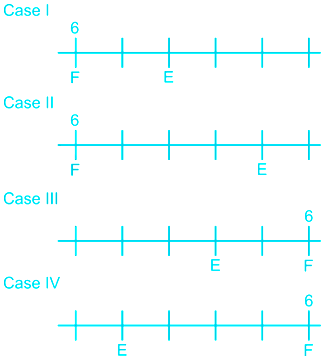
    3) The person who sits on one of the extreme position likes number 1.

    4) There is a gap of two persons between B and F.

    5) C sits immediate right of E.
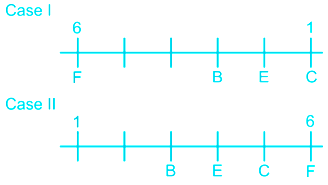
    6) A does not sit immediately next to either F or B.
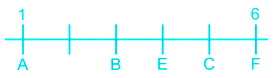
    7) There are two persons amid the one who likes number 4 and the one who likes number 3.

    8) D does not like an odd number.
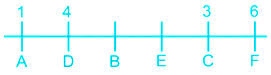
    9) The neighbours of E do not like even numbers.
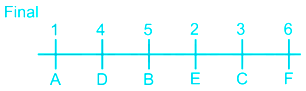
    Hence, E sits on the immediate right of B.
  • Question 11/15
    1 / -0

    Directions For Questions

    Directions: Study the following information carefully and answer the given questions.

    There are six persons A, B, C, D, E and F sitting in a straight line (not necessarily in the same order) facing towards the north and each of them likes different number i.e., 1, 2, 3, 4, 5, 6 (not necessarily in the same order)

    The neighbours of E do not like even numbers. C sits immediate right of E. F sits one of the extreme ends and likes number 6. There are two persons amid the one who likes number 4 and the one who likes number 3. There is a gap of two persons between B and F. The person who sits on one of the extreme position likes number 1. D does not like an odd number. A does not sit immediately next to either F or B. There are either one or three persons between E and F.

    ...view full instructions


    C likes which of the following number?
    Solutions

    Persons: A, B, C, D, E and F.

    Each of them likes different number i.e., 1, 2, 3, 4, 5, 6.

    1) There are either one or three persons between E and F.

    2) F sits one of the extreme ends and likes number 6.

    3) The person who sits on one of the extreme position likes number 1.

    4) There is a gap of two persons between B and F.

    5) C sits immediate right of E.

    6) A does not sit immediately next to either F or B.

    7) There are two persons amid the one who likes number 4 and the one who likes number 3.

    8) D does not like an odd number.

    9) The neighbours of E do not like even numbers.

    C likes number 3

  • Question 12/15
    1 / -0

    Directions For Questions

    Directions: Study the following information carefully and answer the given questions.

    There are six persons A, B, C, D, E and F sitting in a straight line (not necessarily in the same order) facing towards the north and each of them likes different number i.e., 1, 2, 3, 4, 5, 6 (not necessarily in the same order)

    The neighbours of E do not like even numbers. C sits immediate right of E. F sits one of the extreme ends and likes number 6. There are two persons amid the one who likes number 4 and the one who likes number 3. There is a gap of two persons between B and F. The person who sits on one of the extreme position likes number 1. D does not like an odd number. A does not sit immediately next to either F or B. There are either one or three persons between E and F.

    ...view full instructions


    Who sits between D and A?
    Solutions

    Persons: A, B, C, D, E and F.

    Each of them likes different number i.e., 1, 2, 3, 4, 5, 6.

    1) There are either one or three persons between E and F.

    2) F sits one of the extreme ends and likes number 6.

    3) The person who sits on one of the extreme position likes number 1.

    4) There is a gap of two persons between B and F.

    5) C sits immediate right of E.

    6) A does not sit immediately next to either F or B.

    7) There are two persons amid the one who likes number 4 and the one who likes number 3.

    8) D does not like an odd number.

    9) The neighbours of E do not like even numbers.

    A sits immediately to the left of D.

    Hence, no one sits between A and D

  • Question 13/15
    1 / -0

    Directions For Questions

    Direction: Read the information carefully and answer the following questions

    There are ten persons sitting in two parallel rows. Five persons A, B, C, D and E are facing north and other five V, W, X, Y and Z are facing south. Each person from one row faces exactly one person from the other row but not necessarily in the same order.

    B sits third to the right of E. The one who faces B sits second to the left of Z. W and Y are immediate neighbors of each other. Only one person sits between A and C. A does not face Y. More than one person sits to the left of Y. Two people sit between V and Z.

    ...view full instructions


    How many persons sit between X and Y?
    Solutions

    1) B sits third to the right of E.

    2) The one who faces B sits second to the left of Z.

    3) Two people sit between V and Z.(This eliminates case 2)

    4) W and Y are immediate neighbors of each other.

    5) More than one person sits to the left of Y.

    6) Only one person sits between A and C.

    7) A does not face Y.

    Hence, only one person sits between X and Y
  • Question 14/15
    1 / -0

    Directions For Questions

    Direction: Read the information carefully and answer the following questions

    There are ten persons sitting in two parallel rows. Five persons A, B, C, D and E are facing north and other five V, W, X, Y and Z are facing south. Each person from one row faces exactly one person from the other row but not necessarily in the same order.

    B sits third to the right of E. The one who faces B sits second to the left of Z. W and Y are immediate neighbors of each other. Only one person sits between A and C. A does not face Y. More than one person sits to the left of Y. Two people sit between V and Z.

    ...view full instructions


    Four are same in a certain way and thus form a group. Which of the following does not belong to that group?
    Solutions

    1) B sits third to the right of E.

    2) The one who faces B sits second to the left of Z.

    3) Two people sit between V and Z.(This eliminates case 2)

    4) W and Y are immediate neighbors of each other.

    5) More than one person sits to the left of Y.

    6) Only one person sits between A and C.

    7) A does not face Y.

    All sit at extreme ends except B.

    Hence, B does not belong to the group.
  • Question 15/15
    1 / -0

    Directions For Questions

    Direction: Read the information carefully and answer the following questions

    There are ten persons sitting in two parallel rows. Five persons A, B, C, D and E are facing north and other five V, W, X, Y and Z are facing south. Each person from one row faces exactly one person from the other row but not necessarily in the same order.

    B sits third to the right of E. The one who faces B sits second to the left of Z. W and Y are immediate neighbors of each other. Only one person sits between A and C. A does not face Y. More than one person sits to the left of Y. Two people sit between V and Z.

    ...view full instructions


    Who sits second to the left of the one who faces C?
    Solutions

    1) B sits third to the right of E.

    2) The one who faces B sits second to the left of Z.

    3) Two people sit between V and Z.(This eliminates case 2)

    4) W and Y are immediate neighbors of each other.

    5) More than one person sits to the left of Y.

    6) Only one person sits between A and C.

    7) A does not face Y.

    Clearly, V sits second to the left of the one who faces C.

Close button icon
User Profile
-

Correct (-)

Wrong (-)

Skipped (-)


  • 1
  • 2
  • 3
  • 4
  • 5
  • 6
  • 7
  • 8
  • 9
  • 10
  • 11
  • 12
  • 13
  • 14
  • 15
Mockers logo Get latest Exam Updates
& Study Material Alerts!
No, Thanks
Arrow pointer icon
Click on Allow to receive notifications
Notification bell icon ×
Open Now
