Please wait...

IBPS SO Mock Test 82
Menu grid icon
Result Result point icon
IBPS SO Mock Test 82
  • Goals icon

    /

    Score
  • Trophy icon

    -

    Rank
White alarm icon Time Taken: -
Result frame illustration
  • Question 1/15
    1 / -0

    Directions For Questions

    Direction: A sentence with one blank is given, indicating that something has been omitted. Choose the word that best fits the blank appropriately.

    ...view full instructions


    The Board members could not arrive at a ___________ regarding the employee.
    Solutions
    Here the sentence is conveying the meaning that the board members were in the process of doing something for the employee. 'Consensus' means “a process of decision making that seeks widespread agreement among group members”. Hence option D is the correct response.
  • Question 2/15
    1 / -0

    Directions For Questions

    Pick out the most effective word from the given words to fill in the blanks to make the sentence meaningfully complete.

    ...view full instructions


    The boy was curious to know what __________ the parcel was.
    Solutions
    Preposition IN is used to indicate location, inclusion, or position within spatial, temporal or other limits.
  • Question 3/15
    1 / -0

    Directions For Questions

    Direction: A sentence with one blank is given, indicating that something has been omitted. Choose the word that best fits the blank appropriately.

    ...view full instructions


    If you ____________ fast, we will reach on time.
    Solutions
    "Travel" means to pass from here to there; to move or transmit; to go from one place to another. This word would be the answer but it has been used in its past participle form. Thus, this will be eliminated. 
    Hence, we are left with only one choice, .i.e., "walk" which means to move at a regular pace by lifting and setting down each foot in turn, never having both feet off the ground at once. Therefore, option C is the correct response.
  • Question 4/15
    1 / -0

    Directions For Questions

    Direction: A sentence with one blank is given, indicating that something has been omitted. Choose the word that best fits the blank appropriately.

    ...view full instructions


    I _____ your parents that I would take care of you.
    Solutions
    We need a word that would convey the meaning "to make an assurance". Promise will be the correct word to fill the blanks here. Hence option D is the correct response.
  • Question 5/15
    1 / -0

    Directions For Questions

    Direction: A sentence with one blank is given, indicating that something has been omitted. Choose the word that best fits the blank appropriately.

    ...view full instructions


    We must have some ________ that these drugs are harmless.
    Solutions
    To negate something as harmless, we must have some evidence. The word sign can also be a tempting choice but of the two, i.e sign and proof, the latter is a better fit in the context. 
    'Proof' means an evidence or a validation.
    Hence, 'proof' is the correct answer.
  • Question 6/15
    1 / -0

    Directions For Questions

    Direction: Study the line graph carefully and answer the given questions.
    The graph shows the total number of events organized by two companies i.e. A and B in different states of India in these six years.

    ...view full instructions


    The total number of events organized by company A in 2012 and 2014 together approximately is what percentage more than that of the total number of events organized by company B in 2013 and 2017 together?
    Solutions

    The total number of events organized by company A in 2012 and 2014 together=180+160=340
    The total number of events organized by company B in 2013 and 2017 together=100+160=260
    So, required percentage= (340-260)/260× 100
    =80/260 × 100
    =30.769% (Approx)
    Approx 31%

  • Question 7/15
    1 / -0

    Directions For Questions

    Direction: Study the line graph carefully and answer the given questions.
    The graph shows the total number of events organized by two companies i.e. A and B in different states of India in these six years.

    ...view full instructions


    If in 2013, each company A and B organized the events in same two states i.e. state 1 and state 2. The total number of events organized by company A and B together in state 2 is 120 in 2013 and the ratio of the total number of events organized by company A in state 1 to company B in state 1 in 2013 is 3:2. Calculate the total number of events organized by company B in state 1 in 2013.
    Solutions
    The total number of events organized by company A in 2013=220
    The total number of events organized by company B in 2013=100
    The total number of events organized by both companies in 2013=220+100=320
    The total number of events organized by company A and B together in state 2 is 120 (Given)
    The total number of events organized by company A and B together in state 1,
    =320-120=200
    The ratio of the total number of events organized by company A in state 1 to company B in state 1 in 2013 is 3:2 (Given)
    The total number of events organized by company B in state 1=×2
    =×2
    =80
  • Question 8/15
    1 / -0

    Directions For Questions

    Direction: Study the line graph carefully and answer the given questions.
    The graph shows the total number of events organized by two companies i.e. A and B in different states of India in these six years.

    ...view full instructions


    What is the average of the total number of events organized by company B in all these years?
    Solutions

    The total number of events organized by company B in all these six years,
    =160+100+180+200+240+160=1040
    So, required average==173.33

  • Question 9/15
    1 / -0

    Directions For Questions

    Direction: Study the line graph carefully and answer the given questions.
    The graph shows the total number of events organized by two companies i.e. A and B in different states of India in these six years.

    ...view full instructions


    If in 2016, company A organized the events in four different states from state 1 to state 4. If the total number of events organized by company A in state 2 and state 4 together is 80 and the total number of events organized by company A in state 3 is twice the number of events organized by company A in state 1. Then find the total number of events organized by company A in state 1. (All the date is given for 2016)
    Solutions
    The total number of events organized by company A in 2016=200
    The total number of events organized in state 2 and state 4 together=80
    The total number of events organized in state 1 and state 3 together=200-80=120
    The total number of events organized by company A in state 3 is twice the number of events organized by company A in state 1.
    Let the total number of events organized by company A in state 1=x
    Let the total number of events organized by company A in state 3=2x
    Then,
    x + 2x=120
    3x=120
    x=120/3=40
  • Question 10/15
    1 / -0

    Directions For Questions

    Direction: Study the line graph carefully and answer the given questions.
    The graph shows the total number of events organized by two companies i.e. A and B in different states of India in these six years.

    ...view full instructions


    What is the difference between the total number of events organized by company A in 2014, 2015 and 2016 together to the total number of events organized by company B in 2013, 2014 and 2016 together?
    Solutions
    The total number of events organized by company A in 2014, 2015 and 2016 together=160+120+200=480
    The total number of events organized by company B in 2013, 2014 and 2016 together=100+180+240=520
    So, required difference=520-480=40
  • Question 11/15
    1 / -0

    Directions For Questions

    Direction: Study the following information carefully and answer the questions given below.

    Eleven people, I, J, K, L, M, N, O, P, Q, R and S are sitting in two rows. The persons of row-1 are J, R, P, N and K and are facing south and the persons of row-2 are M, O, L, Q, I and S and are facing north. Each row consists of 6 chairs. R sits immediately to the left of J. The vacant seat is not at any end of the row. There are two seats between the one who faces one of the neighbours of L and the vacant seat. I sit immediately next to Q but none of them sits any of the extreme ends. There is only one person on the left side of L. P sits immediately next to the vacant seat and faces the one who does not face South. There are two seats between L and S who faces N.

    ...view full instructions


    Who among the following faces L?
    Solutions
    People:
    Eleven people, I, J, K, L, M, N, O, P, Q, R and S
    1) There is only one person on the left side of L.
    2) There are two seats between the one who faces one of the neighbours of L and the vacant seat.
    3) The vacant seat is not at any end of the row.
    4) P sits immediately next to the vacant seat and faces the one who does not face South.
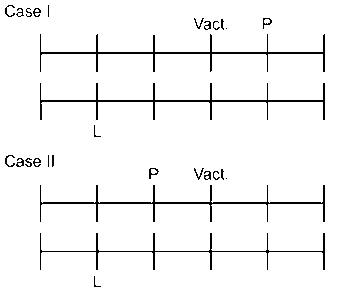
    5) There are two seats between L and S who faces N.
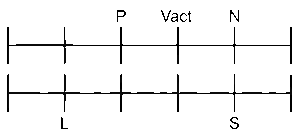
    6) I sits immediately next to Q but none of them sits any of the extreme ends.
    7) R sits immediately to the left of J.
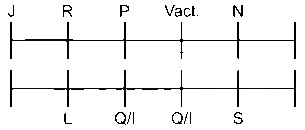
    8) K does not sit in the same row where M and O seated.
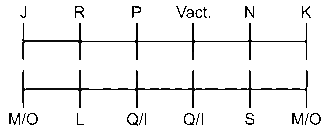
    Hence, R faces L.
  • Question 12/15
    1 / -0

    Directions For Questions

    Direction: Study the following information carefully and answer the questions given below.

    Eleven people, I, J, K, L, M, N, O, P, Q, R and S are sitting in two rows. The persons of row-1 are J, R, P, N and K and are facing south and the persons of row-2 are M, O, L, Q, I and S and are facing north. Each row consists of 6 chairs. R sits immediately to the left of J. The vacant seat is not at any end of the row. There are two seats between the one who faces one of the neighbours of L and the vacant seat. I sit immediately next to Q but none of them sits any of the extreme ends. There is only one person on the left side of L. P sits immediately next to the vacant seat and faces the one who does not face South. There are two seats between L and S who faces N.

    ...view full instructions


    Who among the following faces the vacant seat?
    Solutions
    People:
    Eleven people, I, J, K, L, M, N, O, P, Q, R and S
    1) There is only one person on the left side of L.
    2) There are two seats between the one who faces one of the neighbours of L and the vacant seat.
    3) The vacant seat is not at any end of the row.
    4) P sits immediately next to the vacant seat and faces the one who does not face South.

    5) There are two seats between L and S who faces N.

    6) I sits immediately next to Q but none of them sits any of the extreme ends.
    7) R sits immediately to the left of J.

    8) K does not sit in the same row where M and O seated.

    Either Q or I faces the vacant seat.
  • Question 13/15
    1 / -0

    Directions For Questions

    Direction: Study the following information carefully and answer the questions given below.

    Eleven people, I, J, K, L, M, N, O, P, Q, R and S are sitting in two rows. The persons of row-1 are J, R, P, N and K and are facing south and the persons of row-2 are M, O, L, Q, I and S and are facing north. Each row consists of 6 chairs. R sits immediately to the left of J. The vacant seat is not at any end of the row. There are two seats between the one who faces one of the neighbours of L and the vacant seat. I sit immediately next to Q but none of them sits any of the extreme ends. There is only one person on the left side of L. P sits immediately next to the vacant seat and faces the one who does not face South. There are two seats between L and S who faces N.

    ...view full instructions


    Who among the following sits at one of the extreme ends of the row?
    Solutions
    People:
    Eleven people, I, J, K, L, M, N, O, P, Q, R and S
    1) There is only one person on the left side of L.
    2) There are two seats between the one who faces one of the neighbours of L and the vacant seat.
    3) The vacant seat is not at any end of the row.
    4) P sits immediately next to the vacant seat and faces the one who does not face South.

    5) There are two seats between L and S who faces N.

    6) I sits immediately next to Q but none of them sits any of the extreme ends.
    7) R sits immediately to the left of J.

    8) K does not sit in the same row where M and O seated.

    M and K sit one of the extreme ends of the row.
  • Question 14/15
    1 / -0

    Directions For Questions

    Direction: Study the following information carefully and answer the questions given below.

    Eleven people, I, J, K, L, M, N, O, P, Q, R and S are sitting in two rows. The persons of row-1 are J, R, P, N and K and are facing south and the persons of row-2 are M, O, L, Q, I and S and are facing north. Each row consists of 6 chairs. R sits immediately to the left of J. The vacant seat is not at any end of the row. There are two seats between the one who faces one of the neighbours of L and the vacant seat. I sit immediately next to Q but none of them sits any of the extreme ends. There is only one person on the left side of L. P sits immediately next to the vacant seat and faces the one who does not face South. There are two seats between L and S who faces N.

    ...view full instructions


    Who among the following is one of the neighbors of L?
    Solutions
    People:
    Eleven people, I, J, K, L, M, N, O, P, Q, R and S
    1) There is only one person on the left side of L.
    2) There are two seats between the one who faces one of the neighbours of L and the vacant seat.
    3) The vacant seat is not at any end of the row.
    4) P sits immediately next to the vacant seat and faces the one who does not face South.

    5) There are two seats between L and S who faces N.

    6) I sits immediately next to Q but none of them sits any of the extreme ends.
    7) R sits immediately to the left of J.

    8) K does not sit in the same row where M and O seated.

    Can’t be exactly determined.
  • Question 15/15
    1 / -0

    Directions For Questions

    Direction: Study the following information carefully and answer the questions given below.

    Eleven people, I, J, K, L, M, N, O, P, Q, R and S are sitting in two rows. The persons of row-1 are J, R, P, N and K and are facing south and the persons of row-2 are M, O, L, Q, I and S and are facing north. Each row consists of 6 chairs. R sits immediately to the left of J. The vacant seat is not at any end of the row. There are two seats between the one who faces one of the neighbours of L and the vacant seat. I sit immediately next to Q but none of them sits any of the extreme ends. There is only one person on the left side of L. P sits immediately next to the vacant seat and faces the one who does not face South. There are two seats between L and S who faces N.

    ...view full instructions


    If M faces K, then who among the following may sit third to the left of Q?
    Solutions
    People:
    Eleven people, I, J, K, L, M, N, O, P, Q, R and S
    1) There is only one person on the left side of L.
    2) There are two seats between the one who faces one of the neighbours of L and the vacant seat.
    3) The vacant seat is not at any end of the row.
    4) P sits immediately next to the vacant seat and faces the one who does not face South.

    5) There are two seats between L and S who faces N.

    6) I sits immediately next to Q but none of them sits any of the extreme ends.
    7) R sits immediately to the left of J.

    8) K does not sit in the same row where M and O seated.

    Here, the position of Q is not fixed. But according to the options L is not possible because, L’s position is either immediate next or second to the left of Q. So, the only possible answer is O.
Close button icon
User Profile
-

Correct (-)

Wrong (-)

Skipped (-)


  • 1
  • 2
  • 3
  • 4
  • 5
  • 6
  • 7
  • 8
  • 9
  • 10
  • 11
  • 12
  • 13
  • 14
  • 15
Mockers logo Get latest Exam Updates
& Study Material Alerts!
No, Thanks
Arrow pointer icon
Click on Allow to receive notifications
Notification bell icon ×
Open Now
